


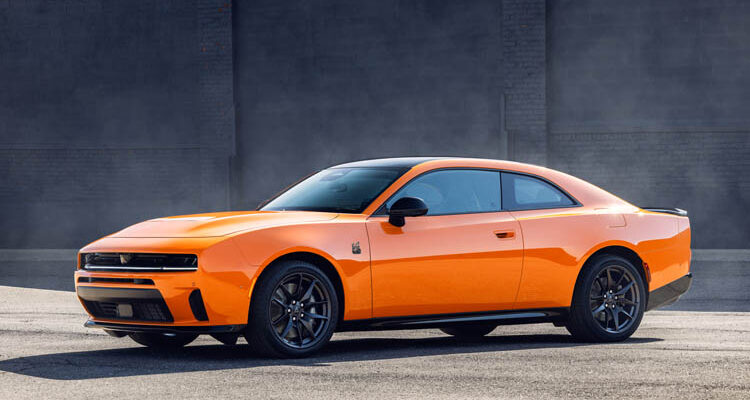
Even when Dodge made waves by announcing that the replacement for the much-loved Charger sedan would be going all-electric, they were quick to drop an “at first” qualifier into the announcement. It would be a BEV at the outset, with a gas version following later. Indeed, it was big news that an electric car would be bearing the Charger name, but that wasn’t enough; kudos to Dodge for going EV with the Charger at first, but unfortunately the sales haven’t quite suggested that an all-out (or even a quasi) acceptance has occurred among the Charger faithful. Even though it made huge power and miniscule 0-100 km/h times and even sounded like a muscle car thanks to its “Fratzonic” exhaust, it seemed there was something missing.
“As deep as those electric motors will push you back into the bucket seats, we always knew that some people wanted to feel the power that pistons, crankshafts and drivelines send to the pavement,” said Matt McAlear, Dodge CEO. “The good news? The Charger platform is designed to carry more than batteries. It’s designed to carry everything we know about high output, internal combustion power.”
With that, enter the 2026 Dodge Charger R/T and Scat Pack Sixpack (there’s no “Daytona” trim here; that’s reserved for the EV model), a completely non-hybrid, traditionally-powered take on America’s favourite muscle sedan. Or coupe; the ICE Charger will be available as either a coupe or sedan, with the four-door models following the coupe models later this year.
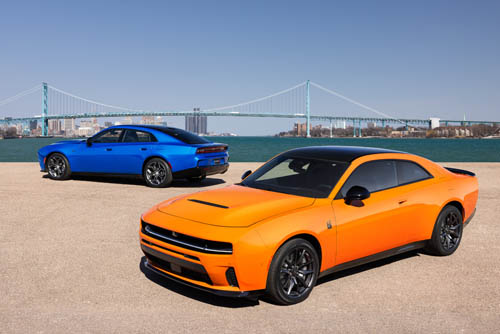
Those eagerly awaiting the return of a gas-powered Charger may have to temper their expectations just a little, however; the Hemi V8 is still on the shelf, with the 3.0L twin-turbo Hurricane six-cylinder doing all the heavy lifting for now. The Charger Scat Pack does get the most powerful version of the Hurricane currently available (it’s also used in the Ram 1500 pickup and Jeep Grand Wagoneer SUV), making 550 horsepower and 531 pound-feet of torque in high-output (HO) form and 420 hp and 468 lb-ft in standard output (SO) form under the hood of the R/T. The HO represents a 10 per cent hp-per-litre jump over the V8 supercharged Demon 170 from 2023, hitherto the most powerful Charger/Challenger we’ve seen from the factory. Micky Bly, head of global propulsion systems at Stellantis says even though he owns a Demon 170, he’s jealous of this new car’s power. Not sure we completely believe him (that Challenger Demon 170 is one rare beast, regardless of engine and performance specs), but nevertheless – the power is there, enough to drop the 0-100 km/h time below the four-second mark for the Scat Pack Sixpack.
Rear-wheel-drive (RWD) is also a no-go for now – but that’s not entirely true, is it? With the press of a button, the standard AWD system can send 100 per cent of power to the rear wheels for some smoky burnout action, helped along by the return of Dodge’s staple line-lock system and standard mechanical limited slip diff. A new TorqueFlite eight-speed auto also comes as standard; there’s no manual option but there are paddle shifters.
There’s lots to like about the powertrain, but during the special sneak preview we attended, the question inevitably came up: what about the Hemi and more specifically, what about the big-daddy 6.2-litre supercharged Hellcat motor? Could it work in one of these?
“I’ll let you take your tape measure out, but don’t be surprised if it would fit,” said McAlear. He also said that what we saw is just the beginning for the ICE Charger. Considering the relaxations on emissions standards recently announced by the US (not to mention the almost-but-not-quite confirmation that the Ram TRX with the Hellcat motor is coming back), we wouldn’t be surprised if not just the Hellcat motor, but a few V8 Hemi choices will be returning to the Charger over the next year or two.
Styling-wise, Dodge says the ICE Charger is all about proportions. “This is a big vehicle,” said Scott Kruger, head of design at Stellantis North America. “It’s big, it’s bold, it’s unapologetic in the design and we wanted to make sure we carried on that legacy from the outgoing Charger and Challenger.” He mentions the latter here because now that the Charger will be available as either a two- or four-door body style, it’s taking up the slack of the dearly departed two-door only Challenger.
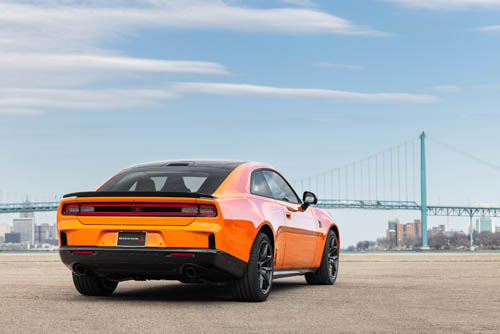
To wit: Dodge says the Charger is the widest car in the industry and they’ve complimented that profile by adding details like quasi-hidden headlights with a full-width DRL light bar up front, as well as full-width taillight in back and subtle trunk spoiler. From the rear three-quarter view, it really does recall the first-generation charger from 1966. In contrast, the flared fenders and front fascia make for a look that’s a mix of second-generation model (you know, Vin’s car) and more modern takes on the Charger.
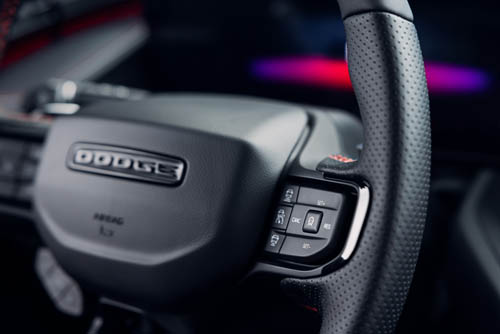
The 2026 Dodge Charger Scat Pack
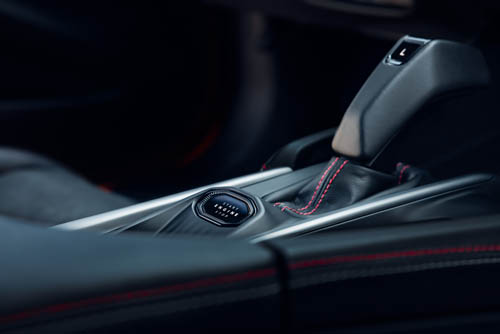
The 2026 Dodge Charger Scat Pack
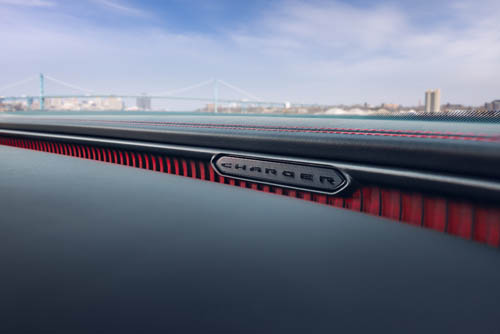
The 2026 Dodge Charger Scat Pack
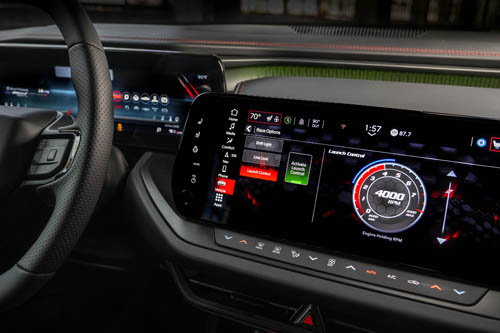
The 2026 Dodge Charger Scat Pack
The 2026 Dodge Charger Scat Pack
The 2026 Dodge Charger Scat Pack
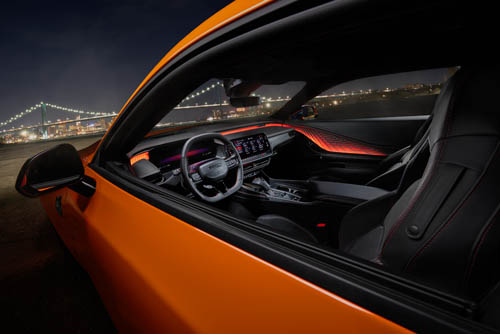
Inside, while Dodge does claim they turned to the 1968 car for design inspiration, it’s tough to see. The dash is dominated by dual digital displays – a 10.25-inch gauge cluster display (with an optional 16″ item) and a 12.3” infotainment display – and modern ambient lighting and pistol-grip style shifter. You could say that the abundance of right angles and straight edges does fit the classic bill, but it’s a bit of a “if you squint, it’s mint” scenario. Which, in all honesty, might be OK because more and more people are accepting – indeed, expecting – digital dashes and so on so it makes sense to have them here. Plus, it saves on manufacturing costs and keeps the ICE Charger’s starting cost just below the 60-grand mark in Canada. The full-fat Scat Pack model starts at $69,995 before freight and PDI.
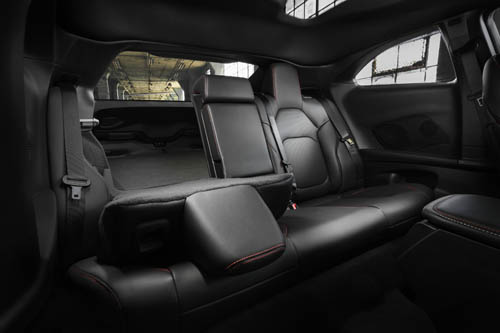
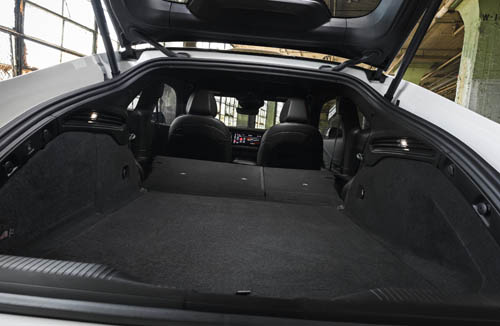
The 2026 ICE model is also larger than the previous-generation car, with 127 per cent more cargo space than the last Charger and more back seat space. That’s a very good thing, because to say the last car was a “little cramped” in back would be an understatement.
The 2026 Dodge Charger Sixpack two-door models will start arriving in dealers in the second half of ’25, with the four-door model arriving in early ’26.