


When I first sampled a product from Jeep’s all-new (sort of) Wagoneer line – the 2022 Grand Wagoneer in full pull Series III spec – I cam away mostly impressed, especially when it came to interior environs. The top-grade materials, space and tech on offer were all on-point, and while the exterior styling had its quirks, I didn’t mind it as much as some did, judging by online remarks and conversations with my peers. In short, I liked it.
So I was anxious to sample the Grand Wagoneer’s (slightly) smaller Wagoneer sibling, in Series I spec that sat (just a little) down the line.
Styling
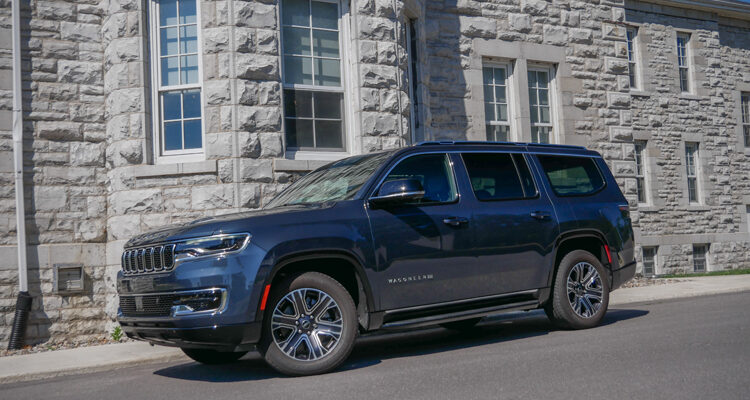
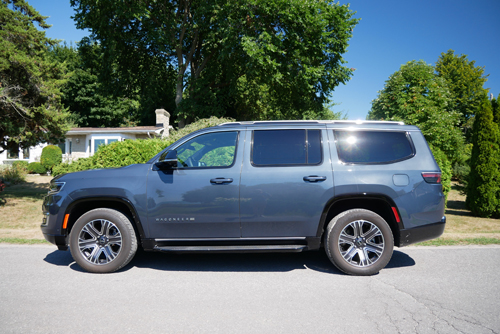
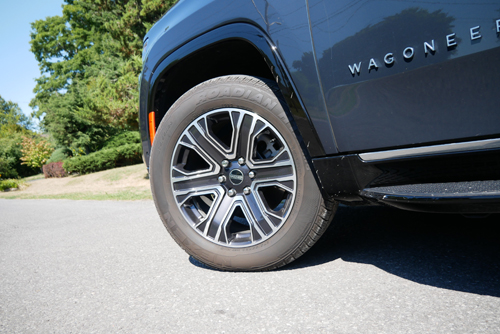
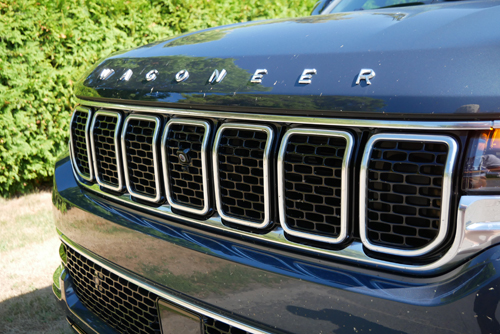
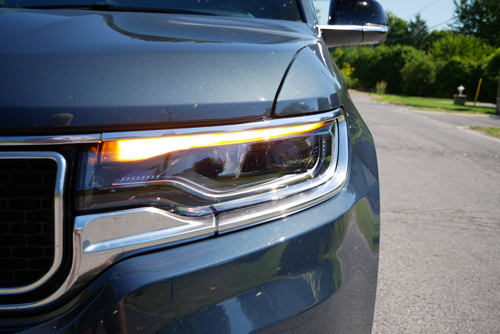
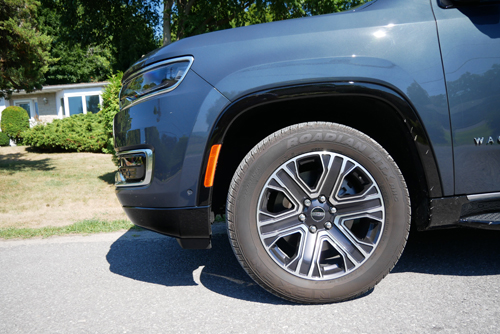
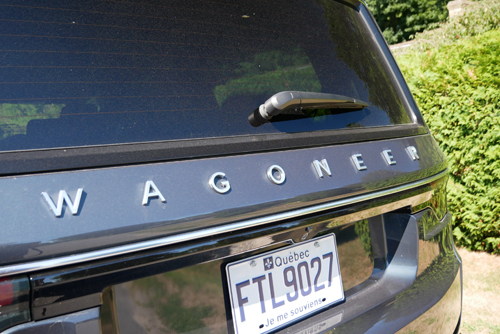
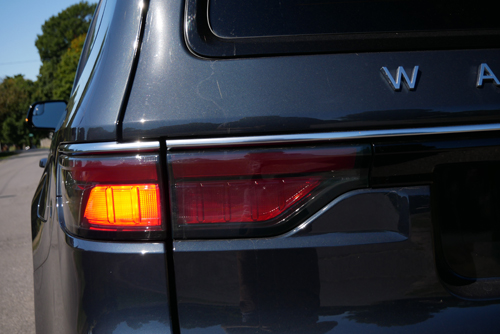
Finished in River Rock blue, my Wagoneer (as opposed to Grand Wagoneer or Wagoneer L) was much more compact-looking than how I remembered feeling about the Grand Wagoneer. Gone is the somewhat gawky rear overhang as well as the rear side window which were my main issues with the larger model. As a result, the Wagoneer looks much more like the timeless two-box design sported by the likes of the Chevy Tahoe, especially when seen from the side. Since there’s lest swept panel area, the 20-inch wheels aren’t quite as dwarfish as they might otherwise be. You could still go bigger, of course, but then you risk compromising the ride. Other stand-out details include a classic chrome 7-slate grille and LED headlights and full-width taillight treatment.
2025 Jeep Wagoneer
2025 Jeep Wagoneer
2025 Jeep Wagoneer
2025 Jeep Wagoneer
2025 Jeep Wagoneer
2025 Jeep Wagoneer
Interior
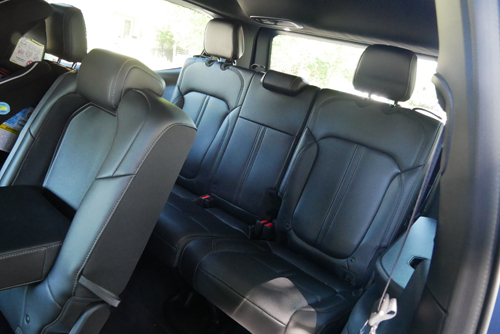
Like every other Wagoneer you can buy, my interior was a black on black affair with leather seating surfaces and a few inserts on the doors, armrests and dash. That’s it. If you want a lighter colour, you have to look elsewhere in the Jeep/Wagoneer line-up and that’s a bit of a shame.
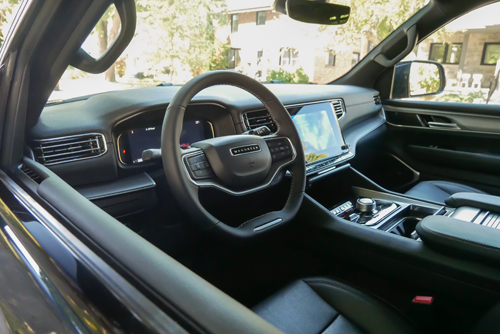
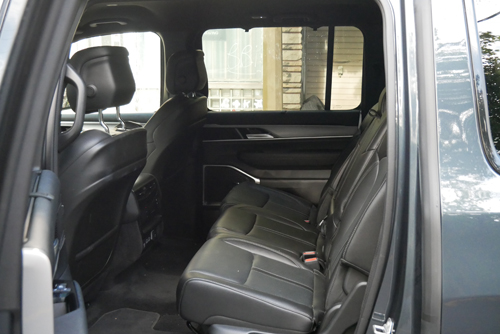
What’s not a shame, however, is how much room there is inside. Both the front- and second-row passengers are well cared for both in terms of headroom and legroom. You can chalk that up to good interior design of course, but the lack of a sunroof at this trim level helps as well. I like having the extra space but considering how dark the interior is otherwise, having no sunroof is a bit of a shame.
There’s also a third row with seating for not one, not two but three passengers that don’t just get some properly cushy seats (also found in the other two rows; the overall seat design is very on-point) but cupholders and USB-C ports as well. Access to the third row, meanwhile, is made easier by a quick-release second row, done via shoulder-mounted buttons. Big fan of that, as well as how you can recline or slide the second-row seats fore and aft.
2025 Jeep Wagoneer
2025 Jeep Wagoneer
2025 Jeep Wagoneer
2025 Jeep Wagoneer
2025 Jeep Wagoneer
2025 Jeep Wagoneer
2025 Jeep Wagoneer
2025 Jeep Wagoneer
2025 Jeep Wagoneer
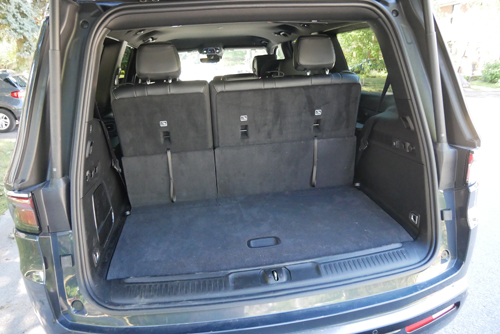
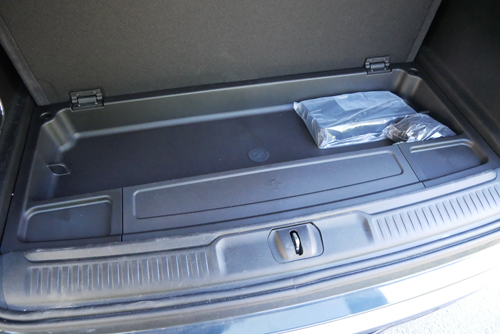
Of course, chances are most Wagoneer owners are going to leave that third row folded flat, which provides room for up to 3,304 litres of cargo space.
Tech
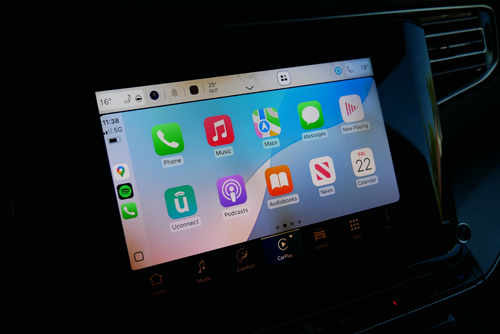
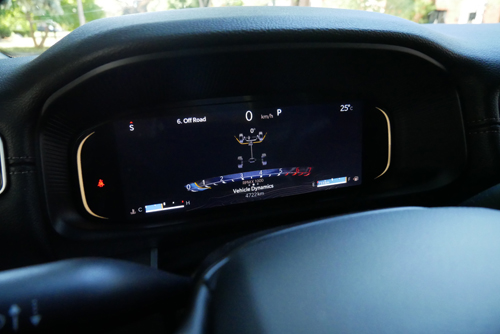
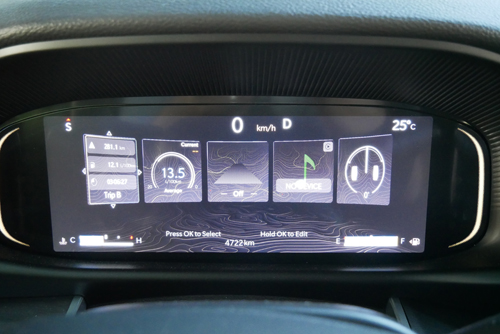
Being the entry-level model to the line-up, the Wagoneer gets a 10.1” central display as well as UConnect 5 tech, wireless Apple CarPlay and Android Auto as well as a 10.25” digital gauge cluster. Said cluster can be modified to display traditional instruments, chassis info or navigation with wheel-mounted buttons, including a hotkey to pull up a rotating selection of screen choices. It’s a nice touch.
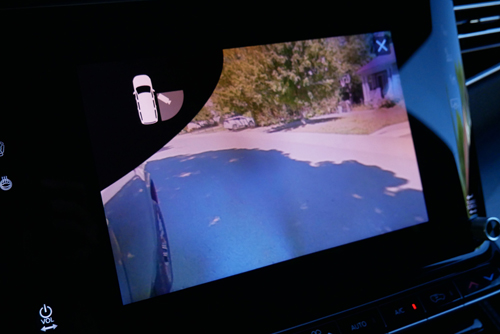
Audio comes courtesy of a 10-speaker Alpine system; higher-end models get heavy duty McIntosh audio but the Alpine system I had is pretty good. The clarity is there – even when using lo-fi streaming services — but a few extra speakers would be welcome in a vehicle of this size. A digital rear-view mirror is available on higher trims, which is always a nice bonus in three-row SUVs where the second- and third-row passengers can get in the way of the view rearwards, a digimirror really helps.
Power and handling
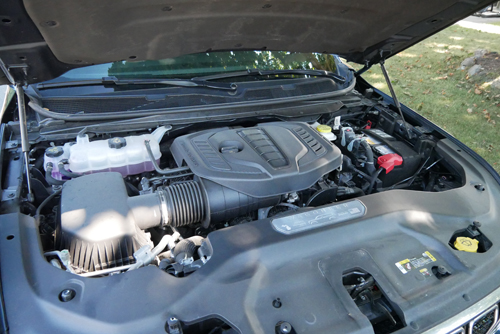
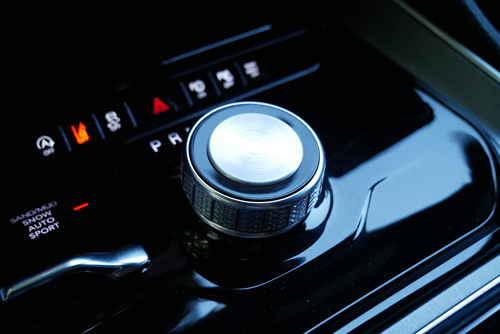
Power comes courtesy of a twin-turbocharged three-litre inline-six “Hurricane” engine good for 420 horsepower and 468 pound-feet of torque, sent to all four wheels via an eight-speed automatic. Gear selection is done via a rotating wheel, which is a modern touch and one that helps reduce interior colour. It also means no oblong shift lever on which to snag backpack straps et cetera.
While you won’t get as immediate a power delivery as you’d get from an older Jeep product powered by a Hemi V8, the turbos spool up nice and quickly and it helps keep the power delivery just flat enough and not to peaky. Thanks to the nicely-spaced ratios, there’s always power on-tap for passing at speed, entering the freeway and so on.
The more I think about it, the more I feel like a turbo-6 is actually the perfect fit for a full-size vehicle like this. It’s smooth, emits just enough growl without imposing itself too much on the cabin (this thing is ultra-silent when cruising) and isn’t bad on fuel; we saw 13.4 L/100 km in the combined cycle, which ticks just over what’s found on the environment Canada website. That’s a variance I’m perfectly happy with considering the features and power on hand.
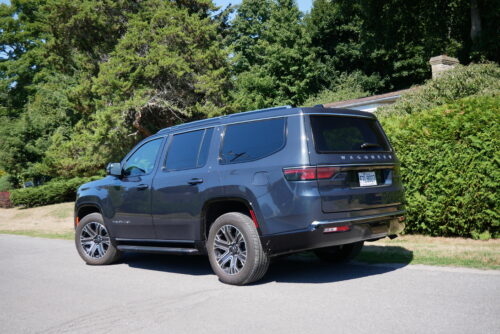
The ride is also good; I mentioned before how smaller wheels can have a positive effect on the ride. Such is the case here, as progress is very smooth and while you’re going to feel some roll through corners, it’s not so bad as too have you and your passengers sliding to and fro all over their seats. It’s also got self-levelling rear suspension, which is a nice feature to have as standard. It helps with the ride as well as with towing. Which, by the way, is rated at 2,672 kilos, enough for a decently-sized camping trailer or a pair of side-by-sides.
Conclusion
The Wagoneer sits in a bit of a strange middleground between the uber-luxe of the Grand Wagoneer and the lux-slash-family mover Grand Cherokee and Grand Cherokee L. That’s why we find standard features like the leather interior or self-levelling suspension, without dropping too many expensive items that would bump the starting price up from the 80-grand level, and into the 100-grand level. It’s an interesting choice from Jeep, but it does lead to a bit of an identity crisis for this particular truck. For many, that won’t be an issue – they like the Wagoneer name, like that they’re buying something that has connections with the luxury world without having to pay a luxury price – but it could lead to a little bit of confusion and indecisiveness on the showroom floor.
Quick Specs
Price as Tested: $80,395
Freight & PDI: $2,695
Engine: Twin-turbo inline six-cylinder
Transmission: 8-speed Automatic
Drivetrain: All-wheel drive
Output: 420 horsepower / 468 lb-ft of torque
Official Combined Fuel Economy: 12.5 L/100 km
Observed Fuel Economy: 13.4 Le/100 km
Warranties: 5-year / 100,000-km (powertrain), 3-year, / 60,000-km (basic)
Key Competitors: Chevrolet Tahoe, Ford Expedition, GMC Yukon, Hyundai Palisade, Kia Telluride, Nissan Armada, Toyota Grand Highlander or Sequoia
Website: Jeep Canada