


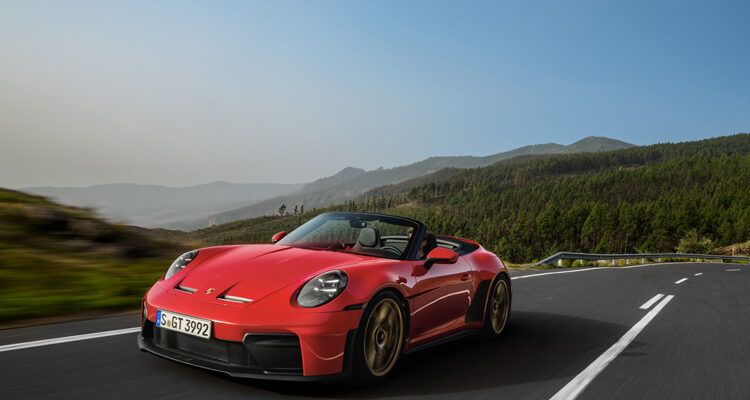
Today, Porsche pulled the wraps off an all-new variant of their flagship 911 sports car – or should we say “sports cabriolet”?
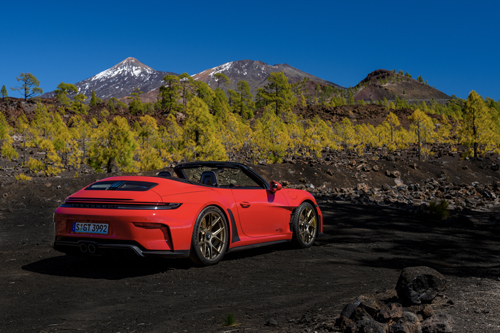
For 2027, the GT3 is dropping its top to become the 911 GT3 S/C – “Sport Cabriolet” – with the aim of mixing the purity of the 911 S/T driving experience with the exhilaration of open-top motoring. That means a naturally-aspirated 4.0-litre flat six-cylinder with 502 horsepower and 331 pound-feet of torque, a manual transmission only and seating for two. There is no back seat in the car at the outset; we’ll soon find out if they will add one as an option later on. For now, the only option is a leather-covered 80-litre storage box that can be hard mounted behind the front seats.
The lack of a back seat plays into Porsche’s efforts to save weight. Other adds in this vein include carbon-fibre fenders, hood and doors, carbon fibre rear anti-roll bar and connecting links and standard Porsche ceramic composite brakes, which save 20 kilos over cast iron rotors.
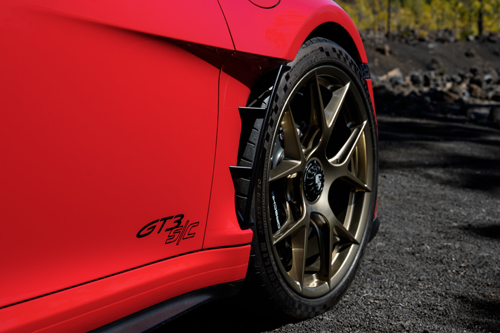
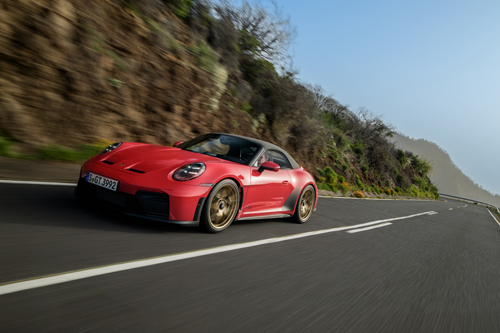
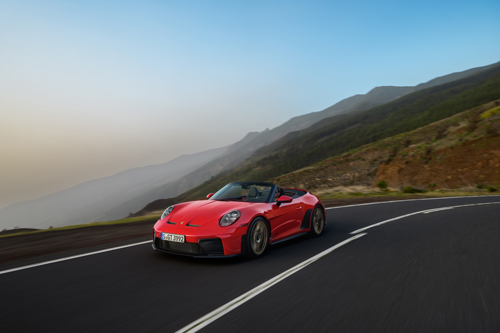
Styling-wise, we find an optional black windshield surround (another S/T staple; a black convertible top is your only choice), centre-locking magnesium wheels measuring 20 inches up front and 21” in the rear and magnesium convertible top components. Seems Porsche recently watched Rush and took note when Daniel Brühl’s Niki Lauda grilled his engineers about using magnesium parts for his race car…
It should be noted that since Posche was able to design a lightweight power folding top befitting of the 911 GT3 S/C’s modus operandi, it doesn’t get the bubble-style tonneau cover and manual top that its 911 Speedster predecessor had. That’s a bit of a shame for the purists, but it should make the top much easier to deploy or stow, making the GT3 S/C that much more usable.
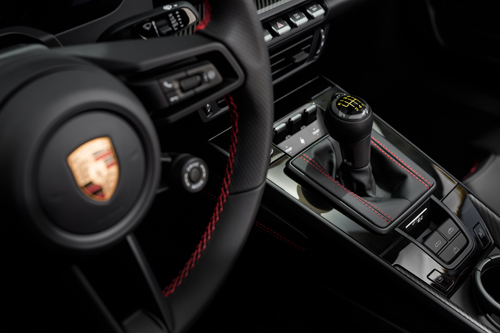
Inside, we find lightweight carpets and door panels (likely with optional nylon pulls, although Porsche’s penchant for using these as a lightweighting tactic seems almost more about tradition than function these days). Four-way power seats are standard, with lighter sports seats as an available option. Considering Porsche’s seats go all the way up to 18-ways these days, though, the four-ways should already ben light enough when compared to other 911 cab models. Speaking of tradition: the GT3 S/C goes back to a twisting ignition switch instead of a push-button sport. We like.
It all combines to provide a 0-100 km/h time of 3.9 seconds and a 313 km/h top speed. In addition to the standard ceramic brakes, a double wishbone front acles (a first for 911 convertibles) and extra-sticky tires measuring 255 millimetres at the front and 315 at the rear should all combine to offer performance suitable for a car with “GT3” in its name. To keep things stable at higher speeds, the retractable rear spoiler gets an additional lip – also a first for any 911 cabriolet.
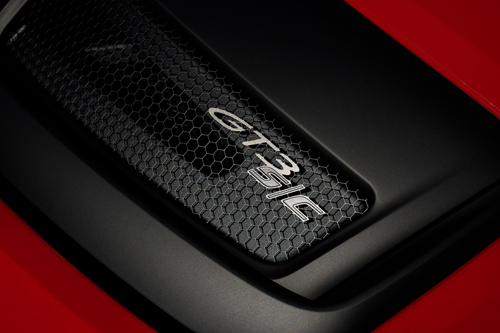
2027 Porsche 911 GT3 S/C
2027 Porsche 911 GT3 S/C
2027 Porsche 911 GT3 S/C
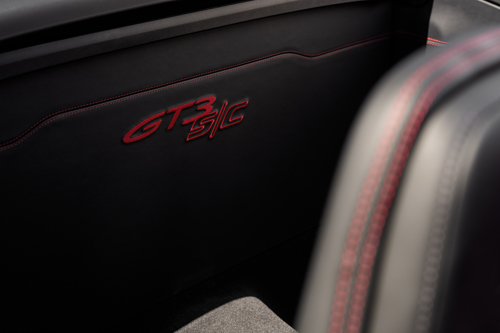
If the new standard styling touches aren’t enough, Porsche will also be offering a “Street Style” package. That adds Pyro Red Porsche lettering on the doors, slate grey nero wheels shrouding gold brake calipers and Pyro Red inner wheel barrels. Inside, the seats get special four-braid leather in slate gray, guards red, magnesium grey or Kalahari tan and there are even reversible floor mats that are guards red leather on one side, and slate grey carpet on the other. A host of other special badging and colour inserts complete the look of this more special-than-special 911 cab.
2027 Porsche 911 GT3 S/C
2027 Porsche 911 GT3 S/C
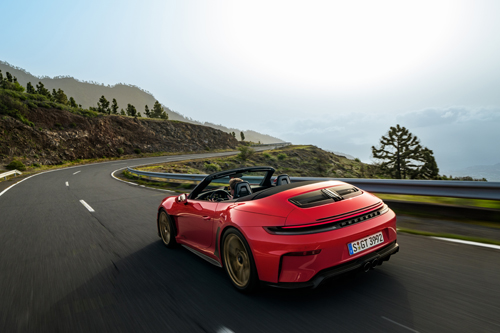
2027 Porsche 911 GT3 S/C
Pricing, of course, is not for the faint of heart: the 2027 Porsche 911 GT3 S/C starts at $313,300 in Canada – oof – but unlike the Speedster, the S/C will not be a limited-run model.
If you have the funds, though, this is sure to be an absolute cracker of a car. To find out more, look for our first drive of the S/C in the print edition of ViCARious magazine soon.