


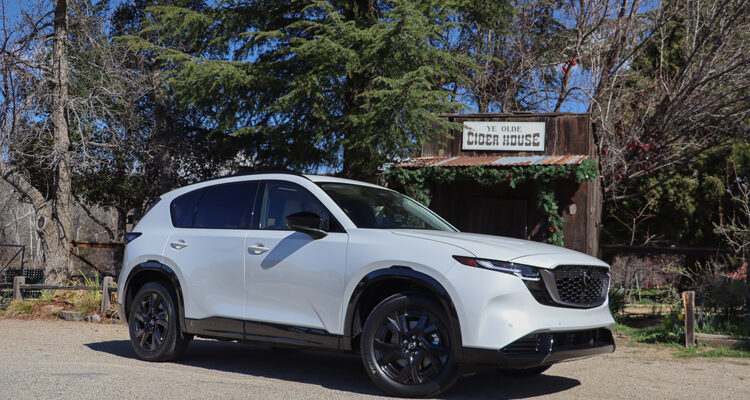
Encinitas, CA — For 2026, the Mazda CX-5 – a CUV that’s sold over five million units since it debuted in 2013 – is bigger and more tech-laden than ever before. Mazda has listened to its loyal followers through the years, and it was interior space and tech that routinely came to the top of the list.
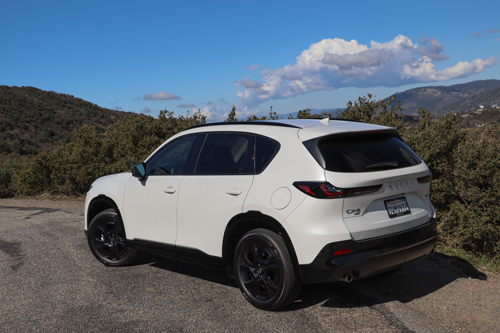
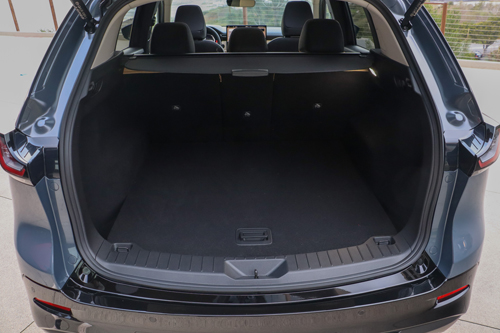
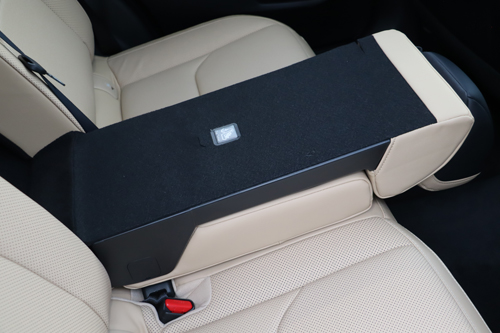
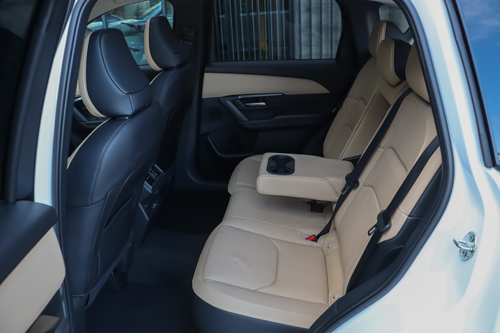
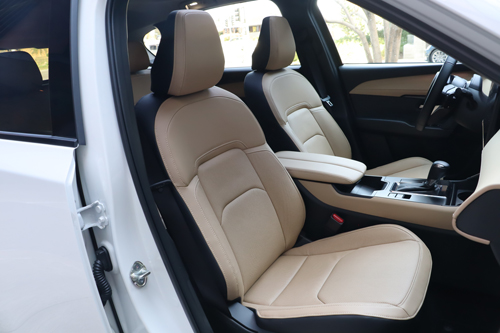
So, Mazda has increased the CX-5’s wheelbase, it’s taller than before and wider, too. It’s a little longer overall but the added length comes between the wheels, so the front and rear overhangs are no longer than before. That means the now larger CX-5 is still tractable around town, and when parking. Most of the added space is felt in the back seats – where there’s more headroom than previous as well as two extra thoracic airbags – and the rear cargo area, where volume’s up from 1,680 litres with the 40/20/40 split folding rear seats down in the ’25 model, to 1,883 L in the ‘26. That’s a significant jump and more than that, Mazda has lowered the liftover height to make it easier to load. The return of the 40/20/40 split means you don’t have to sacrifice an entire outboard seat in order to pack longer items, and the seats can be folded via levers mounted to the cargo bay walls. Mazda has also made the rear door openings larger and the doors can swing open to almost 90 degrees, making entrance and egress — and installing a child’s seat — so much easier.
It also means that while front seat space is the same as previous, you don’t have to move, say, the front passenger seat so far forwards in order to accommodate a rear-facing child’s seat.
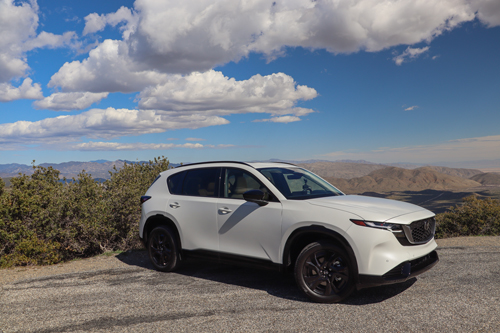
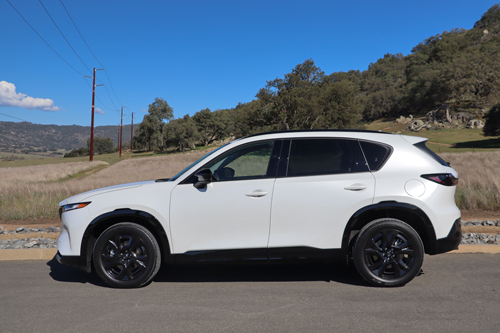
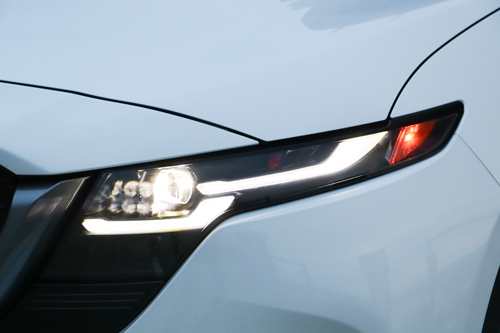
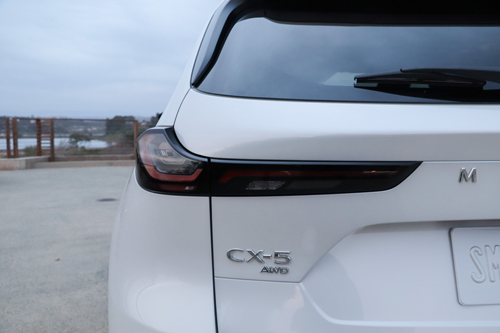
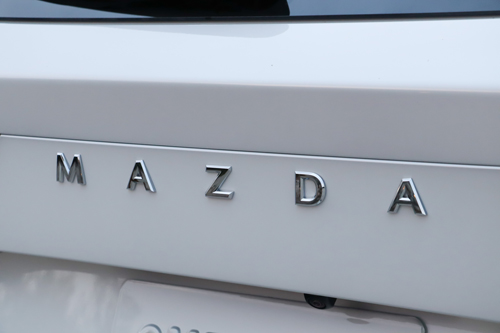
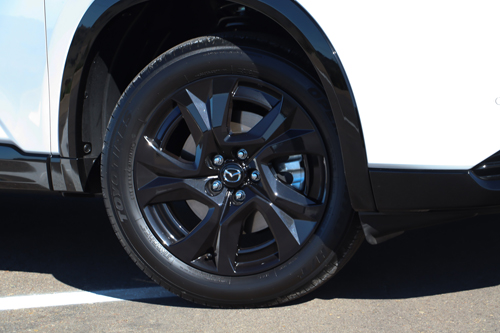
Styling-wise, the 2026 CX-5 is definitely recognizable as such, but they’ve grown things up a little by widening the grille, changing the LED head- and taillights so it looks more like a small CX-70 now and added new wheel designs. My favourite add is the “MAZDA” scripting across the rear deck, which does well to fit with a practice happening all over the car and light truck world these days.
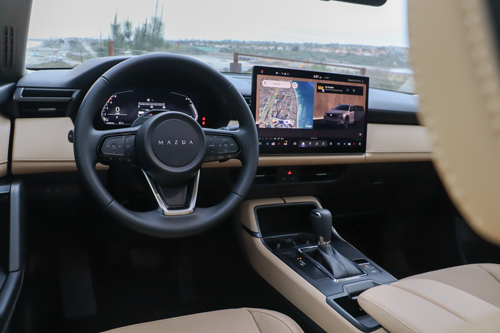
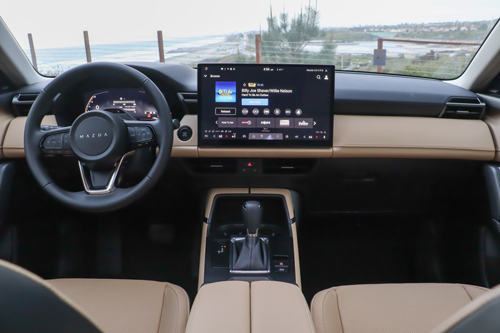
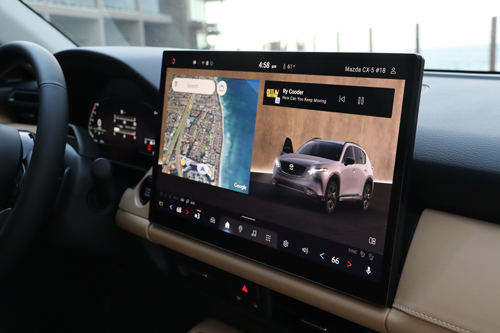
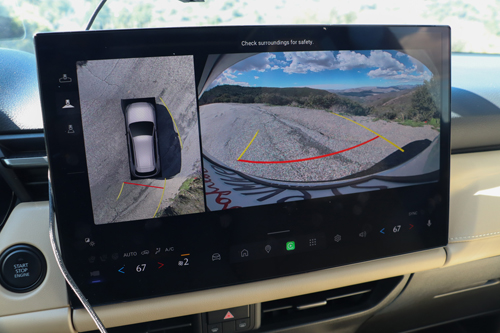
The next big piece of news is the, well, big piece of tech that is the optional 15.6-inch central infotainment display with Google Built-In on the GT Premium package ($46,700), with a 12.9” item as standard on the rest of the line-up (GX, $36,300; GS $39,200; GT $42,200; GT w/panoramic roof $44,200), which is still bigger than previous. That means the native navigation interface is done via Google Maps, and occupants also have access to the Google Play Store and apps like Spotify and Google Assistant so you can “Hey, Google” yourself all the way to your favourite Japanese restaurant. If you’d rather keep things more traditional, wireless Apple CarPlay and Android Auto are also here, as well as wireless charging plus four USB-C ports in the cabin.
That 15.6” display is big, and pretty much everything is accessed through it. Climate controls, infotainment controls, communication apps — it’s all there and the only traditional buttons found on the dash are the front/rear defrost twins. That’s it, and it means the central control knob Mazdas have had for years is no longer.
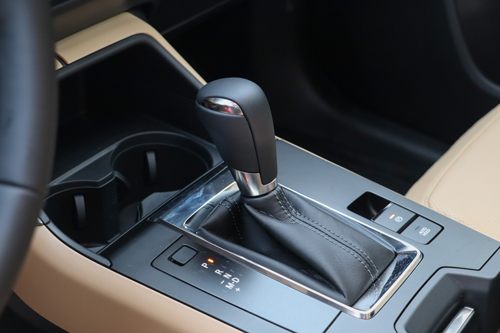
I don’t mind that so much as it was somewhat cumbersome to use as opposed to a touchscreen, but I do regret the loss of the volume knob mounted below the shifter. It was just so nice to be able to adjust volume – something we do often in our cars – just by reaching down and twisting. No need to feel for the controls on the dash, no chance of changing the radio station instead of changing the volume. It was oh-so refreshing and nicely analogue, and it will be missed. Luckily, if the Honda Civic is any indication, mid-cycle changes can be made if there’s enough of an outcry.
2026 Mazda CX-5
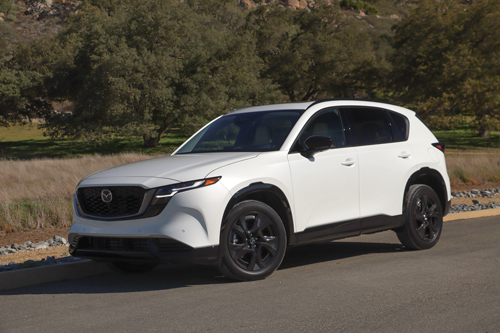
2026 Mazda CX-5
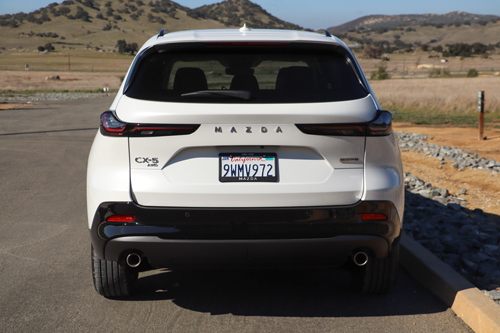
2026 Mazda CX-5
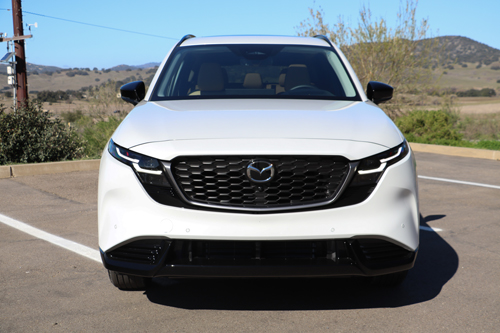
2026 Mazda CX-5
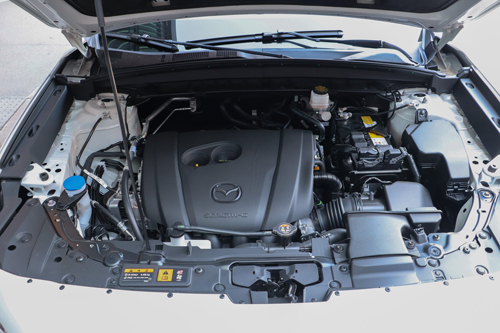
2026 Mazda CX-5
2026 Mazda CX-5
Other than that, the display can be customized so that your most oft used apps can be on your homepage. That’s all good, because having to navigate through multiple menus to, say, access your media is a pain. At that size, though, the display really does dominate the interior proceedings, Tesla-style. At least they’ve mounted it low enough so as not to obstruct your view forwards.
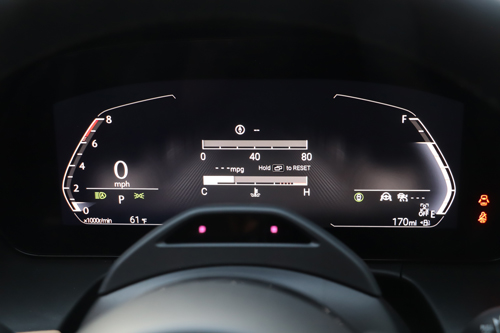
Other interior adds include more comfortable front seats – that’s a big plus – full-digital gauge cluster that changes a little when you change drive modes and a more functional steering wheel whose hub gets “MAZDA” scripting that reflects what’s seen on the tailgate. It’s also more functional than previous because along with the MMI controller and volume knob, the drive mode toggle is also gone from its old spot atop the transmission tunnel. It’s now controlled via wheel-mounted button, as is lane-keep assist, cruise control and audio source but curiously, not the heated steering wheel. To activate that, we once again have to turn to the central display. Or use a voice command, which is something Mazda expects users to do for a lot of this stuff, but I’m just not so sure on that.
2026 Mazda CX-5
2026 Mazda CX-5
2026 Mazda CX-5
2026 Mazda CX-5
2026 Mazda CX-5
2026 Mazda CX-5
It’s all quite the paradigm shift as Mazda has been pretty steadfast in its refusal to ask users to rely too much on a central display, even as so much of the industry started to move that way. They will say that people are so “involved” with their phone/Siri/Hey Google etc. that this is a natural extension of that – and that may be true – but there’s also a definite price advantage. Digital displays are much less expensive to deal with than a cornucopia of knobs, dials and tach needles and Mazda is a small company that needs to squeeze more out of their dollar, and this is one way to do that.
Another example of a concerted tweak as opposed to a full-scale re-do is the chassis. The platform is almost the same as previous – same suspension mounting points, same assembly line in Hiroshima, Japan, the birthplace of every CX-5 – but they’ve added more high-tensile steel than previous and have improved the ride not by adding expensive adaptive dampers, but by modifying what they already have.
Most notably, they’ve looked to the MX-5 roadster playbook re-designed the shock absorbers’ pistons and valves to better be able to handle road imperfections without compromising the drive. Mazda has always been about the drive, so why should this new CX-5 be any different? Well, it is different, but in a good way as the ride is vastly improved from previous. There’s much less chassis shudder than before and coupled with more sound-deadening materials, it’s quieter, too. How they’ve done all while hardly adding anything to the curb weight is a mighty impressive feat.
I was also happy to find that even with all that, this ‘26 CX-5 does what the CX-5 has always done – have you feeling like you’re piloting a car more than a crossover. The seating position, steering wheel angle and view forwards start the proceedings, while the steering feel (the steering’s a little lighter for ’26, due to customer demand) and response take the baton the rest of the way. I wouldn’t go so far as to say you’d be right to swap the “C” in “CX-5” for an “M”, but it’s a great drive — the MX-5 of crossovers, if you will.
Except…
Power is rated at 187 horsepower and 186 pound-feet of torque, sent to all four wheels via a traditional six-speed automatic transmission with manual mode and paddle shifters on the top GT Premium trim. Those figures are the exact same as previous for the non-turbocharged version and since that turbo isn’t making a return for ’26, that’s what you get.
2026 Mazda CX-5
2026 Mazda CX-5
2026 Mazda CX-5
2026 Mazda CX-5
2026 Mazda CX-5
2026 Mazda CX-5
Same goes for the transmission – right down to the shift knob — although they have tweaked it to be more “predictive” than previous. What that means is instead of just seeing how much throttle you’re applying and reacting to that, it will also look at how quickly you’re depressing the throttle pedal and use that to help determine what gear you should be in. This improves engine response for high-speed passes on the highway and the like.
That’s all good, but for the first time in a non-turbo’d CX-5, I had a hard time shaking the feeling that it would be nice to push into the 210-220 hp 200 lb-ft brackets. Maybe it was the canyon roads I was on, maybe the fact that all the CUVs I’ve recently driven – the Honda CR-V, the now hybrid-only Toyota RAV4, even the smaller Kia Sportage PHEV – all have more power than the CX-5, but I couldn’t shake that feeling of a power deficit, however slight. The CX-5 just seemed to be hunting for gears that much more, and keeping the revs that much higher on climbs to acquire the juice needed to make it all copasetic.
2026 Mazda CX-5
2026 Mazda CX-5
2026 Mazda CX-5
The thing is, most folk looking at one of these probably aren’t going to be overly concerned about that. They don’t drive as many cars as I do, for as long as I do at any given time and we as car writers always have to take that into account. Most CX-5 buyers are going to go with the ’26 because it still looks phenomenal, handles like very few others – perhaps no others – in the segment and is now more comfortable overall.
Plus, come 2027, Mazda will be releasing a CX-5 hybrid with an all-new hybrid system developed in-house, as opposed to the Toyota system Mazda borrowed for the CX-50 hybrid last year. There will likely be more power there and details on that new system are scarce but if Mazda’s able to deliver a turbo hybrid system like I had in that Sportage PHEV, well, now we’re talking.