


This review was originally featured in the print edition of Vicarious Magazine and now appears here for our online audience.
The ancient port city of Valencia and the surrounding Spanish Mediterranean coastline was hit by deadly flooding late last year. Powerful floodwaters crushed countless cars, drowned buildings and ruined livelihoods. The city centre was relatively unscathed, but driving out of Valencia on the highway in January, a few weeks after the devastation, dirt and detritus are still piled high. Roads have been entirely erased, including the usual entrance to the Circuit Ricardo Tormo where Porsche is launching the thoroughly revised new 2025 911 GT3.
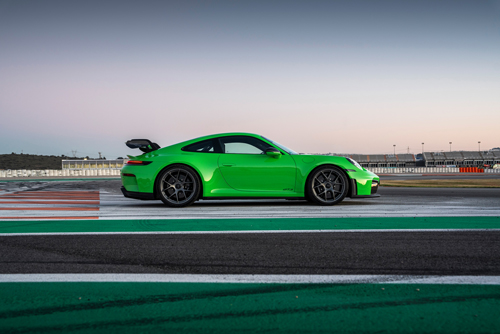
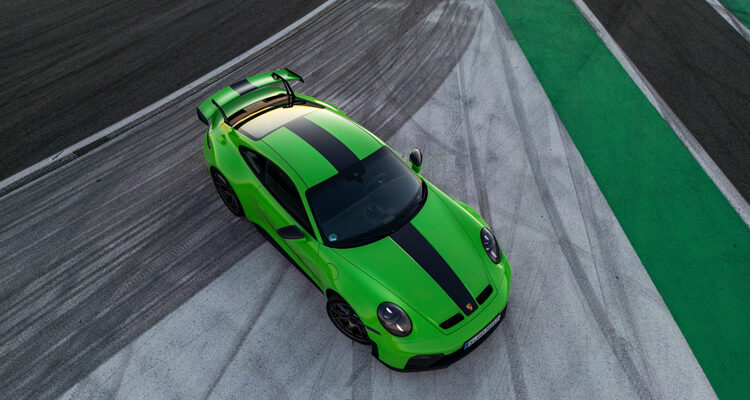
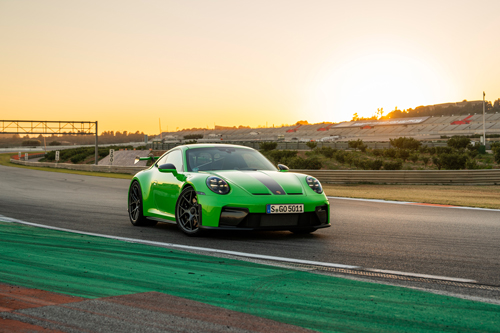
The irony is not lost on me as I climb into Porsche’s new gas-burning GT3, a symbol of old-school internal-combustion decadence. Its 4.0-litre engine barks to life and then howls towards its 9,000 rpm redline before the first turn at Ricardo Tormo. Turning into the fast, sweeping left-hander the car brims with feel — so good is the steering you can almost derive the texture of the road — but for 2025 there’s a newfound sense of balance and approachability to the car. It’s less twitchy on turn-in, and slips more gently into under- or overrsteer. Mid-corner it’s infinitely adjustable on the throttle, with each input bringing a predictable and measured output. Unlike the brutish new Aston Martin Vantage, the delicate Porsche feels less muscular but more precise. Rather than pulling lurid powerslides out of every bend, the GT3 seems most comfortable right on the edge between grip and oversteer. Maybe it’s the retuned power steering or the Michelin Cup 2 tires, but the newest GT3 is an absolute peach. This is Porsche’s GT division at its finest — and perhaps one of its last pure, unfiltered creations.
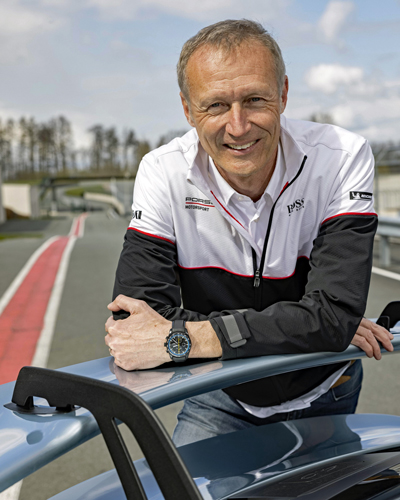
Behind this mechanical symphony stands Andreas Preuninger, approaching his 60th birthday and facing what might be the twilight of an era. He’s lanky, with grey hair and a wry smile.
The new GT3, known internally as the 992.2-gen model, an overhaul of the 992.1 launched in 2021, is the 27th new car Preuninger has overseen during his tenure as the head of Porsche’s GT division. His first car was the 2003 911 GT3.
“They call me The Pope of GT Cars, which is funny,” he says. Indeed, there is a religious fervor to his followers, those devoted fans of Porsche’s pure combustion-engine, stick-shift, naturally-aspirated GT cars.
“Without turbocharging or without electrification, this [992.2 GT3] could be the last one,” Preuninger says. When we spoke in Spain, he was waiting to hear the details of the upcoming EU7 emissions regulations, which loom large over the GT division’s naturally-aspirated future.
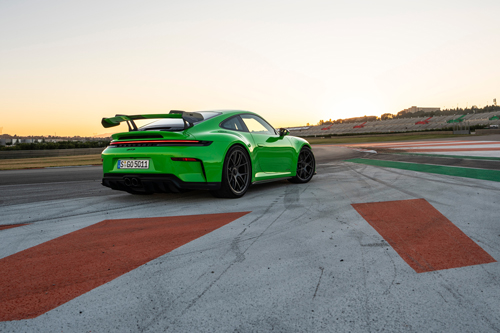
Already though compromise has crept in. Getting the revised 2025 GT3 to pass global emissions rules meant adding two more catalytic converters, upgrading the engine’s cooling system, and optimizing the air intake. The extra cats, in particular, add weight, which is a problem for a lithe sports car like the GT3.
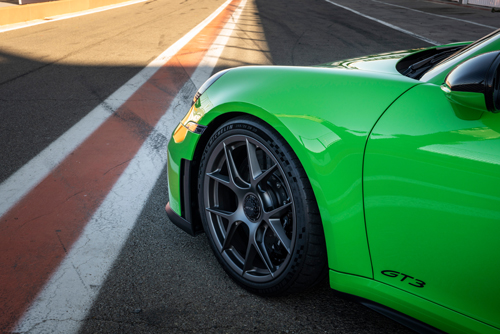
“Frankly speaking we are not so happy with this necessity, but it’s unavoidable,” says Jörg Jünger, manager of Porsche’s GT model line.
And all of that extra work only kept the engine at its previous output, 502 horsepower, with torque dropping slightly to 331 pound-feet.
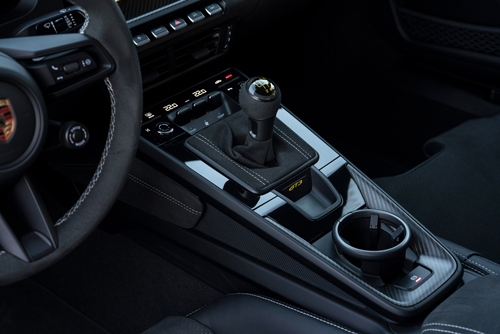
Other changes for the 992.2 GT3 include major quality-of-life improvements, because, as Preuninger explains, more and more customers are using these cars on a daily basis. To that end, the GT3 can now be optioned with rear seats. And new shorter gear ratios are better suited to driving on the road where top-speed is of no concern.
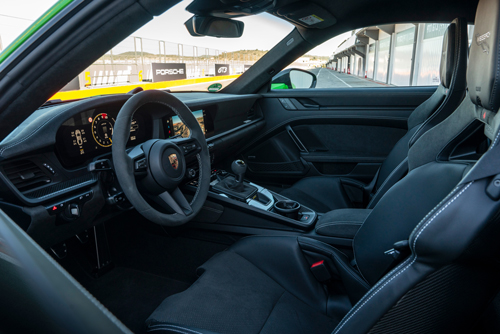
More importantly, however, Preuninger’s team has finally addressed the GT3’s notoriously stiff and punishing ride. It always seemed needlessly rigid, given the fact Porsche has the GT3 RS to satisfy the dedicated track rats and Walter Röhrl wannabes. Despite that, the regular GT3 was a chore to drive around the city. By the time you made it out to any good roads, you’d need a break just to stretch and recuperate.
“We wanted it,” Preuninger says of the new car’s softer suspension. “Mostly the streets are not so good, so the car has to be compliant with road conditions that are suboptimal,” he explains. To do that, his team took lessons learned from the street-focused limited-edition 911 S/T; they increased the effective spring travel by shortening the bump stops, fitted next-generation electronic dampers and reprogrammed the software for added compliance.
On the hillside roads west of Valencia, the result is a car that’s noticeably more forgiving, even at low speed. It is, dare I say, actually comfortable. (Or, at least comfortable by the standards of serious sports cars.) With better bump absorption there’s less head-tossing over rough patches, and noticeably more cushion and bounce to soak up speed bumps and potholes.
So far, so good, but the 2025 GT3 is not perfect. For one thing, ditching the analog instrument gauges in favour of a digital display feels like a downgrade. For another thing, the 4.0-litre engine doesn’t sound quite as spine-tingling as I remember. It’s loud, yes, but some character has somehow been lost, perhaps on account of the extra catalytic converts.
For 2025, the GT3 costs an eye-watering $245,300 CDN. Add the forged magnesium wheels ($19,000) and the Lightweight Package ($41,090) or any of the hundreds of other optional extras and the price quickly climbs north of $320,000. Ouch.
When pressed about the price jump, Preuninger points to broader market forces: “Everything gets more expensive: energy, parts,” he says, before drawing a telling comparison. “Try to buy a Rolex Daytona. It’s 17 percent more than last year, and it’s basically the same thing,” he says.
It’s a fitting analogy for what the GT3 has become: not just a car, but a status symbol and a signifier of taste, a kind of mechanical devotional object. Preuninger has created something between a sports car and a religion. The question now is whether his gospel of naturally-aspirated engines and pure driver engagement can (or should?) survive in a world that’s increasingly either flooded or on fire.
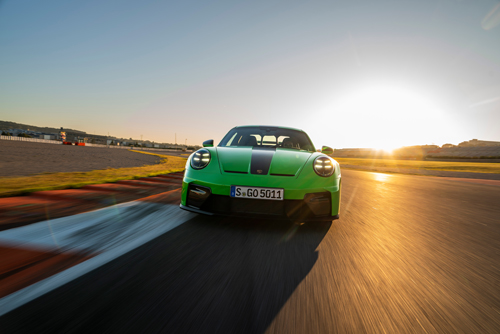
2025 Porsche 911 GT3
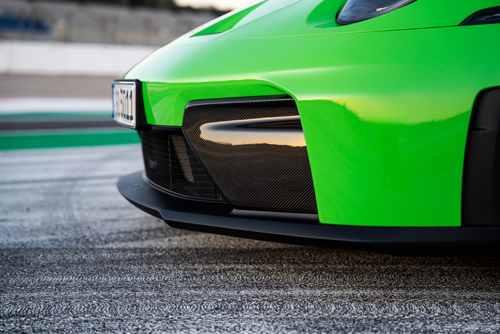
2025 Porsche 911 GT3
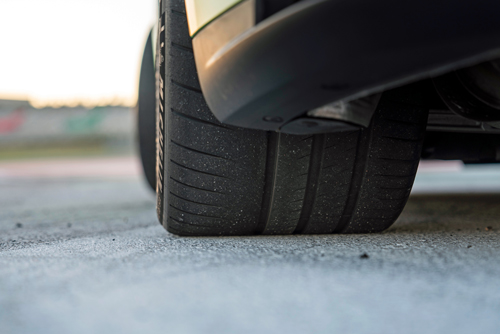
2025 Porsche 911 GT3
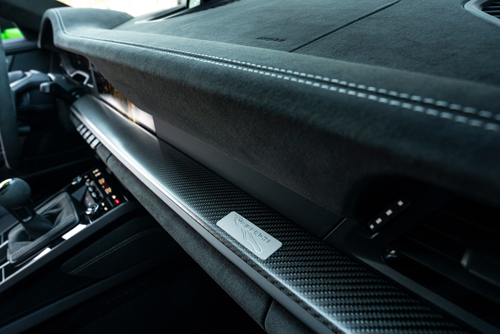
2025 Porsche 911 GT3
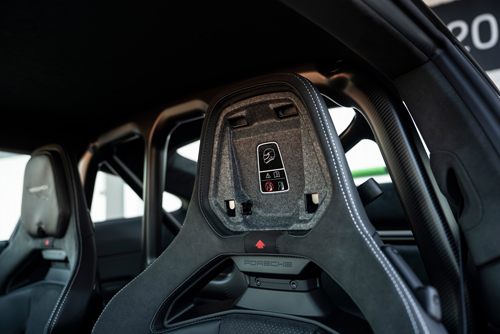
2025 Porsche 911 GT3
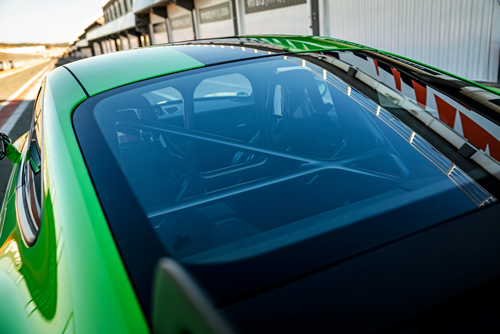
2025 Porsche 911 GT3
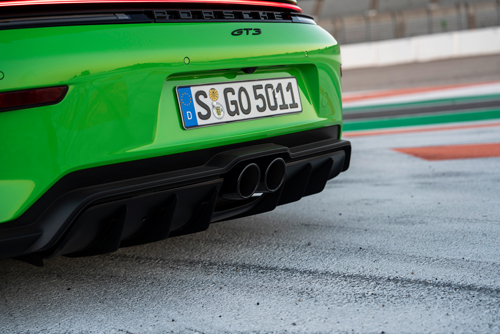
2025 Porsche 911 GT3
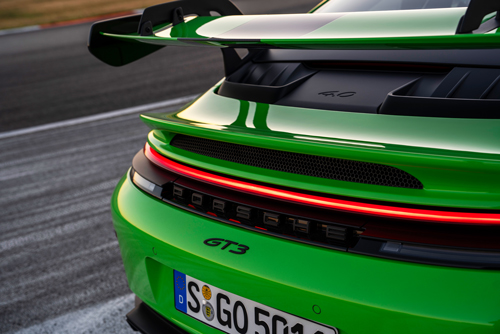
2025 Porsche 911 GT3
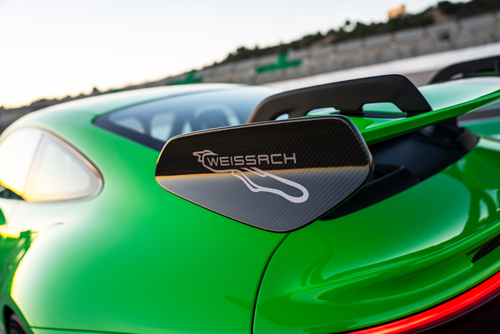
2025 Porsche 911 GT3