


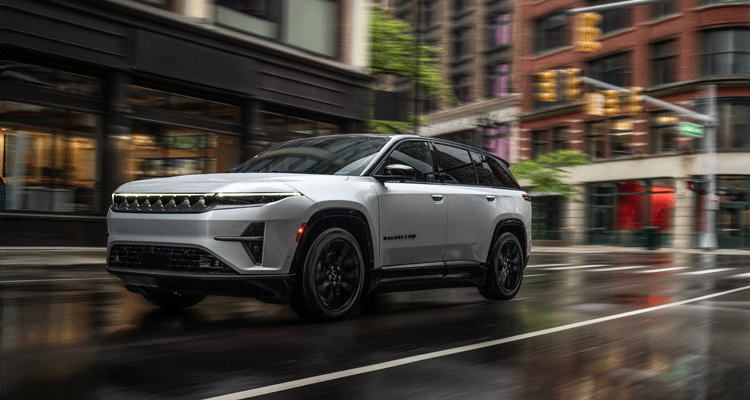
The Jeep Wagoneer S, an electric midsize SUV not to be confused with the larger, gas-only Wagoneer, is the brand’s first fully electrified vehicle. It arrives at a time when the popularity of EVs appears to be at a critical juncture, with government incentives drying up and some automakers pulling back from battery-electric development.
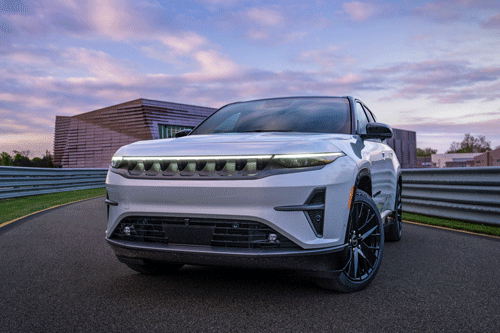
We recently tested the 2025 Wagoneer S Premium, the higher of only two trims offered (Limited being the other). Stellantis tells us that the 2026 model will see very little change, with updated models arriving in showrooms at a later date.
The Premium trim also carries a premium price, with an as-tested cost of $95,485, a steep price to pay for a Jeep.
It does, however, come with elevated features such as a 19-speaker high-performance McIntosh audio system, 20-inch painted aluminum wheels, ambient lighting colour control, power front passenger seatback massage, a front trunk (frunk), front ventilated seats, second-row heated and ventilated seats, a suede headliner, and titanium exterior accent pieces.
Our tester was equipped with the optional red leather seats ($1,000) and the $2,000 Luxury Group, which adds a head-up display, tonneau cover, front passenger interactive display, and more.
Powertrain: The Wagoneer S uses a dual-motor setup, enabling all-wheel drive. Output is substantial, with 600 horsepower and 617 pound-feet of torque — more than enough for a midsize SUV.
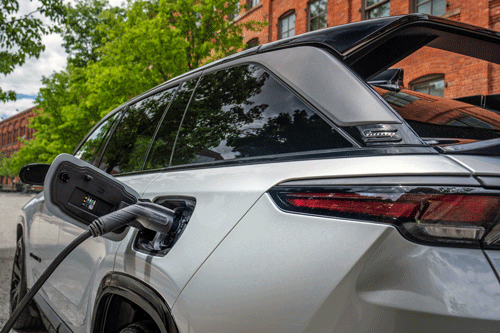
The 100.5 kWh battery delivers an estimated range of 473 kilometres. My week with the vehicle coincided with very cold weather, and I found that both range and battery percentage dropped more quickly than expected under normal conditions.
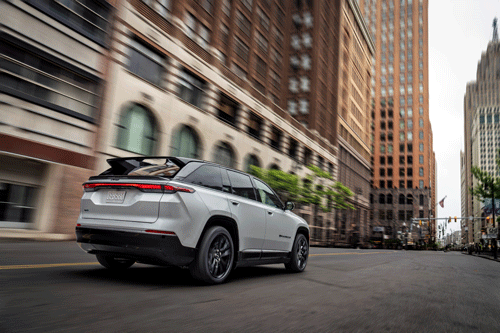
Exterior: The Wagoneer S Premium stands out thanks to titanium trim pieces around the upper grille, rear fascia, and other exterior accents. All exterior colours are designed to offer a striking contrast with the black roof, mirrors, and other exterior elements.
Up front is a modernized, streamlined interpretation of Jeep’s signature grille, illuminated for added presence at night. Overall, the design is clean and contemporary, though the sharply sloped rear glass does cut into cargo space somewhat.
Interior: Unlike the larger Wagoneer, the Wagoneer S does not offer a third row and seats up to five occupants. The Neo Ultra leatherette seating was comfortable overall, though I would likely choose black over the red option.
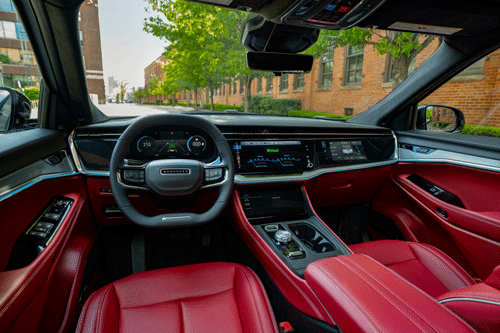
The cabin features a very modern design, with soft-touch controls for most functions. While visually appealing, this becomes a bit of a drawback in winter, as I frequently had to remove my gloves to perform simple tasks like activating the heated seats or steering wheel.
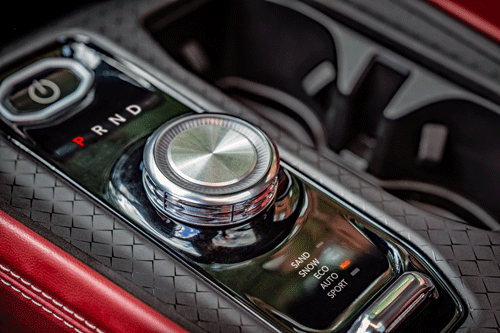
The flat-top and flat-bottom steering wheel adds a sporty touch, and a large dual-pane panoramic sunroof brightens the cabin. The gear selector is a rotary dial on the centre console, with the drive-mode selector positioned just behind it.
Infotainment: The dashboard is dominated by a 12.3-inch touchscreen running the excellent Uconnect 5 system. It’s intuitive and responsive, offering navigation, satellite radio, wireless device connectivity, and wireless charging.
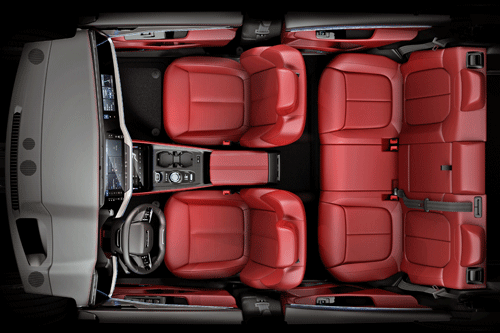
As with other applications of this system, it proved easy to use and well executed, even without many physical buttons.
Drive: The Wagoneer S delivers strong acceleration when pushed, with genuinely quick bursts of speed. Handling remains composed, even in snowy conditions, thanks to the all-wheel drive system keeping everything pointed straight.
Steering feel and suspension tuning combine to deliver a generally smooth ride. Drive modes include Auto, Sport, Eco, Snow, and Sand, allowing the powertrain to adapt to varying conditions.
My only real concern was how significantly cold temperatures appeared to impact real-world driving range.
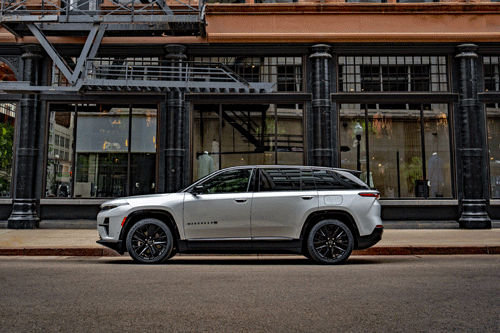
2025 Jeep Wagoneer S Premium
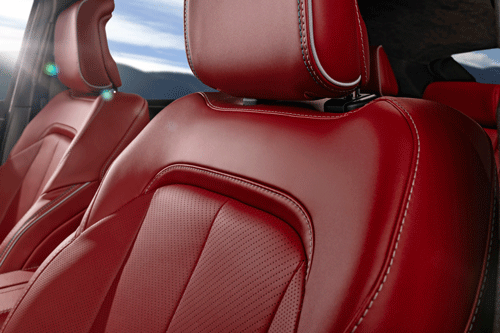
2025 Jeep Wagoneer S Premium
2025 Jeep Wagoneer S Premium
Conclusion: The Jeep Wagoneer S represents a solid first step into the battery-electric space for the brand. It looks the part, offers modern tech, and drives well. That said, the Premium trim’s pricing may give buyers pause, particularly as government incentives continue to decline, and could send some shoppers looking elsewhere.
Quick Specs: 2025 Jeep Wagoneer S Premium
Price as Tested: $95,485 (CAD)
Freight: $2,695
Configuration: Dual electric motors / All-wheel drive
Output: 600 horsepower
Torque: 617 pound-feet of torque
Battery Capacity: 100.5 kWh
Estimated Range: 473 kilometres
Warranty: 3 years / 60,000 km (basic)
Website: Jeep Canada
Fun Fact: Despite wearing the Wagoneer name, the Wagoneer S rides on Stellantis’ STLA Large electric platform, not the body-on-frame architecture used by the traditional gas-powered Wagoneer and Grand Wagoneer.
Rivals: Premium Electric SUVs Worth Considering
Why it matters: The Lyriq brings a sophisticated, tech-forward luxury experience and strong electric performance to the midsize EV segment. It offers premium materials, advanced driver assists, and competitive range, making it compelling for buyers considering the Wagoneer S Premium from a luxury EV angle.
Why it matters: As Hyundai’s three-row EV flagship, the IONIQ 9 targets buyers who want both size and electric range, with seven-passenger seating, ample interior space, and a substantial battery pack. It’s a logical alternative to the Wagoneer S for families or shoppers prioritizing room and efficiency in a zero-emission SUV package.
Why it matters: With its available third row and very competitive range numbers, the EV9 continues to be a strong contender in this class. It blends practicality, technology, and electric performance, making it a sensible comparison for shoppers weighing options against the Wagoneer S.
Rivals Takeaway: The Wagoneer S Premium holds its own with power and premium touches, but these rivals extend the competitive set by offering larger passenger capacity, family-friendly layouts, refined luxury cues, or relative value in the EV space. Each has its own strengths, from the Lyriq’s luxury positioning to the IONIQ 9’s spaciousness and the EV9’s balanced practicality, giving buyers slightly different interpretations of what a full-battery SUV can be.