


Editor’s note: This interview was first published in Vicarious magazine and has been adapted for vicariousmag.com.
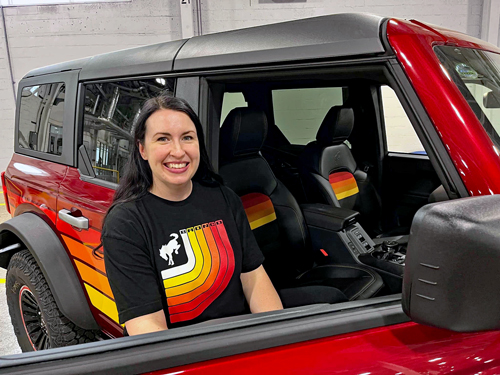
Kristen Keenan: Colour + Material Designer at Ford Motor Company
From the fast-paced world of athletic wear at Nike to the refined interiors of Ford vehicles, Kristen Keenan has built a career on shaping how people connect with the products they love. Her work explores the intersection of colour, texture, and emotion, whether it’s a sneaker designed for performance or an automotive interior crafted for everyday journeys. In this exclusive Vicarious conversation, presented here in an abbreviated form for storytelling purposes, Keenan reflects on her design philosophy, her inspirations, and the delicate balance of creativity and functionality that defines her role at Ford.
Vicarious: You’ve transitioned from designing for performance and lifestyle at Nike to shaping the sensory experience inside Ford vehicles, how has your design philosophy evolved across these two worlds?
Kristen: I like to think of what I do as Fashion Design for products. My training in Apparel Design was extremely influential to me and has given me a unique point of view to apply while designing colours, materials and finishes regardless of the type of product. That foundation has made it feel natural to work across industries like footwear, automotive, and consumer electronics during my career. Nonetheless, each industry I have worked in has given me additional perspectives and experiences that I can apply to future projects.
V: Colour and material choices can evoke powerful emotional responses. What inspires your palette selections, and how do you strike the balance between trend-forward and timeless?
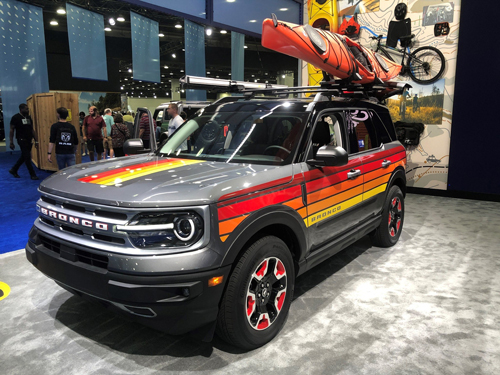
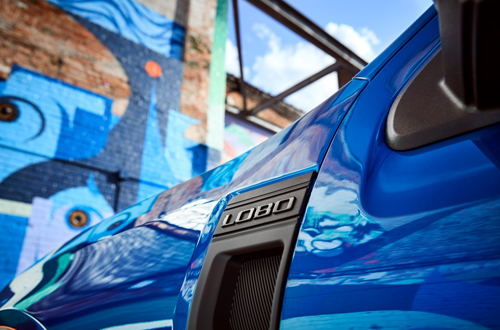
K: Seeing the world through a lens of colour, materials and finishes means that inspiration comes at me from all angles. I find myself taking reference images often in daily life or while traveling- it could be a striking colour combination out in the wild, or patterns and textures I see passing by. When I began ideating on the Maverick Lobo, I mentally went back to a trip to New York City. I saw some amazing colour combinations and textures in a graffiti park in Queens, and was so excited to incorporate that inspiration while brainstorming for the interior. We are surrounded by unbelievable inspiration- we just have to keep our eyes open and notice the details.
Striking the balance between trend forward and timeless design is an interesting challenge. In addition to considering the intended audience, I like to think of how often the product will be used, and I consider the overall lifespan of the item while brainstorming. It is essential to incorporate trends into all products in some fashion – the ratio, or one could say intensity, of the colour or trend will fluctuate depending on those factors.
V: How do you approach collaboration with engineering and manufacturing teams to ensure your design intent is preserved without compromising functionality?
K: It isn’t always easy to get design concepts into manufacturable products, but I have a deep passion for the challenge. One of my favourite parts of the design process is the long and intense journey taking a concept from the ideation phase into production, it is a specialty of mine. As a colour and materials designer, I work to gain a deep understanding of the manufacturing processes of the product I am designing; the materials themselves, the components, and the finished product. Secondly, I make sure that I am working extremely closely with internal engineers and external suppliers from the earliest point possible. Discussing ideas and concepts with them, showing early mockups and samples that I have either made myself or made by partnering with our talented internal fabricators in our design shops. Listening and collaborating to understand any concerns from engineering, manufacturing, and suppliers, and pushing back or working through things together to find ways to deliver design intent, no matter the obstacles. These journeys have probably taken years off of my life, but I have a pristine track record on achieving design intent on the assembly line, and I am very proud of that!
V: Can you walk us through a recent project at Ford where you pushed the envelope in material innovation or sustainability?
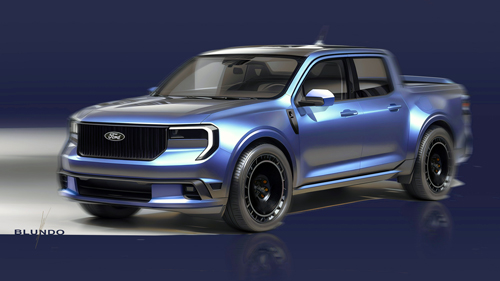
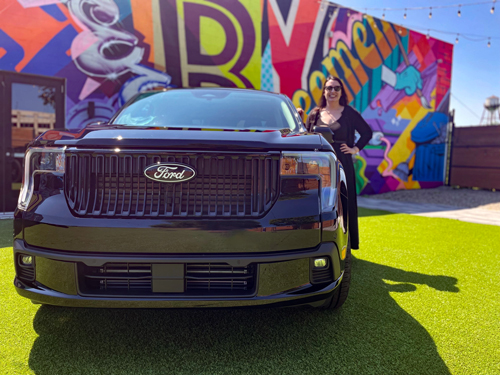
K: My work on the Maverick Lobo pushes the boundaries by introducing colour combinations and layered textures in a way that hasn’t been done in the automotive space before. It was very exciting to bring the vibrancy often seen in footwear or streetwear into an automotive interior.
V: Interior spaces in vehicles have become more personal than ever. How do you design for emotion, comfort, and individuality in a mass-produced product?
K: Emotion is such an essential element to consider as a designer. I love to figure out what makes something irresistible. I also love to consider how the feel of touchpoints in the interior can soothe or calm… or even excite! For individuality, I think it is very important to have a neutral overall interior environment colour. This not only sets the stage for any colour accents to stand out- it also makes it easy for individual accents to be added seamlessly by the customer.
V: What feedback do you most value from customers when it comes to the materials and colours you’ve chosen?
K: I love the opportunity to bring early concepts to market research sessions. It is so beneficial to see how a colour, material or finish clicks with potential customers. This may sound strange, but the body language, tone of voice, or even the sound effects that attendees make when they see a colour sample or feel a material is so telling, and incredibly interesting to observe. It says so much about the potential emotional connection, which is very important to me.
V: Looking ahead, what emerging trends or technologies in material design are you most excited about bringing into the automotive space?
K: While we don’t speculate on future product, I can say that I’m personally working on some extremely exciting projects that I cannot wait to share with the world! Let’s talk again sometime next year.
V: Your background at Nike likely required fast-paced, trend-aware decision-making. What lessons from the athletic wear industry have served you best at Ford?
K: Nike is excellent at storytelling through design. I gained so much experience in using narratives to inspire and visually communicate design themes both internally, and through the finished product. That has been extremely helpful to me during my time at Ford.
V: What advice would you give to young designers hoping to work in the automotive industry, especially in roles focused on color and material innovation?
K: It is so important to allow yourself to explore any and every creative impulse that you have – both personally and educationally. You will start to see during your career that it is all connected. An interest in film, photography or art direction will help you visualize how your designs could capture a feeling or emotion to be presented during a launch, which can serve as a huge inspiration. Figure drawing or sculpting, even if it seems far from product sketching, will only help you improve how you explore form. I call it creative cross pollination, and It will undoubtedly add to your ability as a designer by expanding the way you think about inspiration, ideation and design.
Website: Ford Canada