


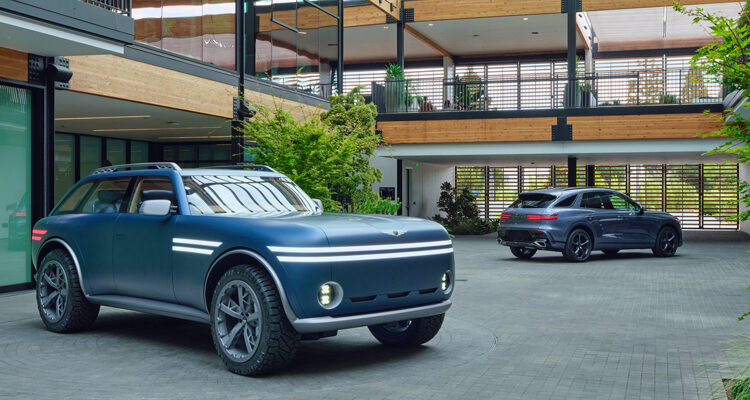
The 45 vehicle designers at the new Genesis Design Studio in El Segundo, California, have a unique and beautiful environment to inspire their creativity.
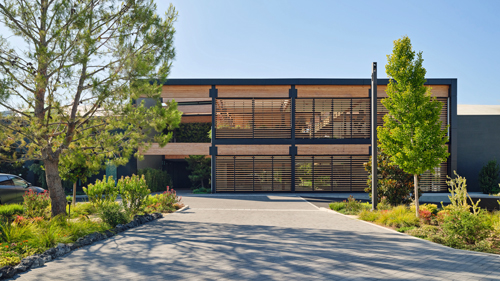
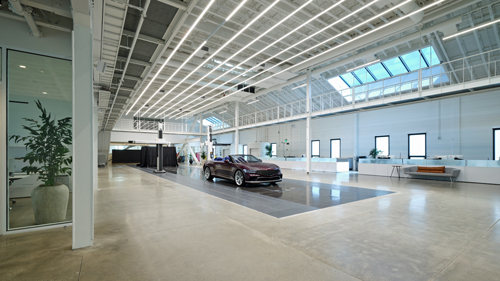
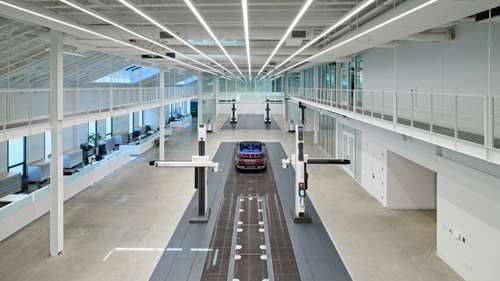
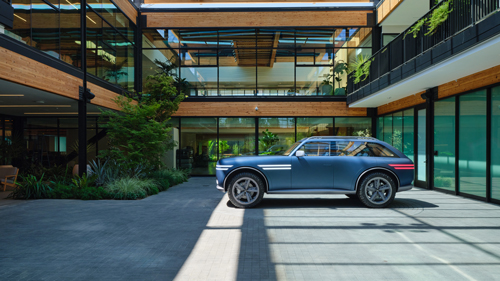
Thanks to the mild California climate, the 80,000-square-foot building is largely open to the air and designed to let in the light. A massive sliding glass roof shields the heart of the building — a calm, plant-filled atrium modelled after a Korean garden. It’s equipped with two vehicle turntables where designers and engineers alike can analyze the lines and appearance of models being developed under different light conditions.
“This place had to reflect one of our main characteristics, which is if we want to treat our customers as honoured guests — as son-nim in Korean — we cannot neglect the life and comfort of our designers. This is why it was very important to find a place where they would feel inspired to work,” said Luc Donckerwolke, Chief Creative Officer of Genesis.
Genesis Design Studio
Genesis Design Studio
Genesis Design Studio
The facility opened against the backdrop of Genesis celebrating its 10th anniversary. It is part of a program to modernize the company’s manufacturing capabilities in North America, said José Muñoz, President and CEO of Genesis. To that end, the manufacturer’s parent, Hyundai Motor Company, is making a US$26-billion investment over the next four years in plants and technology, with the intention of having 80 percent of the product sold on the continent made here.
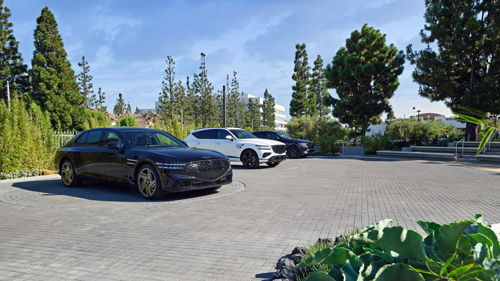
“As a young brand, only 10 years old, to have this level of investment is quite telling of how well the brand has done in its very short 10 years. The United States is the fastest-growing market for Genesis in the world. And the investment in this design studio really signifies the importance of this market,” said Tedros Mengiste, Chief Operating Officer at Genesis Motor North America.
The design centre is the third of three the Korean carmaker has established around the globe, with the others located in Seoul, Korea, and Frankfurt, Germany. The designers in all three places work together and as separate teams to bring new models to market. They compete to present new concepts to Genesis leadership in Seoul, while the winning ideas are refined collaboratively among all teams.
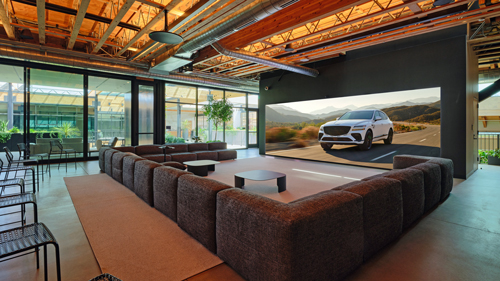
With the design teams separated by continents and time zones, the process of bringing vehicles to market never stops. It’s a 24/7 operation where a challenge or idea can be picked up by one studio’s designers when the workday ends for another. “We are completely connecting all the studios,” Donckerwolke said.
It’s common for the principals at each facility to consult one another, asking other teams to weigh in on an idea or solution to a problem. “We work in competition, but at the same time, we work synchronized and connected. At the end of the day, it doesn’t matter where the design came from as long as the best design is picked. That’s what we all know. That’s where the collaboration comes in because we work together to ensure that we challenge one another enough to get to the best design,” he said.
Genesis Design Studio
Genesis Design Studio
Genesis Design Studio
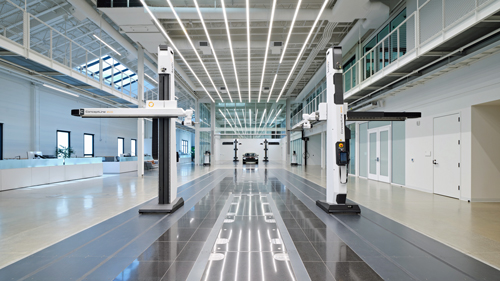
The process is also aided by new digital technologies that speed up workflow. At the core of the facility is the ‘glass box,’ home to the clay modelling and 3D printing workshop. It’s a long, light-filled hall with high ceilings, focused around four five-axis milling machines used to create and refine clay mockups of new vehicle models.
Manager David Briggs explained how these digitally driven machines simplify and accelerate design by allowing engineers and designers to collaborate remotely. He also noted that the back-breaking labour of manually shaping clay models has been replaced by the milling machines. “It’s not less work,” he said. “It’s just different — and more conceptual now. We can focus on details rather than our sore backs.”
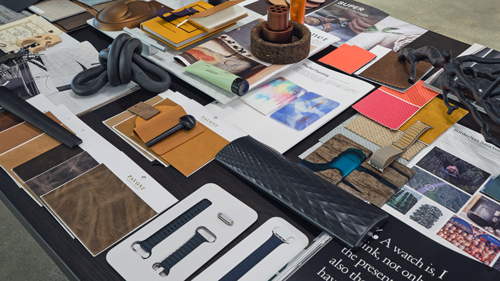
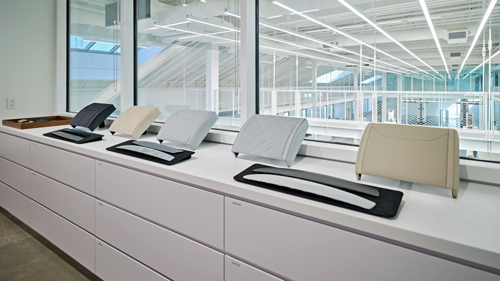
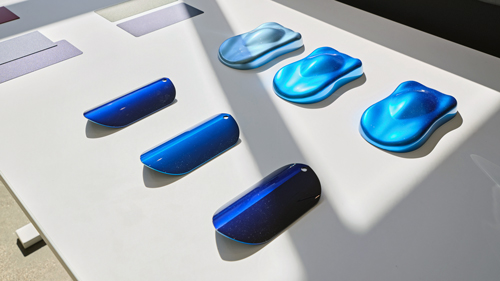
The facility also includes a Colours, Materials and Fabrics (CMF) lab where designers can gather inspiration from almost anywhere. Their work remains highly analogue, with giant bulletin boards covered in images, fabric swatches and sticky notes. A long table groans under the weight of rocks, wood, sculptures, leather samples, painted objects, and dozens of other items that might inspire a notion that ends up in a Genesis vehicle.
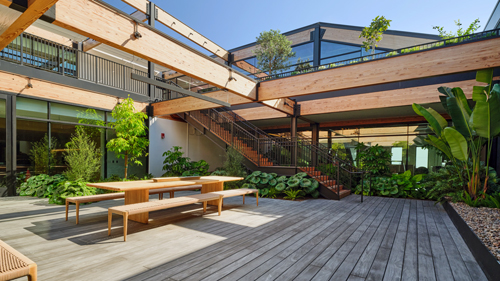
The design team began working out of the facility earlier in the year, with the official opening held on October 9, 2025. So far, it’s been a popular move, said Senior Chief Designer John Krsteski. “It’s rare that you can be pissed off on the [Highway] 405 in traffic and then come into the studio and immediately change your mood because of the environment. It really captures the essence of what California is about — inside and outside,” he said.