


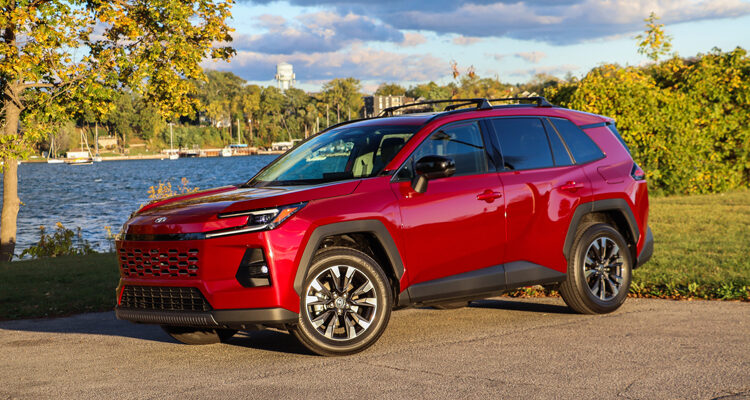
Niagara-on-the-lake, ON — The Toyota RAV4 is a pioneer. Likely no one could have predicted it then, but when it first arrived in North America for the 1996 model year after serving duty in Japan for two years, Toyota’s “Recreational Active Vehicle with 4-wheel-drive” signaled the beginning of an era that continues to this day: that of the compact crossover. To this day, the segment is the most popular in terms of sales in Canada and the RAV – oh, the RAV – leads the pack. In 2024, it outsold its nearest competitor in Canada (where every RAV Hybrid sold in this country is going to be built going forward) by about 20,000 units.
Make no mistake about it; the RAV4 is established in the automotive canon so needless to say that when a new one comes out it’s a red-letter day – and they best not mess it up.
With that in mind, we made our way to the beautiful Niagara Falls region in Ontario to put the all-new 2026 RAV4 through its paces.
For its sixth generation, there’s new styling and new features of course but the big news is twofold: every RAV4 sold in Canada across all 11 trims (starting and LE, moving up through XLE, XSE and Limited and adding new models like Woodland and GR Sport – pricing to be announced at a later date) will have AWD and a hybrid powertrain, either of the more traditional HEV variety (gas engine, minimal EV help and the only one that we’ve driven so far) or PHEV (gas engine and the ability to plug-in and drive in full EV mode for long stretches). It’s a very compelling one-two punch that Canadians will love – but will delve further into that in a minute.
First, the styling.
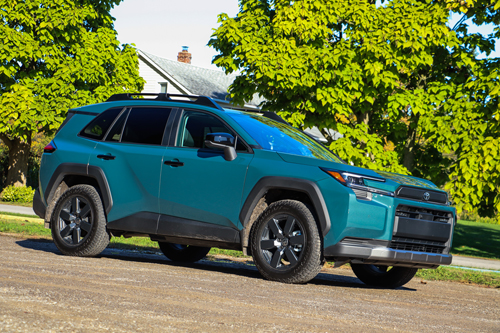
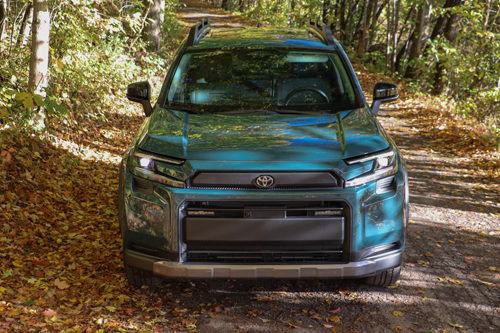
There’s a bit to unpack here in that for ’26, the RAV4 has been broken into three groups: Core, Woodland, and GR Sport. They all have specific styling properties to differentiate themselves from one another: Woodland gets standard all-terrain tires and wheels plus extra exterior cladding, the GR Sport (PHEV only) gets special paint and wider front and rear tracks. The Core, however, is a different story. Within the Core family you have a number of trims that get styling tweaks, different feature sets but all with HEV power except the XSE, which can be had with either HEV or PEHV and is the only model in the line-up with that choice.
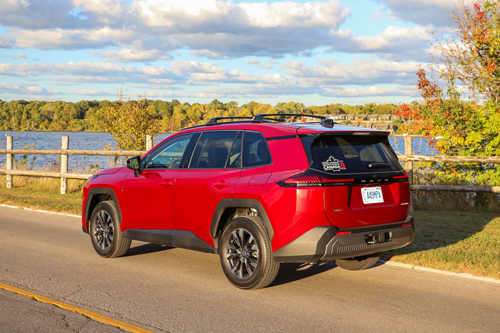
We spent most of our drive in the Limited; its 18-inch two-tone wheels, body-colour grille, and contrast-colour door mirrors help it stand apart from other models and when pricing is announced, it will likely be tied for second on the RAV4 roster with the XSE, and just below the top-of-the-pops GR Sport. It’s the first time, by the way, that we’ve seen a ‘’GR Sport’’ Toyota in North America, which is not quite as performance-committed as your typical GR-without-the-Sport model such as the GR Supra or GR 86. On the macro level, the RAV4 – with its new ‘’Hammerhead’’ front end, side creases and slightly-less-boxed-than-previous wheel arches cuts a subtly muscular look. It’s one that diverges from the chunky lines of the last model, which looks a little trying-too-hard-to-be-a-4Runner by comparison now.
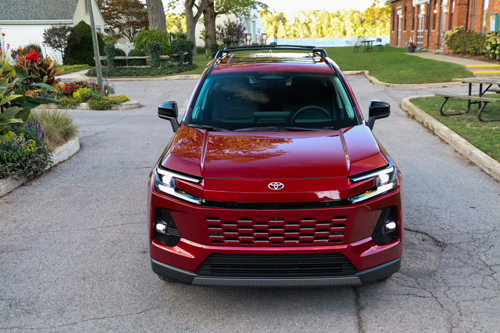
2026 Toyota RAV4 Limited
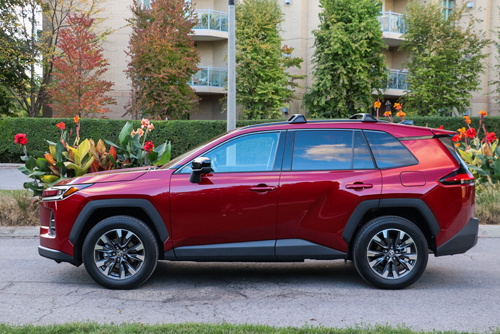
2026 Toyota RAV4 Limited
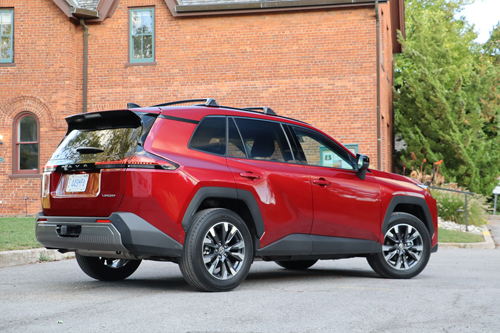
2026 Toyota RAV4 Limited
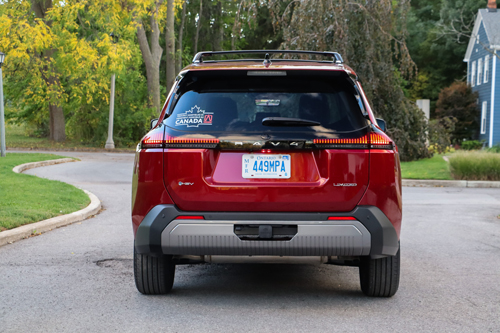
2026 Toyota RAV4 Limited
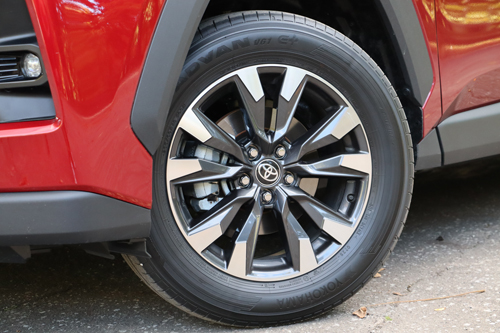
2026 Toyota RAV4 Limited
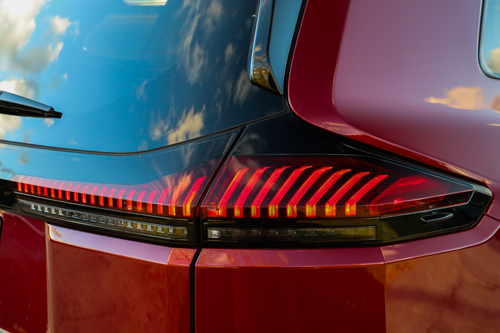
2026 Toyota RAV4 Limited
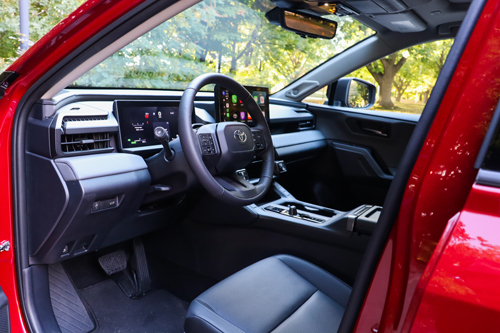
2026 Toyota RAV4 Limited
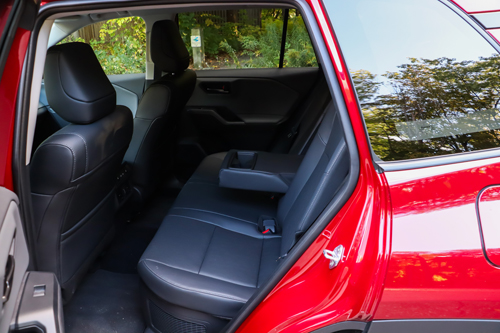
2026 Toyota RAV4 Limited
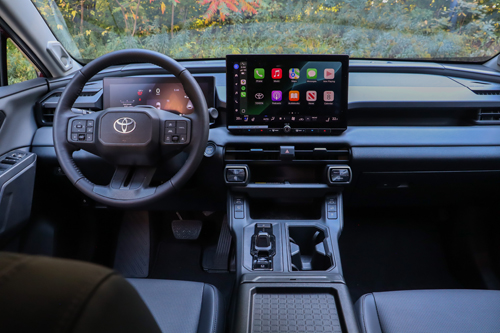
2026 Toyota RAV4 Limited
Inside the Limited is where we really start to see the changes the move to Limited spec includes. Limited models get the larger of two available central infotainment displays (one measuring 10.5’’, one 12.9’’, both larger than what was offered at base last year), a nine-speaker JBL audio system, synthetic leather seating, full-length moonroof and digital rear-view-mirror. That last one is handy because on a compact crossover, the rear window can easily be blocked by tall rear-seat passengers or cargo loads. With a digital rear-view mirror, that’s no longer a problem. Plus, even if you have multiple drivers, you never have to adjust the mirror. Speaking of multiple drivers: there are also dual wireless chargers as well as wireless Apple CarPlay and Android Auto, plus two USB-C ports. Those are mounted to the base of the centre stack, right around the hill-descent control and traction control buttons and below the drive and AWD mode controls that look all chunky and purposeful and easy to access on the move with gloves on. I like that. Another new piece of standard tech are dash cam drive recorders that are on-hand to record any unfortunate on-road incidents you may encounter. With dash cams being all the rage these days, having these mounted out-of-sight and in the car as standard is a great bonus.
Size-wise, the RAV4 has the same length, wheelbase and near-as-makes-no-difference height as previous. That translates to similar interior space, but the lower-mount rear seats means slightly more headroom in back, while larger door openings mean easier entrance and egress and child-seat installation. What has improved, though, is rear cargo space; it’s rated at 1,070 litres with the 60/40 split rear seats up (Toyota hasn’t yet announced seat-down figures; expect it to be in the 2,000 L range), and both the PHEV – with its larger 22.7 kWh battery and HEV get the same. That’s achieved by installing a smaller yet more powerful battery further forward in the chassis to minimize cargo area intrusion. It also allows for a full-flat load floor once they’re down – which is nice.
Power-wise, the HEV is good for 236 horsepower from a 2.5-litre naturally-aspirated four-cylinder coupled with a front 100 kW EV motor and a 40 kW rear EV motor. It’s a nice set-up (just don’t mention that the Hyundai Tucson and Kia Sportage hybrids both get turbo fours with their EV motors – oops, just did) that pairs will with an eCVT transmission to provide confident forward progress; just don’t look for a manual mode, because there’ isn’t one. It sounds a little strange if you really floor it, but that’s probably because the rest of the RAV4 driving experience is just so quiet and refined otherwise. Toyota has focused heavily on reducing noise intrusion through lots of sound deadening (about 90 per cent of the floor is covered in it) plus the new front-end shape for reduced drag and it has worked. Bumps and cracks in the tarmac are gamely swallowed up — especially by the Woodland model with its fatter tires and softer off-road spec suspension – and wind noise is kept comfortably low save for just a little more than I’d like ‘round the wing mirrors, but that’s a bit of a pet peeve of mine.
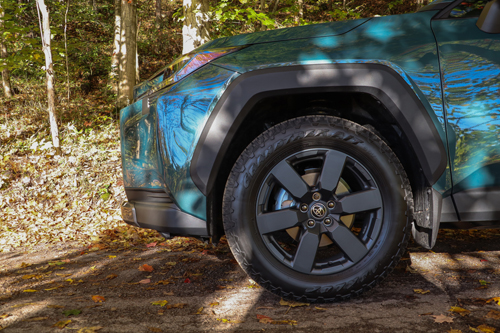
2026 Toyota RAV4 Woodland
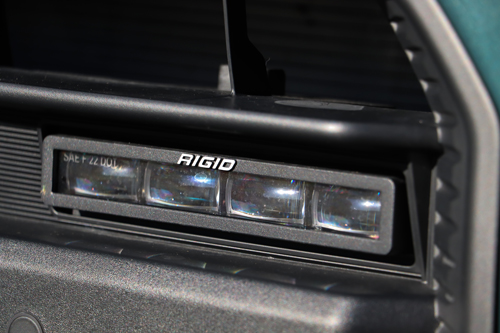
2026 Toyota RAV4 Woodland
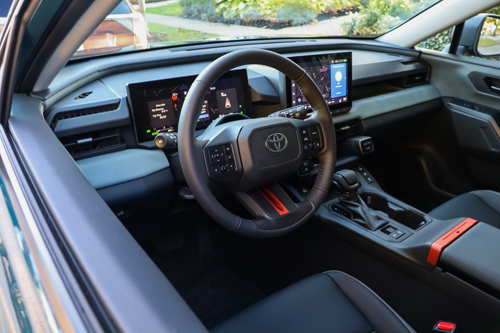
2026 Toyota RAV4 Woodland
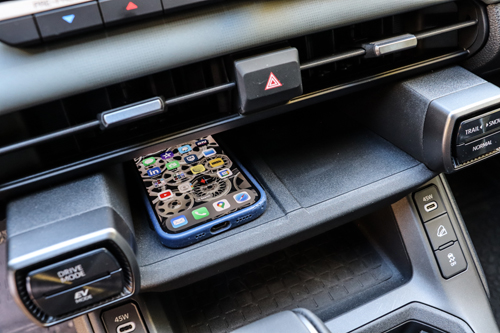
2026 Toyota RAV4 Woodland
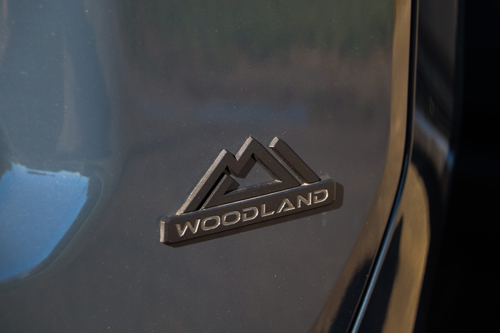
2026 Toyota RAV4 Woodland
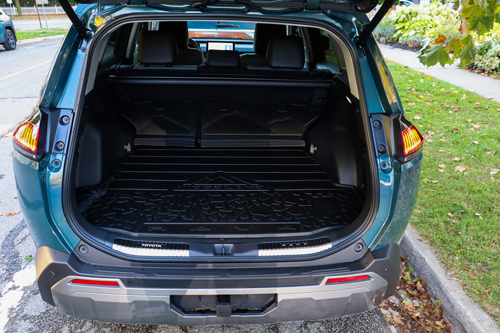
2026 Toyota RAV4 Woodland
The bottom line is the RAV4 ticks the boxes it needs to tick in this segment better than ever before, especially in the ride and occupant comfort departments. Buyers in this segment – the many many millions of them – want a few things: they want to be comfortable, they want features and they want economy. On all of these fronts, the 2026 Toyota RAV4 delivers; Toyota has so far sold 975,000 RAV4s in Canada (a fraction of the 14 million they’ve sold worldwide – but nevermind) since the model’s inception, number 1 million is going to be a hybrid, and it’s not going to be far away.