


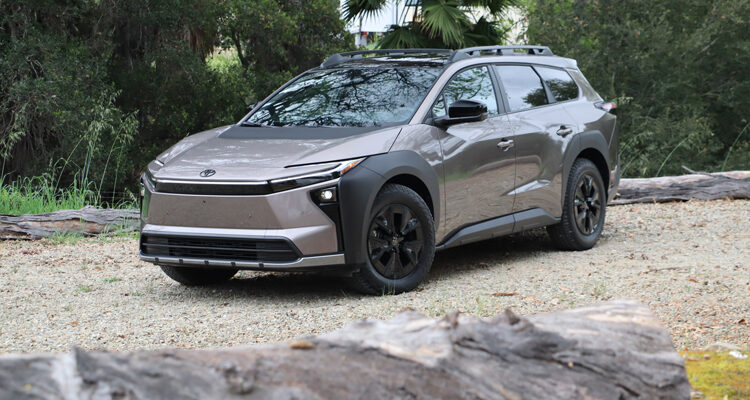
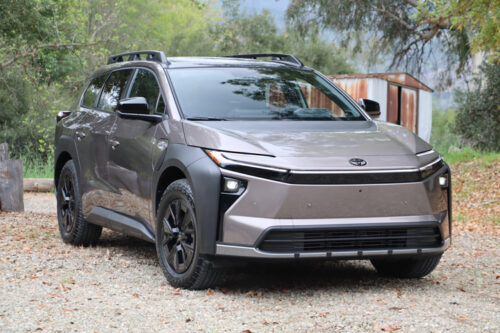
Ojai, CA — Toyota has three- count ‘em, three! – new battery electric vehicles (BEVs) arriving in 2026 – well, two-and-a-half, really, as the bZ is something we’ve seen before but has been heavily redesigned for this year. Either way; it’s an interesting tack for a manufacturer that has been somewhat steadfast in its preference for developing hybrids over BEVs or EVs over the years.
They’re jumping in with both feet now, though, because the bZ Woodland (Woodland having graduated from trim name to full model status) is an EV unlike anything we’ve seen before, really. A two-row, long-roofed station wagon with two 83.5 kilowatt EV motors and up to 450 kilometres of range? That’s quite the rare thing. In fact, in Canada, it’s the only “thing” with this configuration.
While both the bZ and the smaller C-HR are available with either single-motor, front-wheel-drive (FWD) or dual-motor, all-wheel-drive (AWD), the Woodland is available only with the latter. It gets between 418 and 452 km of range depending on configuration with 323 pound-feet of torque to go with its 338 hp. Those are some pretty heady figures, added to which you can charge it on a DC fast charger and go from 10-80 per cent charge in about 30 minutes. To help drivers get the most from their charge, a pair of wheel-mounted paddles allow you to choose from between four levels of power regen.
There’s a further twist: all three of these come with an NACS (read: “Tesla Supercharger”) port as standard and while we don’t have claimed figures on that yet, we expect 10-80 per cent to come in the 20-minute range. Each bZ variant/C-HR sold, meanwhile, comes standard with an adapter so you can plug in to your average DC fast charger from the likes of Electrify Canada, Chargepoint, Flo et. al.
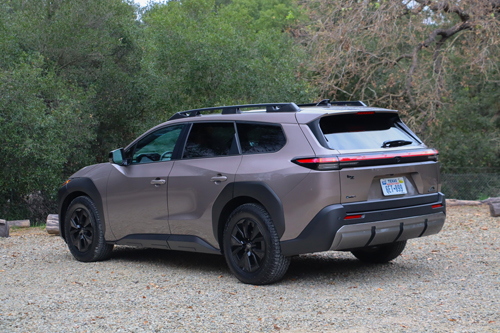
In order to return a more “off-road” look and feel, Toyota has given the Woodland more plastic cladding ‘round the wheel wells (that are always black and cannot be body coloured, as they can in the bZ) and rocker panels, beefier roof rails and slightly more ground clearance – if you select the optional Dunlop Grandtrek off-road tire option. That’s right: the only way to gain more ground clearance in this more “off-roady” EV is to change the tires because the suspension settings are the same as what’s found on the bZ.
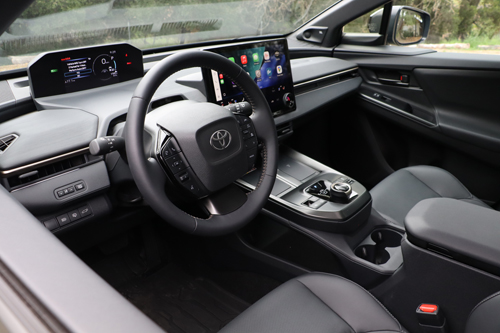
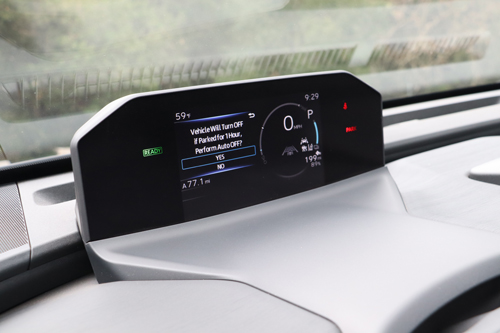
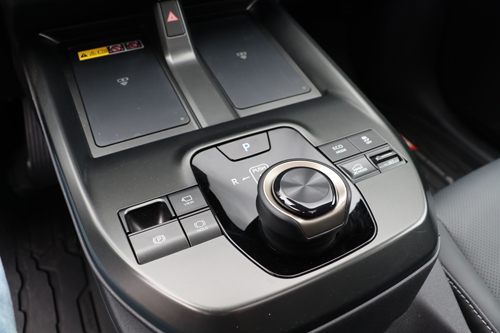
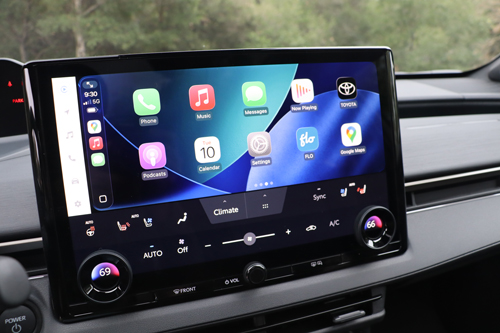
Inside, the proceedings are dominated by the central 14-inch display, which is complimented by a seven-inch driver information display. It sits back and right at the base of the windscreen, meaning it can easily be seen in the driver’s peripheral vision without obstructing the view forward. It’s a trend over at Toyota that we’ve seen on the Prius and I rather like it. But, like the ride height, the joystick-style shifter, steering wheel design and dual wireless charge pads, the environs here are pretty much identical to both the C-HR and bZ, with the exception of some colour and material choices.
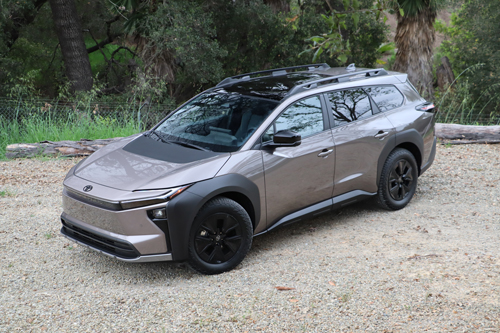
2026 Toyota bZ Woodland
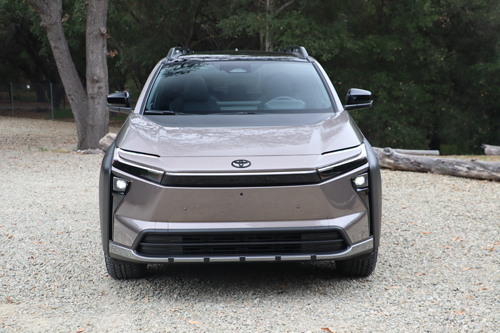
2026 Toyota bZ Woodland
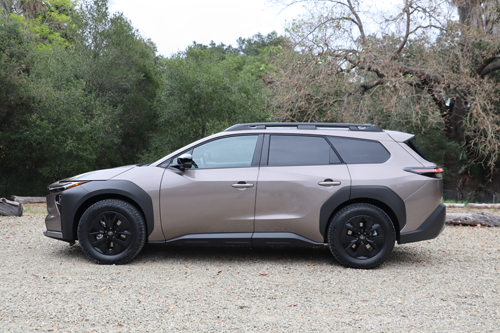
2026 Toyota bZ Woodland
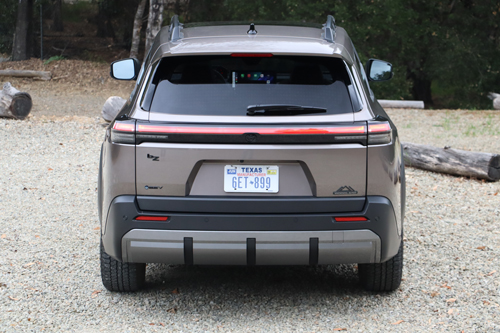
2026 Toyota bZ Woodland
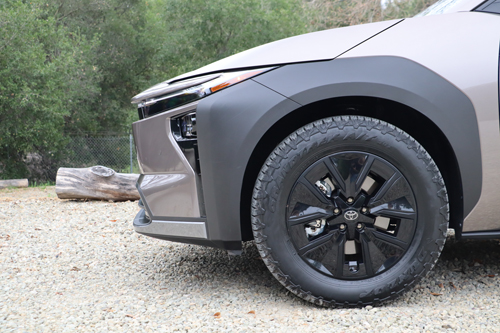
2026 Toyota bZ Woodland
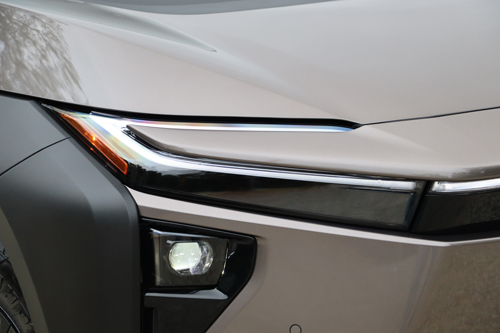
2026 Toyota bZ Woodland
2026 Toyota bZ Woodland
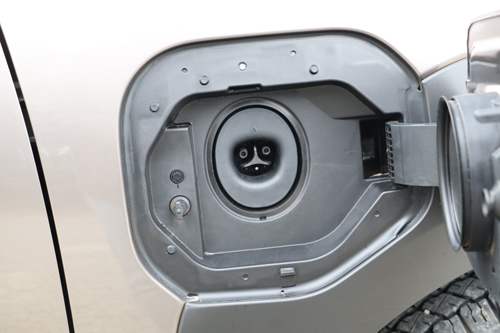
2026 Toyota bZ Woodland
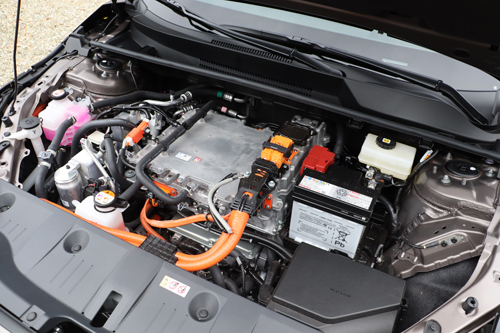
2026 Toyota bZ Woodland
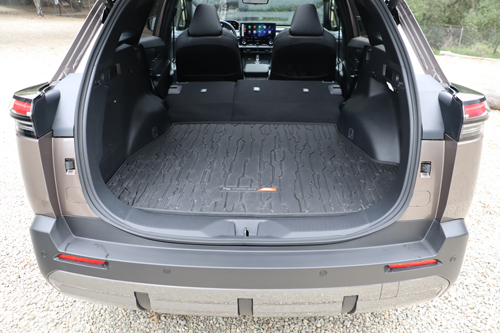
The same, that is, until you look over your shoulder and see just how much space is back there. We’re talking 975 mm of rear headroom, 897 mm of rear legroom and 2,690 litres of passenger volume. There’s 2,104 L of rear cargo space if you fold the rear seats flat, and 959 L if you keep them in place. That’s a lot of haulabilty and it’s a good thing you have all that space back there because there is no frunk. Regardless, it feels properly cavernous inside the Woodland which is surprising because it doesn’t look so huge – in fact, it looks almost chopped – from the outside. I refuse to abide Toyota calling this thing a “crossover” as it’s so clearly a station wagon and even gets the “Touring” nomenclature in Europe, which is what the likes of BMW have called their wagons in Europe for decades. So, “wagon” it is and right over there is the hill I’m going to die on.
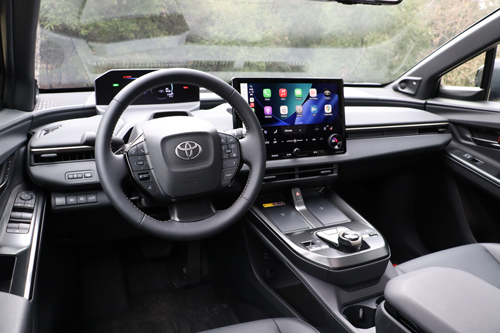
Notable creature comforts include standard heated Softex synthetic leather front seats, heated steering wheel, available full-length panoramic roof, heated and cooled front seats, nine-speaker JBL audio and digital rearview mirror and it’s the only model of the trifecta with a rear wiper.
In addition to standard AWD, the Woodland also gets a dual-mode X-Mode AWD system and yes, that’s the same “X-Mode” we’ve come to love over the years in our Subarus. The two Japanese brands continue to share both an EV platform and some of the other tech that comes along with that, so X-Mode has made its way to the Woodland. It gets Deep Snow/Mud and Snow/Dirt settings, with the AWD system shuttling power between the two axles and their wheels to ensure the most trouble-free forward progress as possible. My guess is they’re keeping “snow” in both settings because most Woodland buyers are probably going to relate to drives in deep snow drifts more than they will to drives through deep mud on the way up to the backcountry trailhead.
For our drive, though, it was all tarmac, all the time (and some great canyon driving around Ojai), and in that scenario, the Woodland acts every bit the quiet, smooth and comfortable EV. Yes; cars equipped with the off-road tires are a little louder and their softer sidewalls mean a little more loftiness through the bends, but this is a fantastic daily driver. And when you step on it, it will make 100 km/h from stop in less that five seconds. An impressive figure indeed from an EV that doesn’t have a “performance” tag stuck to it.
2026 Toyota bZ Woodland
2026 Toyota bZ Woodland
2026 Toyota bZ Woodland
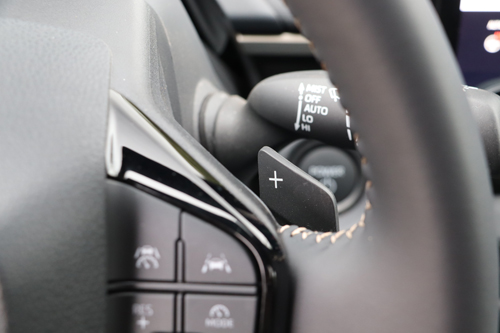
2026 Toyota bZ Woodland
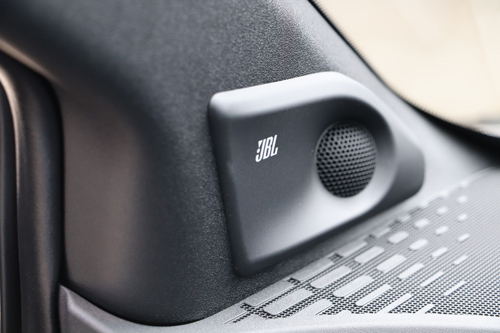
2026 Toyota bZ Woodland
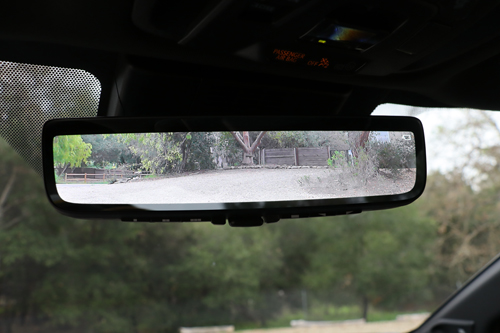
2026 Toyota bZ Woodland
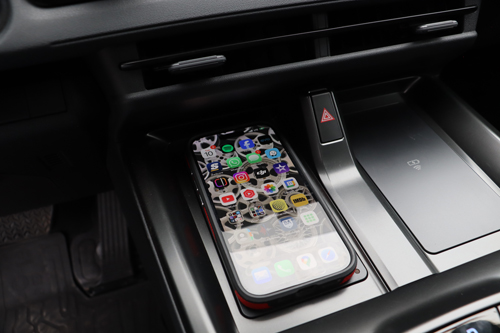
2026 Toyota bZ Woodland
2026 Toyota bZ Woodland
2026 Toyota bZ Woodland
The power delivery is one thing, but quick power delivery is kind of inherent to EVs. Less so is steering response and handling, but aside form that roll we talked about (the Woodland weighs in at over 2,000 kilos, and physics are gonna physic), turn in response is good and there’s a titch more road feel through the steering wheel than I expected. With the Woodland, you get the sense that you’re piloting something with some heft behind. Not a heft that feels heavy and lumbering, but one that feels of a quality and confidence-inspiring. Much like that other off-road wagon we love from Subaru, the Outback. And you have to think that when the agreement to co-develop these was signed, Subaru wanted to ensure that at least one of the vehicles to come from the partnership would appeal to the legions of Outback fans. At which point I can see Toyota going “hmmm. That’s not a bad idea. Let’s see what we can do with this.”
I’m really curious about this one. The switch from wagons to crossovers in North America has been well documented over the last two decades or so. EVs, meanwhile, are enduring a bit of slapping these days with regard to tariffs, incentives going away (but coming back, although they won’t apply to the Woodland whose $59,900 starting price disqualifies it from the recently announced Canadian EV incentives) and so on, the Woodland is kind of a mix of two fledgling segments.
That may be so, but it has the goods – the power, the interior space, the range – to perhaps shirk some of that and open some eyes. I know it did mine.