


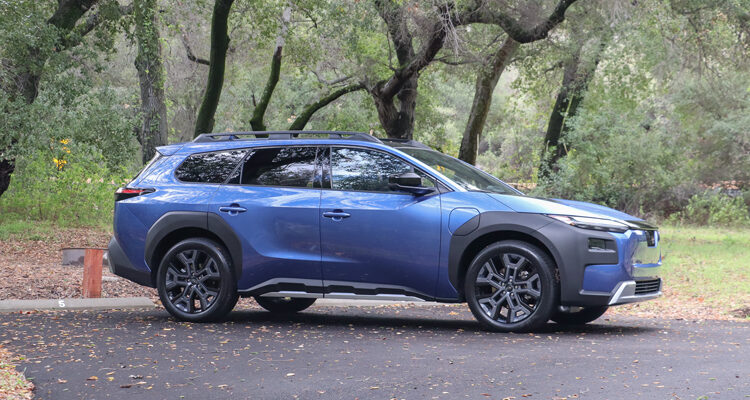
Laguna Beach, CA – If you would have told me not that long ago that not only would EVs and survive waves of “anti” sentiment from consumers and buyers alike, but that they would soon be doing well enough to compel a manufacturer (well, more than one, really, as we’ll see in a moment) to release a full-size station wagon powered solely by electrons, I probably would have raised my eyebrows.
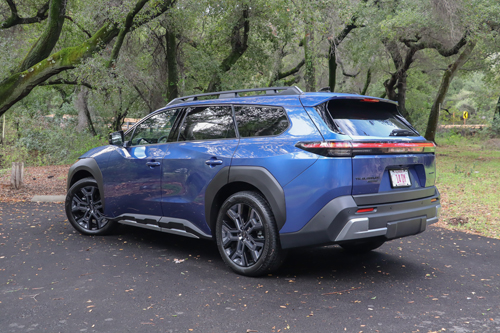
But here we are in February of ’26, and Subaru has released the Trailseeker EV. They’re calling it a crossover, but when I see as long hood, long roof and low stance I’m sorry, but you can add as much plastic cladding as you want (and Subaru has), but I’m going “wagon”. Not to mention that it’s sharing quite a bit – from the platform on up – with the Toyota bZ Woodland, a car that’s called “bZ Touring” in Europe. Europe, whose own manufacturers have been calling station wagons of all sizes “touring” for decades.
Subarus are not typically lauded for their ultra-smooth ‘round town attitude, but more for their rough ‘n tumble AWD attitude. For its part, the Trailseeker has been designed and engineered with the most EV range impossible in mind. That makes for better occupant comfort – and this wagon-slash-crossover is about people moving – as well as better EV driving range, which Subaru claims to 444 kilometres, no matter the spec.
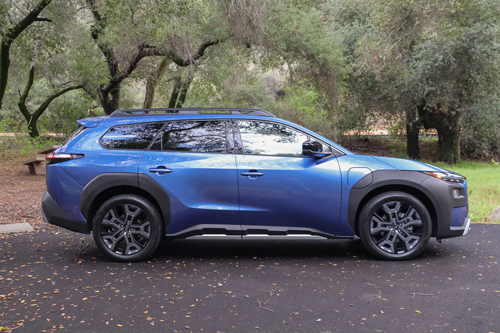
2026 Subaru Trailseeker
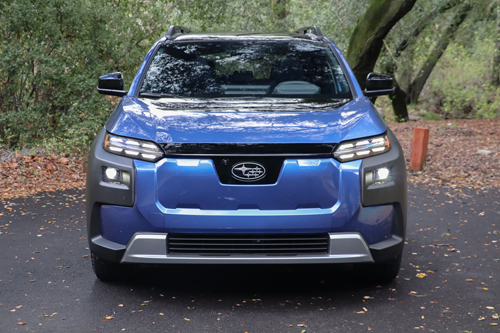
2026 Subaru Trailseeker
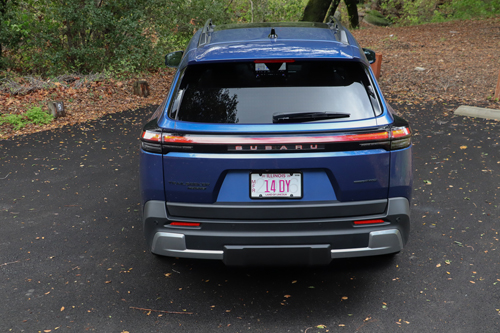
2026 Subaru Trailseeker
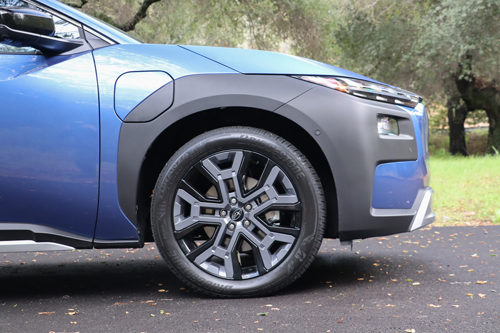
2026 Subaru Trailseeker
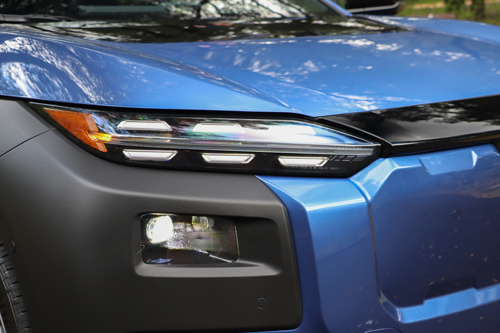
2026 Subaru Trailseeker
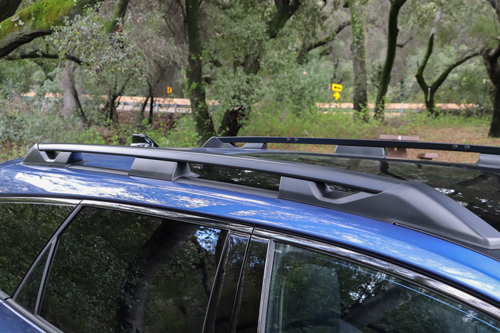
2026 Subaru Trailseeker
To help achieve this goal, Subaru’s designers have given the Trailseeker a sleek front end highlighted by six-bulb LED daytime running lights, with the headlights sitting below those at the bumper corners. The standard Touring model ($54,995) comes equipped with 18-inch wheels while the Limited ($57,995) and Premier ($60,995) models get 20s as standard. They’ve also given drivers the ability to choose from between four levels of power regen by flipping wheel-mounted paddles.
For a smoother ride, the smaller wheels are the better choice so it’s a bit of a shame that you can’t get them on higher trims. There’s also no off-road tire option as you’d find in the Toyota bZ Woodland, with which the Trailseeker shares a platform and many components. You can get all-terrain tires and smaller wheels on the aftermarket – 18s will fit – but that’s an extra step that I feel most buyers aren’t going to bother with. Also, all-terrain tires will negatively impact range, which Subaru says is one of the reasons they decided not to include them. I suspect price is another one; with a starting price of over fifty grand, the Trailseeker will not qualify for the recently announced Canadian EV rebates.
2026 Subaru Trailseeker
2026 Subaru Trailseeker
2026 Subaru Trailseeker
If you’re looking for a Subaru EV that will qualify for those rebates the all-new Uncharted is also on the way. While the Trailseeker is available only with two EV motors and AWD, the Uncharted can be had with two different front-wheel-drive options as well as dual-motor AWD, offers a slightly sportier drive than the Trailseeker and has a smaller footprint. It’s the more youth-oriented, urban-dweller option and three of the four available Uncharted trims will be eligible for the EV rebate.
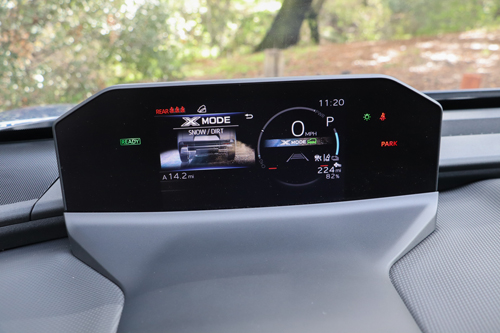
To help give the Trailseeker more off-road bona fides, Subaru has added thick black plastic cladding around the wheels, on parts of the bumper and the rocker panels. It also gets Subaru’s dual-mode X-Mode AWD tech, which provides a Snow/Dirt mode and a Deep Snow/Mud mode to ensure that forward progress inspires confidence even in adverse conditions. It doesn’t look quite as SUV-like as the recently-arrived Outback, but it’s close enough that I’m sure many will refer to it as the “Outback EV”.
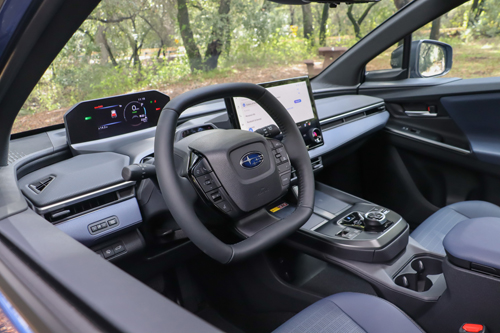
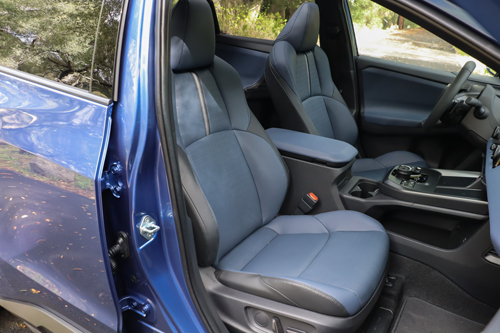
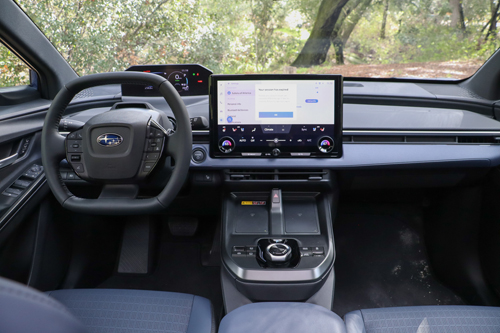
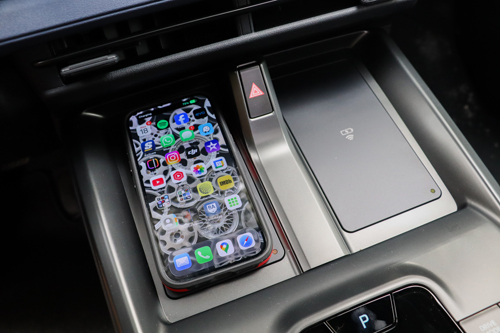
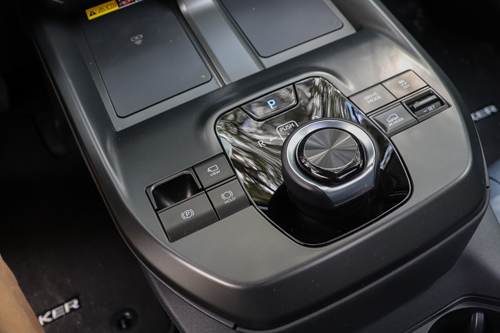
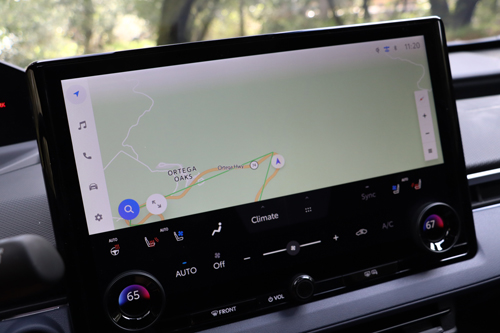
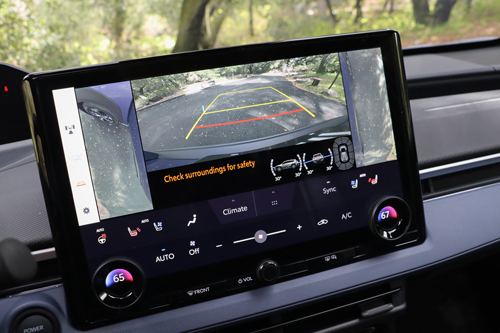
All Trailseekers come standard with a seven-inch instrument cluster and a 14” central infotainment display with wireless Apple CarPlay and Android Auto as well as dual wireless charge pads that can be used concurrently. There are also four USB-C ports if you’d rather charge that way. Options include 11-speaaker Harman Kardon audio (very good; six speakers are standard), real leather seating and standard synthetic leather seating, and a digital rear-view mirror.
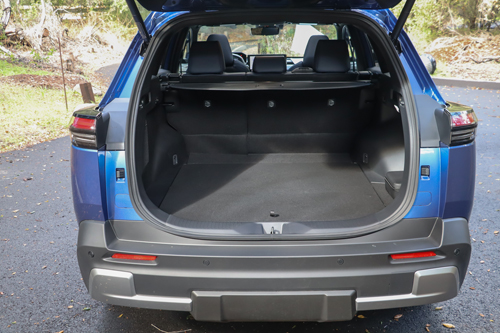
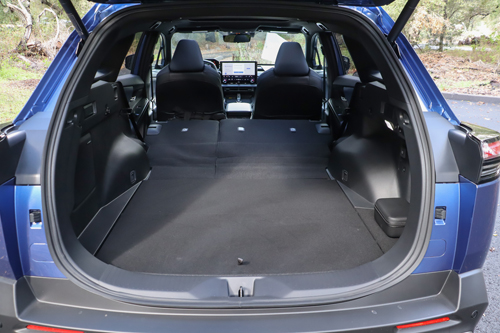
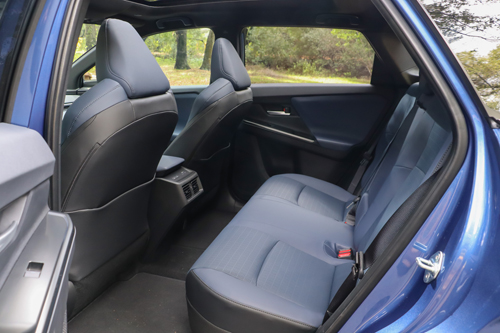
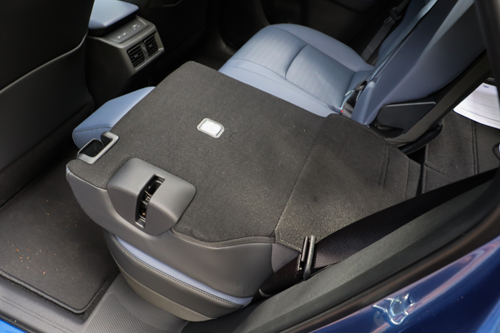
There’s a lot of good equipment here, but the real take home is just how roomy it is. You can fit up to 2,095 litres of cargo inside if you fold the 60/40 split rear seats flat, and the 886 you get when you leave the rear seat intact is mighty generous. My one gripe is that there’s no pass-through centre door or folding centre seat. If you want to haul longer items, you have to sacrifice an entire outboard seat. There’s no front trunk, either, which is a shame.
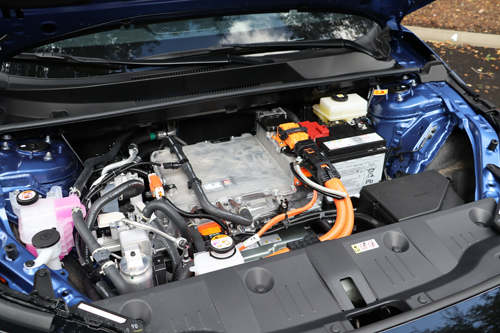
Even after indulging in the heated seats and cavernous environs, it was the ride and handling that would keep me coming back if I owned one of these. It is no light car, but the suspension tuning and the EV motors do a good job of disguising that heft. I was able to take corners with far more confidence and gumption than I thought I would from a two-tonne-and-change EV, but there you go. Freeway entries routinely occurred without drama and the same goes for high-speed passes.
2026 Subaru Trailseeker
2026 Subaru Trailseeker
2026 Subaru Trailseeker
2026 Subaru Trailseeker
2026 Subaru Trailseeker
2026 Subaru Trailseeker
2026 Subaru Trailseeker
2026 Subaru Trailseeker
2026 Subaru Trailseeker
My time in the Trailseeker really did have me feeling that not only are EVs doing just fine, but with incentives we’re starting to see, pledges to increase the charging network, more manufacturers of at-home chargers and just the fact that EVs are regularly good for 450 km-plus of range these days, they may even be entering a bit of a heyday. Why not do it in the spacious, quiet and capable confines of a Trailseeker?