


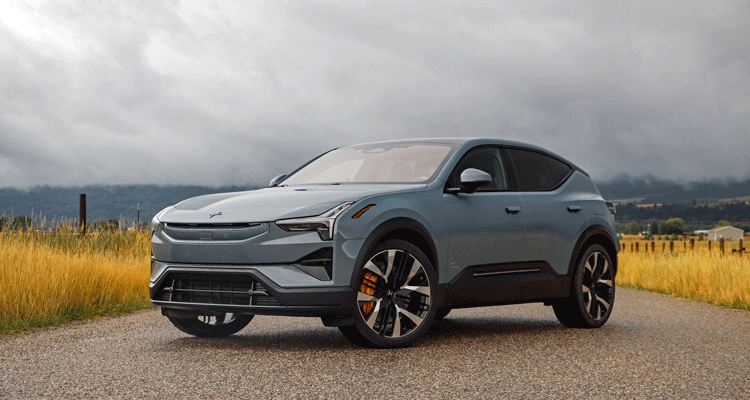
I’m in the all-new 2025 Polestar 3 SUV, driving peacefully through the Grand Teton Mountains just outside Jackson, Wyoming. Traffic, dotted with RVs and pickups, is moving at a leisurely pace as the tarmac winds its way through peaks and valleys. Even though it’s mid-September, it’s snowing — not the super-heavy, powdery stuff, but the kind that falls from dark, brooding skies, sticks to surfaces, and quickly turns to slush once it hits the road. It’s somewhere between snow and sleet, and while visibility isn’t great and the wind is a few octaves below howling, I’m perfectly at ease. The all-electric Polestar 3 provides a comfortably ensconced experience.
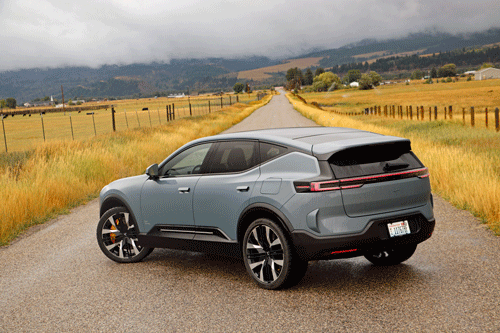
It starts, of course, with that “all-electric” thing. Vehicles like this are inherently quiet, as their motors are essentially silent. Most noise they make is typically engineered by the manufacturer, either to warn others of their presence or, in the case of performance EVs, to add an artificial “engine” or “exhaust” note. Not here. In the Polestar 3, it’s a luxurious, near-silent affair. Extra sound-deadening materials are used in the windows and around the wheels, noise-cancelling technology is built into the headrests — much like your favourite headphones — and the sleek exterior design helps reduce aerodynamic drag for an even quieter ride.
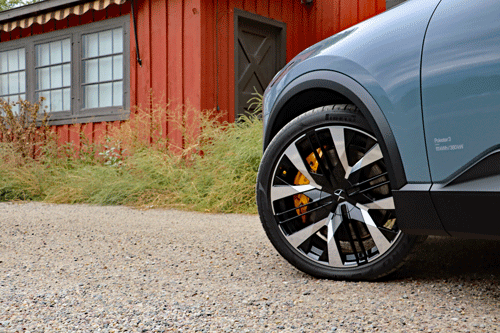
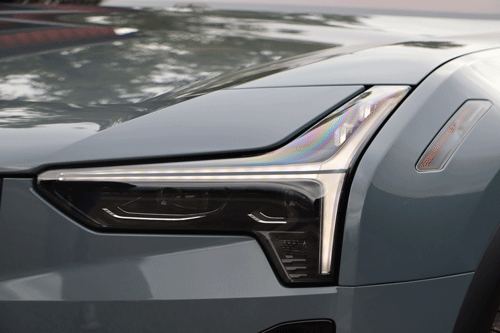
Design-wise, there’s plenty of Swedish modern simplicity, with subtle door creases and a clean front fascia, but it’s nicely punctuated with thoughtful detailing. The contrast-colour rocker panels and triangular front vents are good examples, as are the sharp wheel designs, which range from 20 to 22 inches. Our tester rides on 22-inch wheels that shroud striking gold brake calipers, a subtle reminder that EV or not, there are sporting intentions here.
It’s worth remembering that Polestar began life as Volvo’s in-house performance and tuning arm, responsible for racing versions of popular Volvo sedans and hatchbacks. Becoming its own brand hasn’t dulled that heritage, and when you consider the performance figures, it’s clear that lineage is alive and well.
There are three trims at launch: Long Range Dual Motor, Launch Edition Dual Motor, and Long Range Dual Motor with Performance Pack. The naming may not be particularly punchy, but with 517 horsepower and 671 pound-feet of torque in Performance Pack form, acceleration certainly is. With no transmission losses, power is delivered directly to all four wheels, and despite tipping the scales at roughly 2,600 kilograms, the Polestar 3 hides its weight impressively well. In real-world terms, that means passing at highway speeds is effortless — a welcome trait on two-lane mountain roads with limited overtaking opportunities.
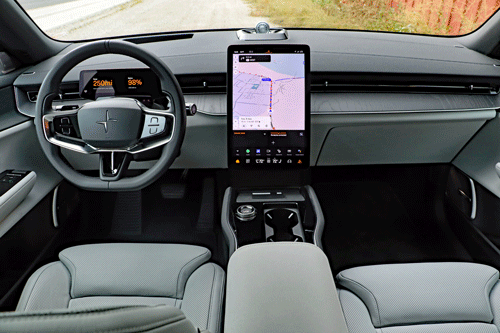
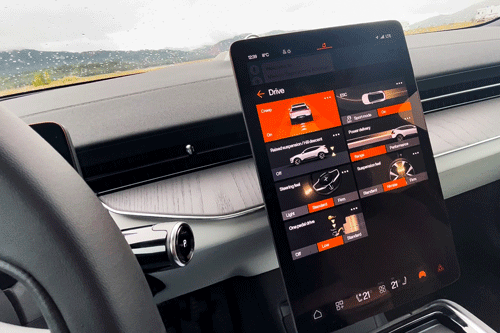
Inside, the calm continues with a deliberately clutter-free layout. The only physical buttons on the dashboard are for audio play/pause and volume, and that’s it. Everything else is controlled via the central 14.5-inch touchscreen. Starting the vehicle simply requires placing the keycard — yes, a keycard — on its designated spot at the base of the centre stack and selecting Drive. Climate controls being housed within a touchscreen is nothing new, but accessing steering wheel adjustments, mirror controls, and even the glovebox digitally is far less common.
And that’s where things get a little frustrating. Adjusting the steering wheel and mirrors begins on the touchscreen, but the fine adjustments are then completed using buttons mounted on the steering wheel spokes. The window controls are equally unconventional: there are only two switches on the driver’s door instead of the usual four. To operate the rear windows, you must first press a button that reassigns those switches. While the de-cluttered look is appealing, using a touchscreen to open a glovebox or adjust mirrors feels like a step too far.
2025 Polestar 3
2025 Polestar 3
2025 Polestar 3
Thankfully, those tasks can be done while stationary. Changing drive settings, however, often happens on the move — and once again, adjustments are buried within the touchscreen menus. Steering weight, throttle response, suspension firmness, and traction control behaviour are all configurable, but making changes while driving requires navigating several layers of menus. A custom drive mode activated by a single button — on the steering wheel or centre console — would be a welcome improvement, but it’s not currently an option.
That’s a shame, because the changes these settings make are significant. I particularly enjoyed the “firm” steering option, which noticeably sharpens the Polestar 3’s character. Regardless of which of the three suspension modes is selected, ride quality remains excellent. You hear the wide 295-section rear tires over bumps more than you feel them, which is a win for comfort. Body roll is minimal through corners, further highlighting Polestar’s impressive chassis tuning and its ability to disguise the inherent heft of a long-range EV.
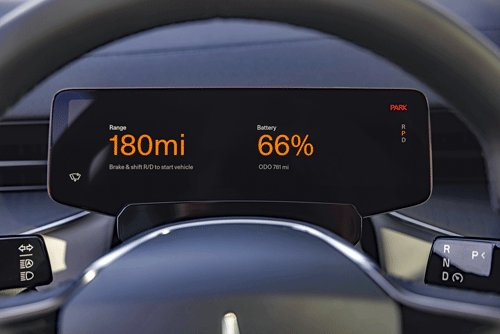
As for range, Polestar claims up to 506 kilometres depending on specification, and the Polestar 3 can charge from 10 to 80 per cent on a 250-kW DC fast charger. That’s legitimate road-trip capability and, combined with its refined ride and serene cabin, makes the Polestar 3 a compelling everyday EV. Polestar is clearly stepping into the big leagues with its first electric SUV. Address a few ergonomic quirks, and this segment has a serious new challenger on its hands.
Fun Fact
Despite its performance focus, the Polestar 3 was engineered with comfort as a priority — its optional active air suspension continuously scans the road surface and adjusts damping in real time, helping the SUV remain calm and composed even on rough, slushy mountain roads.