


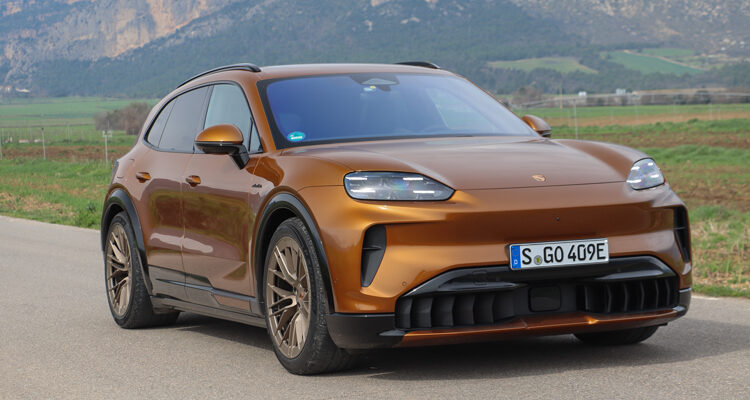
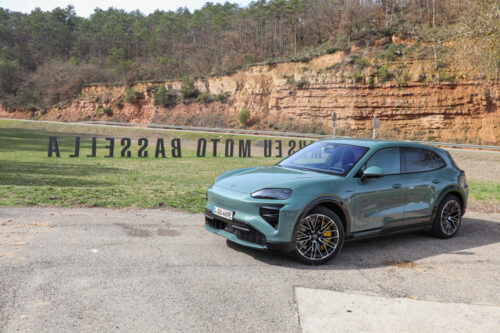
Bassella Municipality, Spain — The road is smooth, with turn after sinewy turn through tunnels carved directly out of the canyon rock with minimal reinforcement lining their walls. Technically, this is a two-lane road, but heaven forbid I should come across anything wider than a motorcycle. Occasional stretches of corrugated steel barriers or massive cubes of roughly cut rock are all that stand between me and oblivion below. I’ve always pictured myself on roads of this magnitude, but at the wheel of a roadster or coupe. Doing so in electric luxury SUV like the all-new 2026 Porsche Cayenne Turbo Electric was definitely not on my bingo card — and that concerns me.
Why? Well, would this beast’s 2,722 kg/6,000 lb (give or take) curb weight and lack of traditional gas power or transmission result in a “you never want to meet your heroes” moment? Or, would I return home from Spain satisfied that I’d conquered my dream road?
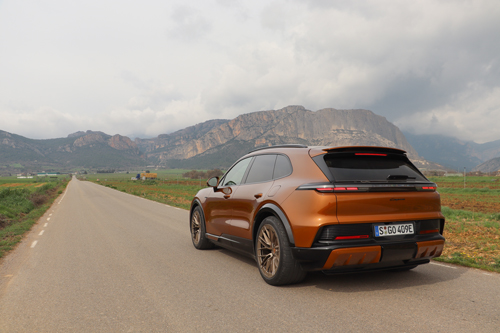
Considering the statistics of this powerful EV SUV is a good start. That’s 1,139 horsepower and 1,106 pounds-feet of torque. Which means that not only is this the most powerful Cayenne ever made, it’s the most powerful Porsche ever made, period.
The Turbo and its $178,300 price tag (sure to inflate with just a couple of ticked option boxes) is joined by two other models. The base Cayenne Electric starts at $138,300. It comes with more rear seat room than previous, standard all-wheel-drive, 435 hp, standard 20-inch wheels and 645 kilometres of claimed range in the European testing cycle. A Cayenne S Electric rounds out the trifecta with a starting price of $142,500 and 536 hp.
For its part, the base model is no slouch. The acceleration from stop is hearty, and I can only say it felt slow when compared to the Turbo – as we’ll see in a minute, the difference in launch controlled starts between these two is quite stark. Still; the fact you even get launch control with the base model, plus the availability of features like Porsche Active Ride (PAR) makes for a compelling package.
Back to the Turbo model. The full slug of power is only unleashed when using certain settings, but the 844 hp that’s always available is no joke. Plus, amidst the hairpin turns on this magical mountain road there is a straight or two with fine forward visibility. A great opportunity to put launch control – and all 1,139 horses — to the test.
2026 Porsche Cayenne Electric
2026 Porsche Cayenne Electric
2026 Porsche Cayenne Electric
2026 Porsche Cayenne Electric
2026 Porsche Cayenne Electric
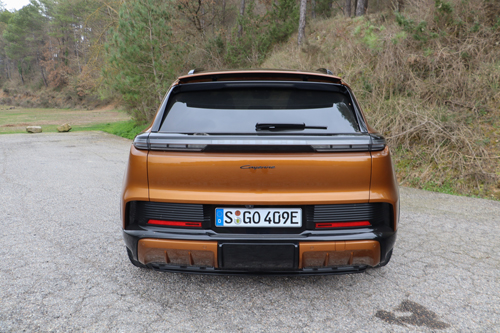
2026 Porsche Cayenne Electric
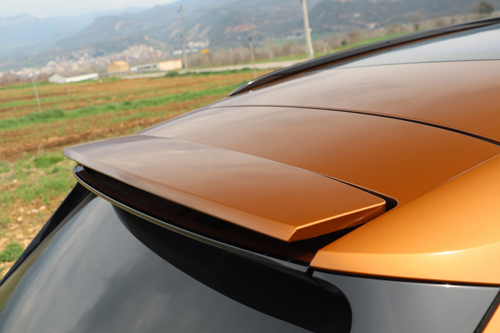
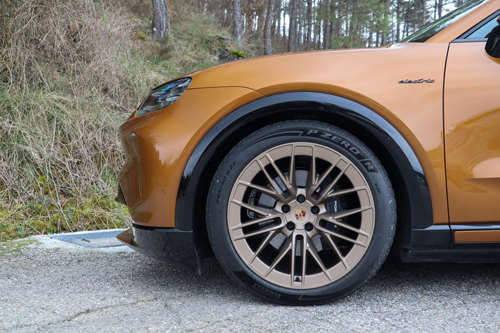
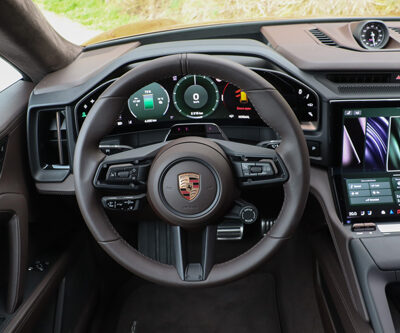
So I do. First, I activate “Sport Plus” drive mode by spinning a knob mounted to the steering wheel’s hub, hold my left foot on the brake and plant the accelerator pedal. After about a second, the car tells me that “launch control is active”, so I release the brake and BLAM! The self deploying “aero blades” either side of the rear bumper deploy, all four fat Pirelli P Zero R tires hook up and slingshot me forward. Small seconds go by before I have to back off to stay below the speed limit. It’s enough to suck my eyeballs deep into their sockets and plant my spine firmly into the seatback. It feels like the movie Oppenheimer is taking place in my insides, so I pull over. Phew!
I have sampled launch control in super sports cars like the Lamborghini Temerario or Porsche’s own 911 Turbo S (cars that actually have turbochargers; the Cayenne Electric is a turbo in name only), but I don’t recall ever feeling like this afterwards. The fact that a vehicle this big and heavy can accelerate like this feels paradoxical, kind of like how a jumbo jet can actually take off and fly. It’s transcendent.
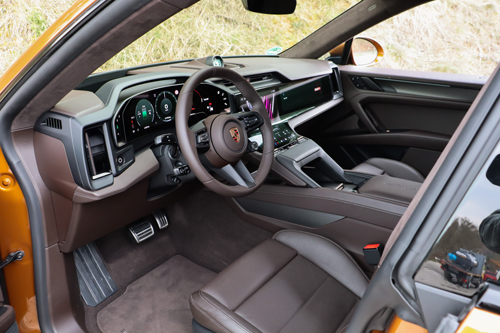
Two EV motors plus a 113 kilowatt-hour battery provide the motive force – which is important. Perhaps more significant, however, is how the battery charge is maintained. To get the most performance possible, Porsche has borrowed tech from its Formula E racing programme. With a total of 192 battery cells, energy can be recuperated at up to 600 kW, while 97 per cent of everyday braking operations are done without friction brakes. Instead, the EV motors are run in reverse, preserving brake pads and rotors.
Having said that: our tester had ceramic brakes so when it did come time to use the friction brakes, stopping power was stratospheric even with over 2,700 kilos to reign in.
The road continues to beckon, so I wipe awestruck tears from my eyes and continue forward because there’s a lot more on offer here.
The acceleration is one thing, but what the Cayenne Electric is able to do courtesy of PAR is quite something. This newfangled tech uses hydraulic pumps at each wheel to partially negate the effects that physics have on a car. That means far less body roll when moving through turns and less of a penchant to “dive” forward under hard braking. This is especially notable with the ceramic brakes because their stopping power is just so immense. At one point, I stood outside as my drive partner performed a panic stop from speed. The Cayenne stopped – but it didn’t look like it was stopping as hard as it was since there was hardly any noticeable dive from the nose.
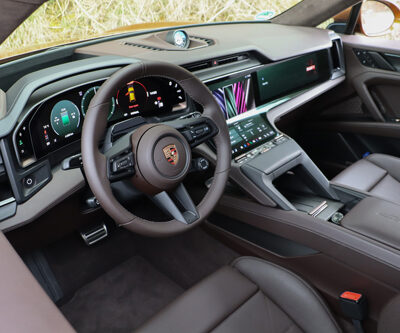
2026 Porsche Cayenne Electric
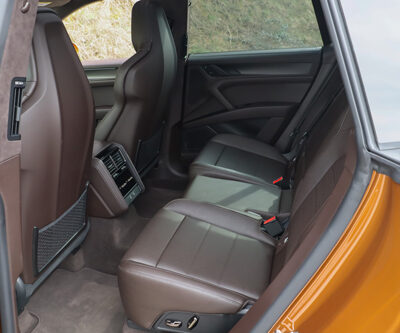
2026 Porsche Cayenne Electric
2026 Porsche Cayenne Electric
2026 Porsche Cayenne Electric
2026 Porsche Cayenne Electric
2026 Porsche Cayenne Electric
PAR will also read the surface below and adjust accordingly for a super smooth ride, adjusting the adaptive dampers and air suspension millions of times a second to keep things a copasetic as possible. This is especially pertinent through repeated left-right-left transitions because this is when you really feel the weight of the car. With PAR, though, it just keeps everything almost flat, so you don’t feel yourself sliding to and fro in the seat even though you’re not having to hang on for dear life. Further, in the less aggressive drive modes, the system will soften things up and actually lean into a corner to pre-empt any body roll before it ever occurs. It’s uncanny and while launch control is a feature reserved only for special circumstances, PAR is something that every Cayenne Electric owner will appreciate, all the time.
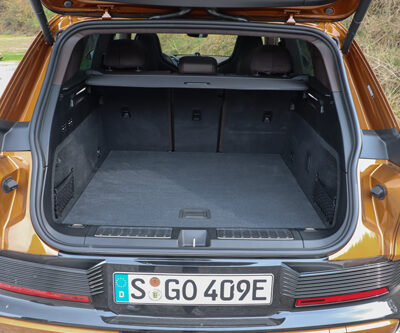
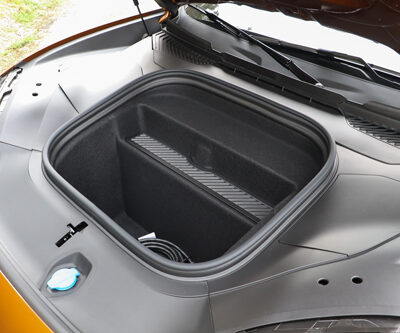
For all its performance bona fides, the Cayenne Electric remains a people-moving mid-size luxury SUV. So, creature comforts include heated and cooled front seats, leather seating surfaces, dual sunroofs that go from opaque to clear with the press of a button and a trick infotainment system.
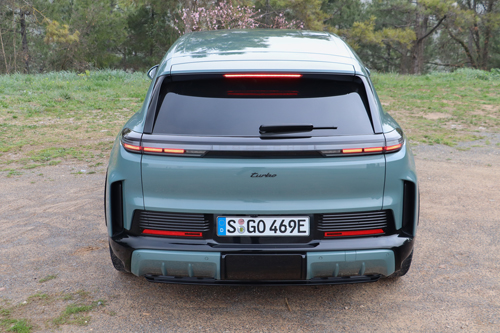
2026 Porsche Cayenne Turbo Electric
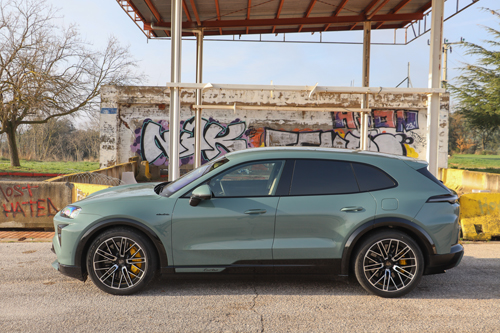
2026 Porsche Cayenne Turbo Electric
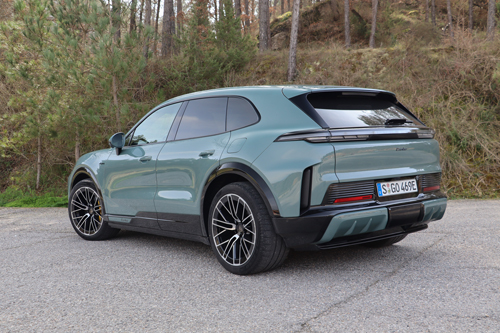
2026 Porsche Cayenne Turbo Electric
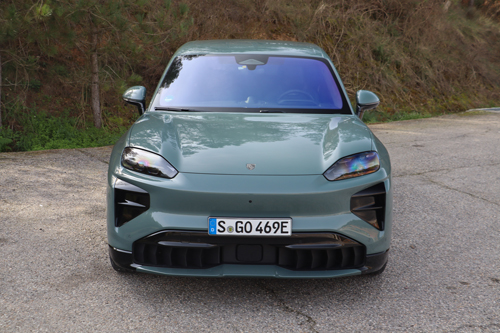
2026 Porsche Cayenne Turbo Electric
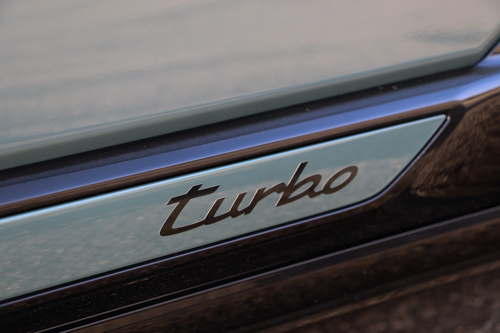
2026 Porsche Cayenne Turbo Electric
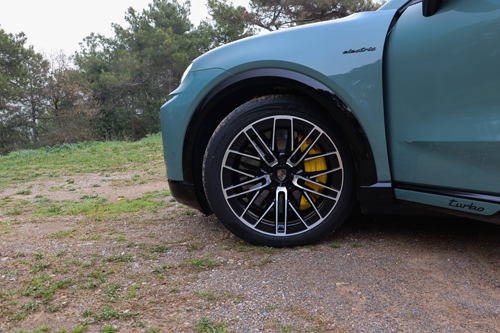
2026 Porsche Cayenne Turbo Electric
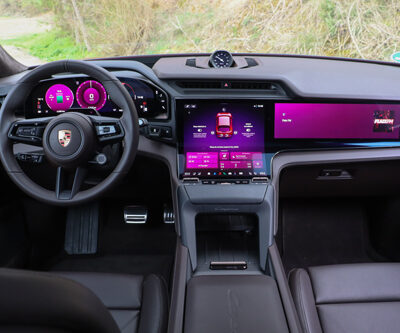
The system is anchored by an OLED central display that not only measures a generous 14.9”, but is also curved. The most oft-used controls are placed on the horizontal bottom portion of the display, making them much easier to reach. A palm rest below that makes it easier still. Baked-in “moods” change the system’s colours (if you’ve never experienced a hot pink digital speedometer before, well, now’s your chance) or how intensely the climate control system operates.
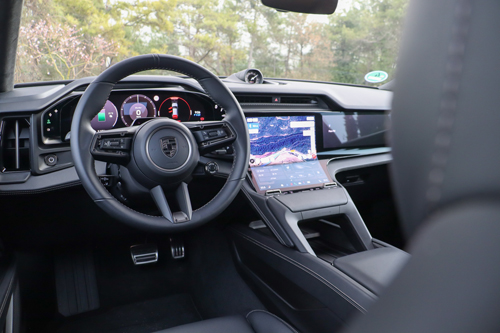
The recent plight of the EV has been well-documented – incentives going away, pauses to charging infrastructure expansion et cetera – but EVs do continue to sell in the markets they’ve always done well in. It seems that people have finally come ‘round – or at least are starting to come ‘round – to the idea of an EV even without incentives and so on. It’s good news, then, for the Cayenne Electric because this is an incredible feat of engineering and it would be a shame for it to not be enjoyed because the rules are changing. Far as I’m concerned, no amount of rule changing should hold something this impressive back. If our launch-controlled drive is any indication, they won’t.