


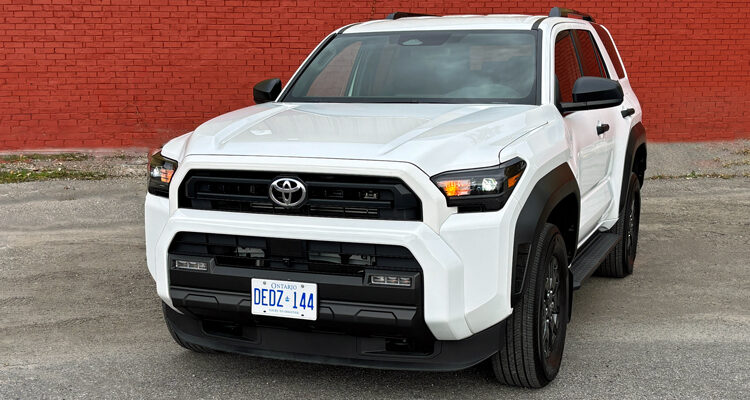
The Toyota 4Runner, now in its sixth generation, underwent a complete overhaul for the 2025 model year from the ground up. It starts with a new base, Toyota’s tough TNGA-F global truck platform, and features an all-new design, which is the best yet on the 4Runner in my eyes, along with a host of new features.
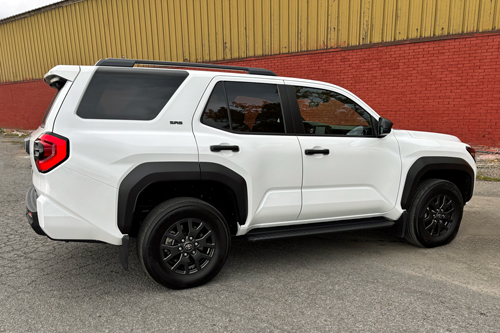
It offers eight different trim levels and two powertrain options, including the first-ever hybrid 4Runner. We tested the base SR5 trim, priced at $54,200, though the range can climb as high as $87,000 for the Hybrid Trailhunter.
The SR5, while the entry model, still has enough features to make it enjoyable. That includes part-time 4WD, 17-inch alloy wheels, air conditioning, heated front seats, LED headlamps, a seven-inch multi-information display, a six-speaker audio system, and an eight-inch infotainment screen.
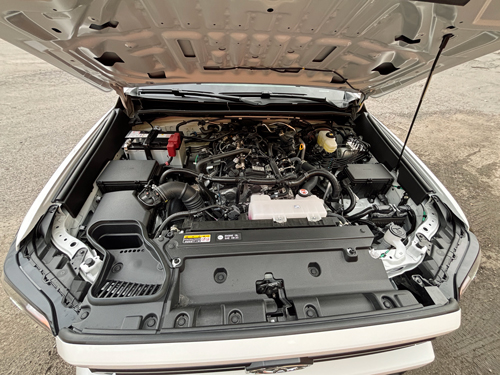
Powertrain: The 4Runner has two powertrain options, including a first for the model: an i-FORCE MAX hybrid system with a full-time all-wheel drive setup.
Our SR5 tester has the more traditional powerplant, a 2.4-litre i-FORCE four-cylinder engine that delivers 278 horsepower and 317 pound-feet of torque.
The engine is paired with an eight-speed automatic transmission and the aforementioned part-time all-wheel drive system.
Toyota estimates fuel efficiency at 11.2 litres per 100 kilometres, and I achieved an average of 13.0 L/100 km.
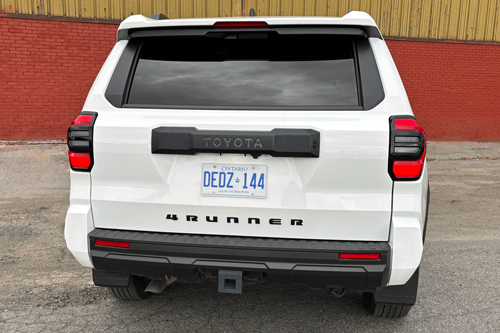
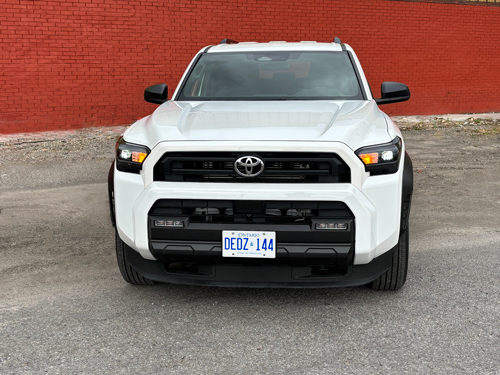
Exterior: The body of the 4Runner is on the boxy side and, while the trend these days is toward sleeker curves, I think for a vehicle whose core purpose is being an “off-road icon,” as Toyota states, the look fits.
The sharp angles around the fascia, fenders, and body panels scream utilitarian, and that is exactly how Toyota is positioning this SUV.
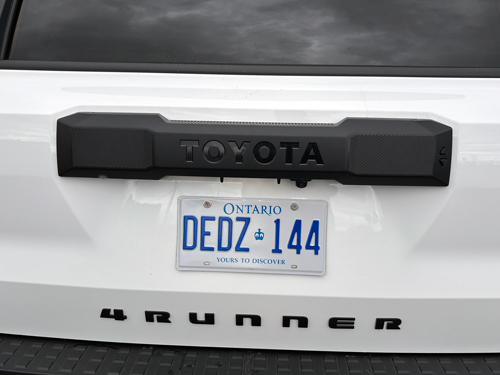
Our tester was painted white, with numerous black accents on the grille, wheel arches, mirrors, door handles, roof rails, and rear hatch.
The whole look, in my view, really works.
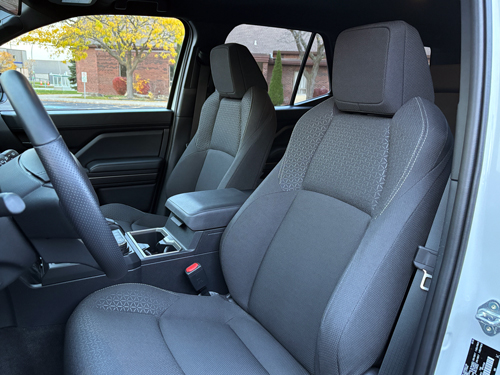
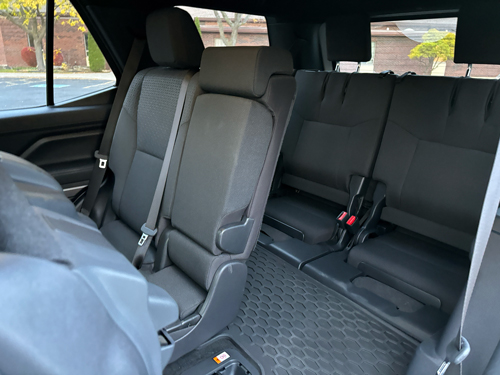
Interior: The cabin may lack some upscale amenities, but it is functional and comfortable, unless you happen to be in the third row.
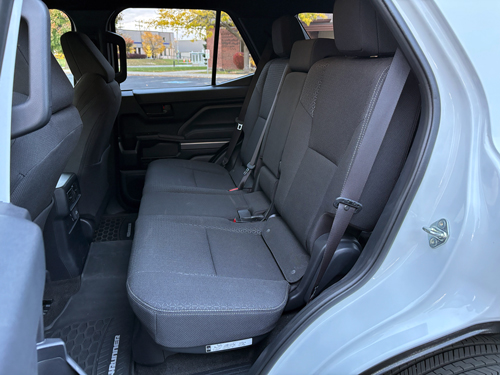
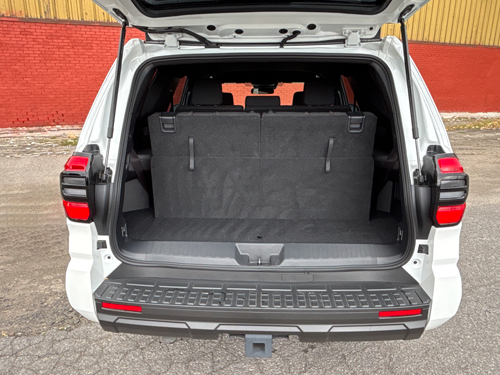
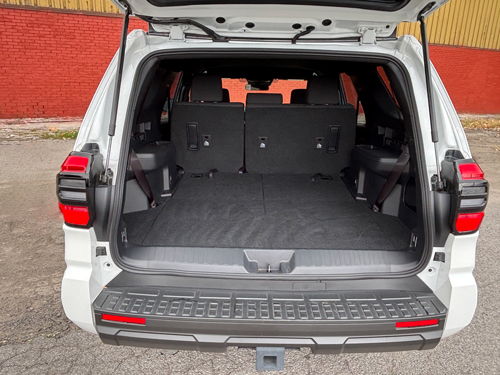
The 4Runner is a three-row SUV that can seat up to seven, but that last row isn’t the most appealing place to be, and when all seats are occupied, cargo capacity is quite limited.
When the third row isn’t in use, however, cargo space is generous.
If that still isn’t enough, the 4Runner SR5 has a maximum towing capacity of 2,722 kg (6,000 lbs).
I also appreciated that many controls are operated via large knobs and easy-to-use lever switches located on the centre stack.
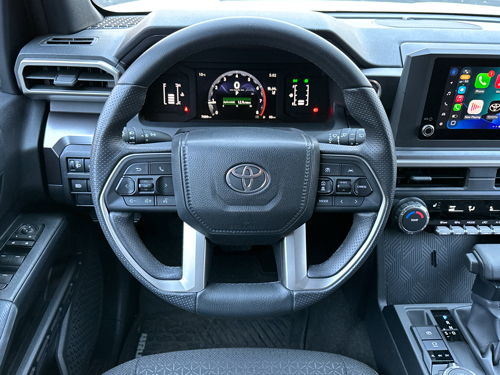
Infotainment: The eight-inch multimedia screen on the dash is small by modern standards, and there’s plenty of room for a larger display, which is available on higher trims.
Even so, the system itself is easy to use and understand, and includes Toyota’s latest infotainment technology.
It features wireless Android Auto and Apple CarPlay, as well as satellite radio.
Drive: Out on the road, the 4Runner definitely feels more like a truck than a cozy SUV. That being said, the overall driving experience is composed, and the steering feels well balanced.
The new platform contributes significantly to improved ride quality and performance while helping the 4Runner retain its off-road capability.
2025 Toyota 4Runner
2025 Toyota 4Runner
2025 Toyota 4Runner
2025 Toyota 4Runner
2025 Toyota 4Runner
2025 Toyota 4Runner
The driver can select from three drive modes; Sport, Eco, and Normal, and when equipped with the towing package, the SUV benefits from hill-start assist.
Conclusion: The updated appearance of the 4Runner is a hit in my view, and the new platform gives this SUV improved ride performance. Even in the base SR5, the vehicle proved to be a solid daily driver with genuine off-road DNA.
As mentioned, the third row is not the most useful, but it’s a helpful option when extra passengers need to come along.
2025 Toyota 4Runner
Price as tested: $56,266.08
Freight: $1,930
Configuration: Front engine / Four-wheel drive
Engine/transmission: 2.4-litre 4-cylinder turbo / 8-speed automatic
Power/torque: 278 horsepower / 317 pound-feet of torque
Fuel (capacity): Regular (72 L)
Combined fuel economy (L/100 km): 11.2 L/100 km
Observed fuel economy (L/100 km): 13.0 L/100 km
Warranties: 3 years / 60,000 km (basic)
Competitors: Ford Bronco, Jeep Wrangler
Website: Toyota Canada