


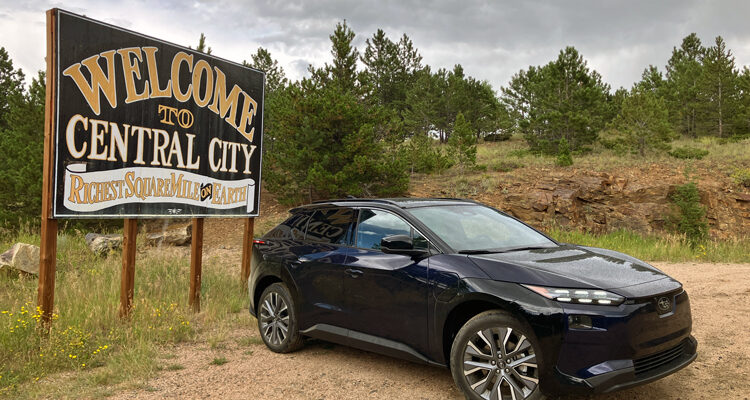
Synopsis: Subaru fans will nakedly love the 2026 Solterra; eco-curious drivers should at least include it on their list of testers.
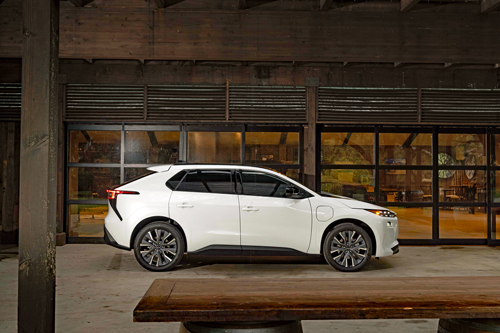
8:45 am Denver, Colorado: On the one hand, there’s the question many in the room quietly grumble: does the world need another compact electric SUV? Which leads to the obvious answer: yes … because here the 2026 Subaru Solterra is. Just be sure to check your province’s electrification incentives.
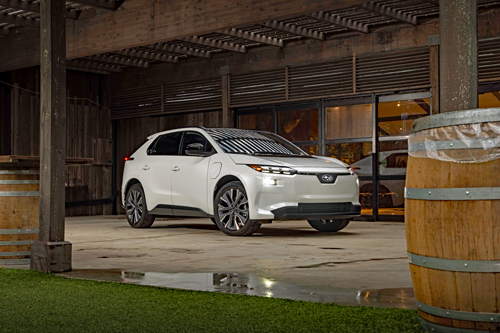
The one hand leads to the other: people who like Subaru love it. Maybe they don’t tattoo the company logo on sagging bellies and eat their dead like a famous American motorcycle brand, but they’re deeply devoted. Today’s event seems carefully planned to demonstrate that brand fans ought to love this “refreshed,” almost all-new Solterra. One writer in the room wants to know what differentiates this new vehicle from a Toyota bZ, and the simplest answer is the Subaru brand and its fiercely loyal fans.
However, Subaru is expanding its audience here, targeting not just the outdoorsy types but young suburban families with quotidian driving needs: safety, squeezability in traffic, practical use of space for packing ample kids’ stuff (ever noticed the smaller the human, the more space they require?) all on AWD, which Canadians love more than any brand.
We’ll talk to these folks first and come back to the diehards this afternoon. They’re still waking up and making coffee at their campsite anyway.
If you’re one of these newly targeted customers, you demand a car that adapts well to your daily commuting ugliness, but with aspirations towards the weekender’s slightly off-road life. Counting your pennies, you want value and would probably prefer not to buy gasoline. Not to buy it ever again. What a feeling that would be.
According to AI, the average suburban Canadian commuter spends from $1,200 to $3,600 per year on gas. True, that’s a fairly useless statistic, but do sit for a while and consider not buying gas. Ever. Again.
If that appeals, put the Solterra on your list of testers. It’s all-electric — no gears or nuthin’ — and averages 450 km per full charge, a 25 percent increase in range since the last iteration of the Solterra, two years ago.
Yes, there was no 2025 Solterra. The brand had a little rest but was far from idle. Today Subaru will prove that point, too, again and again.
Also, for the value-conscious suburban ma and pa, there’s the promise made at today’s first-drive kickoff meeting that the price of the 2026 Solterra won’t exceed the 2024 model, nor will the available trims change. Subaru Canada hasn’t sorted the details but promises no price hike, even with a 25 percent increase in range and several other improvements to be discussed (see above re: “far from idle”).
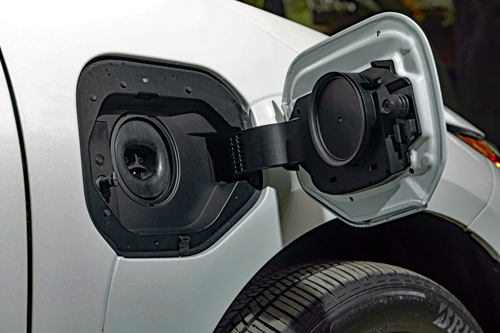
Like improved charging. Range anxiety and the need to recharge are irritants that keep many EV-curious drivers from converting. Subaru says you can charge the 2026 Solterra from 10 percent to 80 percent in just a half hour. Low-temperature charging before battery pre-conditioning in winter has improved by 30 percent. Next, there’s NACS. See the photo within. The Solterra’s charge port has been adapted to work with Tesla’s network, significantly increasing a driver’s options for recharging. With range anxiety lessened, this suburban parent can also feel great about shafting big oil. Fast and efficiently.
Now, let’s test the car, shall we?
10 am till 1 pm: We drive pre-production vehicles, not necessarily Canadian specs. Indeed, the deep blue and rich red colours (spelled intentionally with a u here) of our testers aren’t coming to Canadian dealers. The quality of drive is, though. We’ll focus there.
The urban/suburban commuter wants decent available horsepower and torque to answer sudden challenges in traffic. (Picture your commute and feel free to mentally add any expletives into the previous sentence.) The 2026 Solterra achieves 338 horsepower. As of yet; remember these are pre-production vehicles, there’s no official torque number. But also remember, an EV almost always wins the sudden race to the next traffic light because you can employ almost full torque immediately.
Our morning drive takes us out of Denver and into the mountain foothills. The road bends and curves, a sunny laboratory for demonstrating the Solterra’s well-engineered driving dynamics. There’s almost no traffic and we can push the vehicle safely. The sightlines are good; the corners an invitation to defy gravity, the steering sharp and haptic.
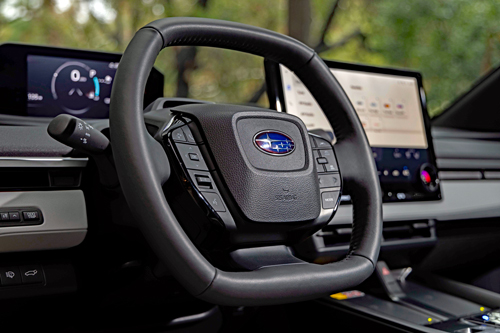
The steering wheel looks like a pregnant square, its design meant to improve knee space and visual access to the instrument cluster, but there’s an adjustable steering column for knee clearance and multiple ways to view any real-time information. So, the squarcular steering wheel becomes a charming eccentricity you can talk about while not gassing up.
Denver is famous for being a mile, or 1.6 km in Canadian, above sea level. But our drive continues to ascend, using a good deal of juice, much of which you could regain on the way back down from the regenerative brakes.
The pristine tarmac leading out into the country is nothing like the festivals of potholes near Canadian metropolises, Toronto and Montreal, especially on suburban highways, but we’ll get some juddering off-road conditions this afternoon. For now, all is smooth.
In Latin, sol means sun and terra means earth. A good name for this experience testing the Subaru Solterra. Reaching 2,621 metres (8,600 ft) above sea level at the drive’s highest point, it feels like we might touch the sky.
As for the terra half of this compound word? Subaru partners with Forests Canada, investing in their Leave No Trace Pledge. They’ll plant 10,000 trees in Canadian parks. It’s another point you can share after the squarcular steering wheel; one that Subaru fans will applaud.
Let’s invite those fans back to the drive. Unlike the zippy weekday commuter, this off-road weekend warrior wants full control at low speeds with varied surface conditions.
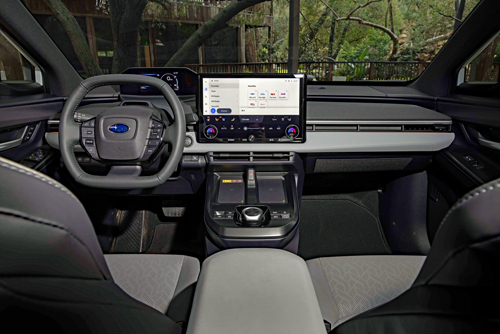
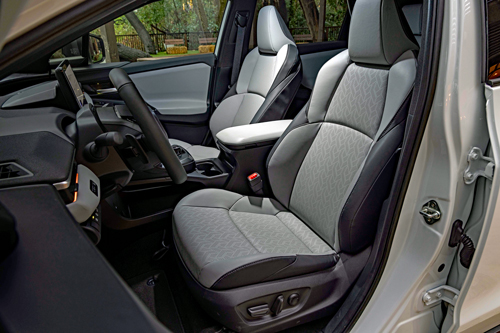
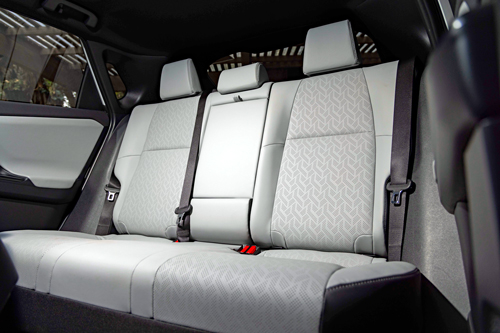
First, they’ll appreciate the spacious atmosphere made roomier with the fixed panoramic sunroof. Lacking an internal combustion engine, the Solterra also provides an immense trunk made roomier with collapsible second-row seating. During your test drive, spend some time in the back seat for a sense of the sheer “territory” the allegedly compact vehicle provides, because you might not be allowed to attempt the following.
2026 Subaru Solterra
2026 Subaru Solterra
2026 Subaru Solterra
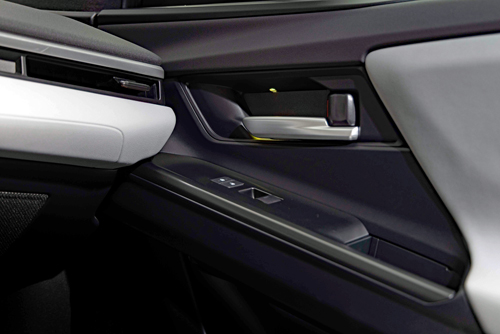
2026 Subaru Solterra
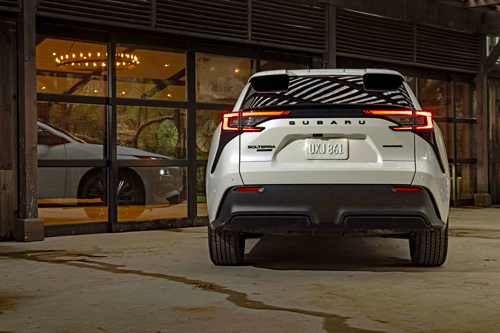
2026 Subaru Solterra
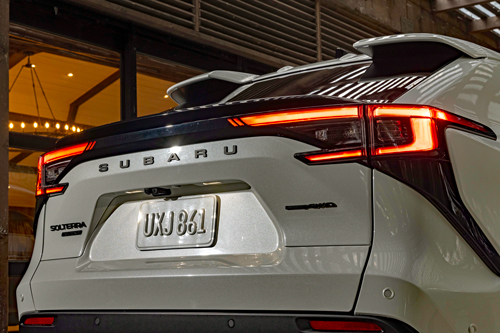
2026 Subaru Solterra
2 pm off-road challenges: 210 mm (8.3 inches) ground clearance is good for a small car if you’re planning on driving dirt roads or even no roads. Switching to X-Mode, a control system that optimizes the drive for extra-challenging conditions, and combining it with Grip Control, the vehicle can descend perilously close to vertical hills slowly and automatically, with you simply steering and attempting to breathe. The nervous or aggressive driver may not trust hill descent, but try not to touch the brake and let the system do its work. It works.
So steep you can’t see over the hood, you want to descend as slowly as it takes you. This tech has been around for decades but now it’s affordable for the rest of us.
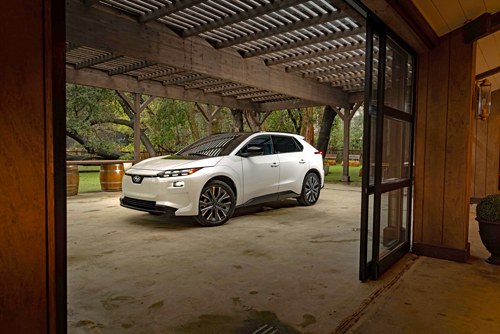
Arriving at the bottom of the hill on a private, brushy, bumpy ranch, we push the accelerator for some gloriously challenging bumps: major differences in elevation between the starboard and port sides of the vehicle (see the photos), anxiety-inducing narrow gaps between trees; nasty scratches just dying to happen, and more mud than this rain-starved region has seen in months.
Oh, but this is fun!
The Solterra performs admirably, admittedly leaving several traces in the landscape but easily satisfying the outdoorsy Subaru lover’s checklist. That’s earth and sky, city and backwoods, at no increase in price. If you’re not a convert, at least put it on your list. On the coasting ride downhill back to town, the unavailable deep blue of this American pre-production vehicle, and all the other testers’ colours, are now brown.