


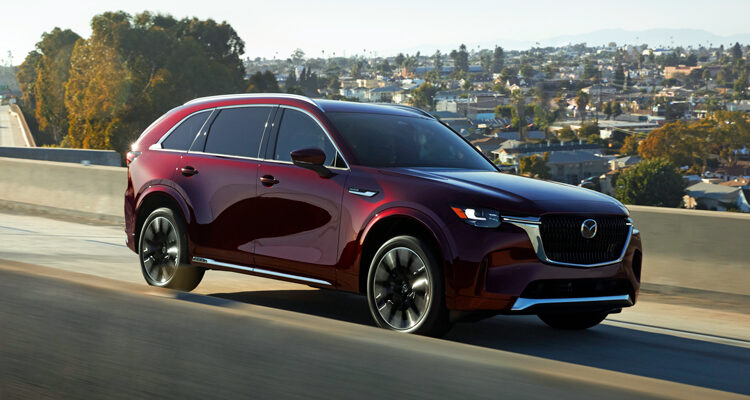
Mazda has a lineup dominated by crossovers in the North American market, a decision that seems to have served them well.
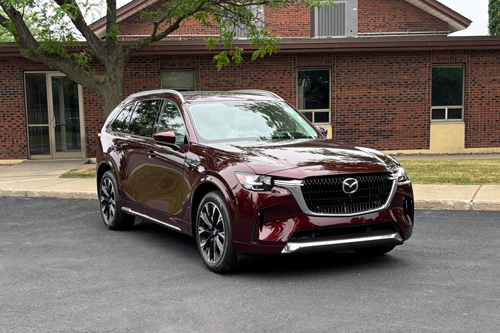
The models run the gamut from the compact CX-30 to the largest of the five, the three-row CX-90.
It is offered with mild-hybrid and plug-in hybrid powertrain options, and we recently drove both back-to-back to get a sense of how they perform.
The CX-90 and its smaller CX-70 stablemate were the first models in Mazda’s Canadian lineup to offer a hybrid setup.
Both look pretty much identical from the outside, save for badging and the extra door for the charge port on the PHEV.
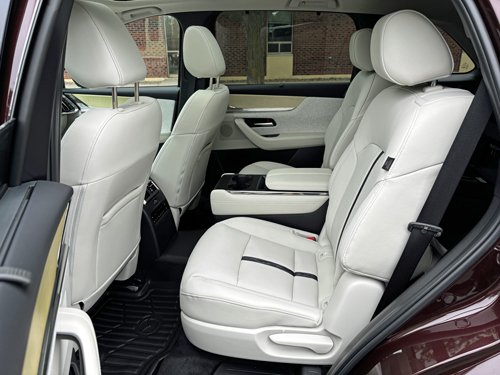
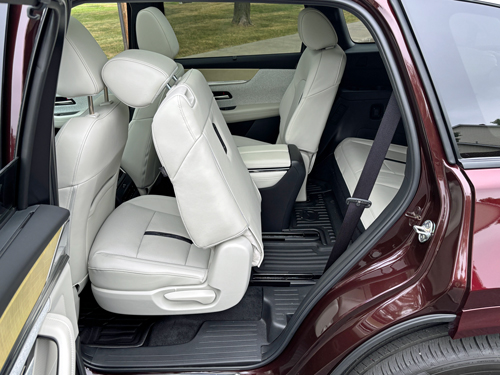
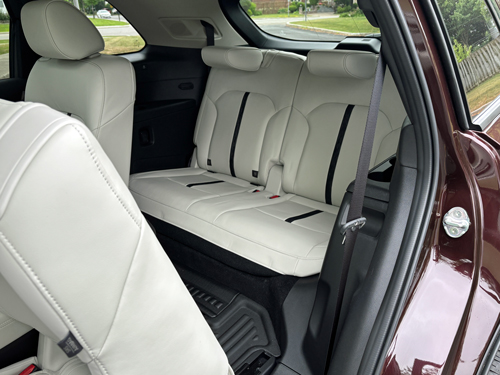
The model can seat seven or eight passengers depending on the trim level, with base models seating eight and higher trims getting second-row captain’s chairs for one less passenger.
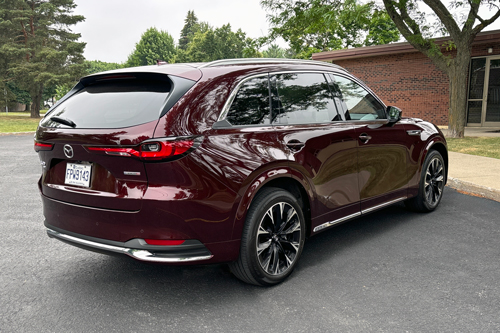
We tested the mild-hybrid Signature model and the GT trim of the plug-in model. While there are fewer bells and whistles on the GT PHEV, it was still very well equipped, and its price point was very similar to the top-of-class Signature.
Powertrain: Both powertrains for the CX-90 are solid options, although I did find that the PHEV version was not as smooth as I had hoped when transitioning between power sources.
The mild-hybrid combines a 3.3-litre inline six-cylinder engine with an 11-kW electric motor.
That is accompanied by a rather small 0.33-kWh battery for some power assist. On the Signature trim, the engine is boosted to a high-output version, delivering a combined power output of up to 340 horsepower and 369 lb-ft of torque when using 93-octane gasoline.
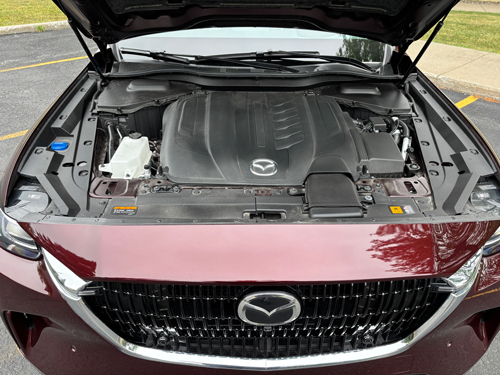
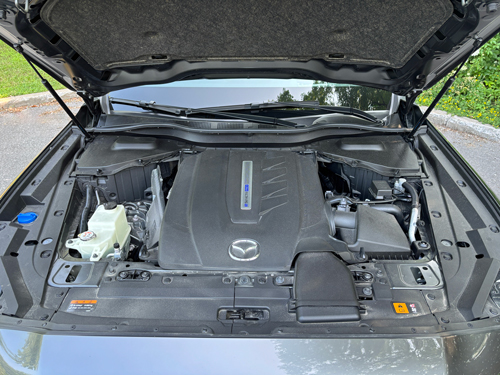
On the PHEV, the engine is a 2.5-litre inline four-cylinder paired with a 68-kW electric motor, which results in a combined power output of 323 horsepower and the same 369 pound-feet of torque (with 93 octane).
The 17.8-kWh battery delivers an estimated 42 kilometres of EV driving range, although real-world range was lower during my test.
The CX-90 comes standard with an eight-speed automatic transmission and all-wheel drive.
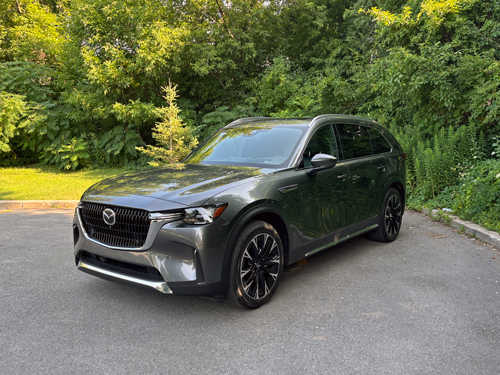
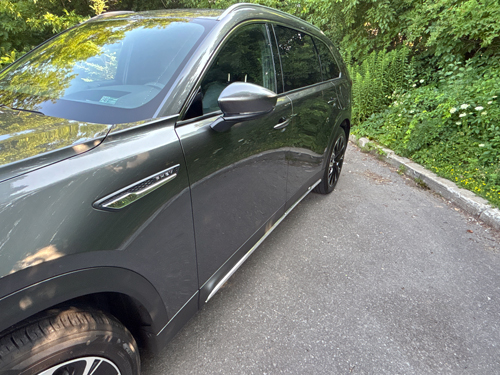
Exterior: The full-size CX-90 is stylishly designed, as is the case with most Mazda vehicles. The automaker has done a good job of delivering an upscale look across its lineup through its Kodo design philosophy.
Other than the port door for the charger, the only other exterior differences are the badging that identifies the PHEV and the inline-six engine on the mild hybrid.
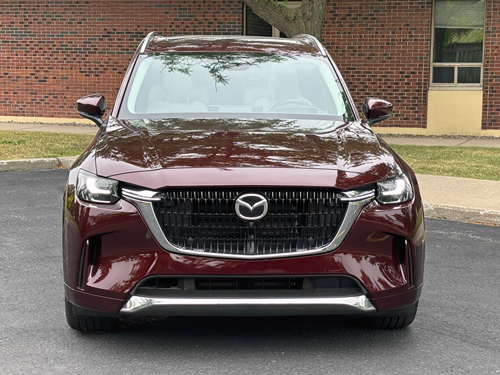
The CX-90 has a long front end to accommodate the engine setup and flowing lines that draw the eye to the vehicle’s silhouette.
Interior: The cabin of the CX-90 is spacious, comfortable and well thought out.
That said, I will call out something I found less appealing: the natural wood-coloured trim in the Signature mild hybrid we tested. It looked almost yellow and, when combined with the light interior materials, just didn’t work for me.
On the PHEV, Mazda reverted to a more traditional look of black seating and dash, with darker trims.
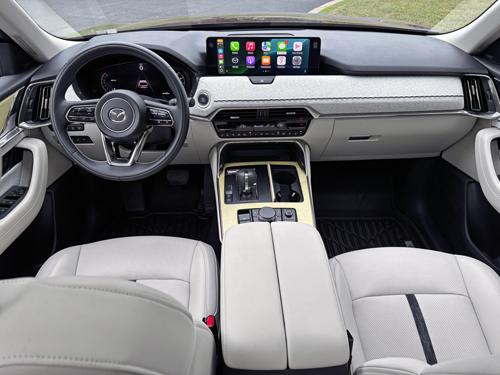
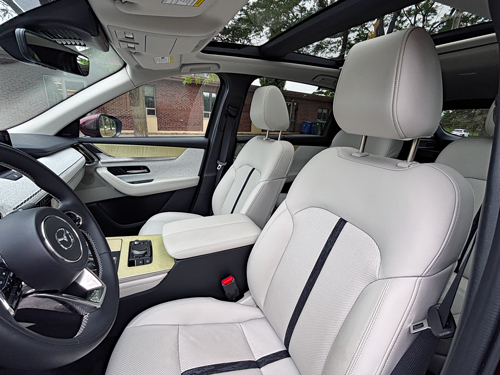
On the positive side, the seating was very comfortable and, in both our testers, featured Nappa leather. The front seats were power adjustable and did a great job supporting the driver during cornering.
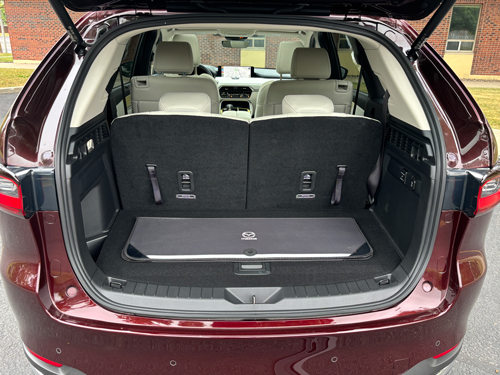
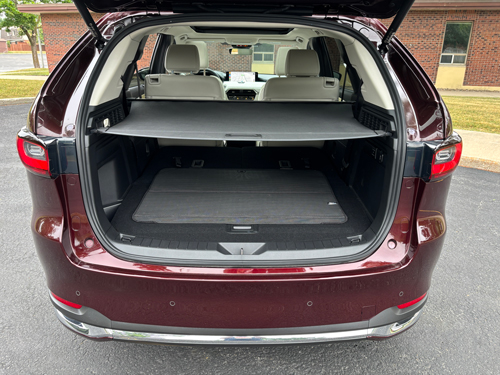
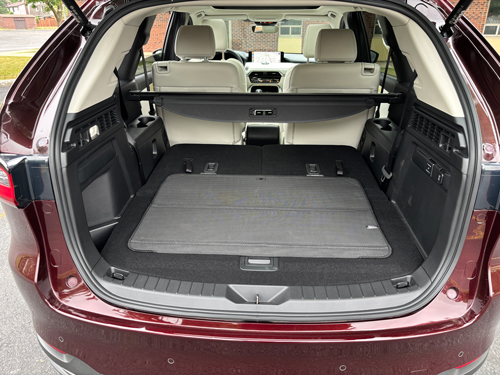
Cargo space is generous even with all three rows in use, but you nearly triple the available room when you lower the back bench. For even more room, the captain’s chairs can also be lowered.
Infotainment: The CX-90 has a large 12.3-inch centre display, which is a great size. However, I was surprised to see that it’s not a touchscreen—unless you are parked, or using Apple CarPlay or Android Auto. I found that a bit odd, and it forces you to use the dial/button controllers in the centre console, which I found to be more of a distraction than anything else.
While it’s a good system overall, there are better ones on the market, and Mazda hasn’t updated this in a while.
Drive: Both powertrains have redeeming qualities—and some foibles.
On the mild hybrid, you are obviously going to burn more fuel and, let’s be honest, most owners will use regular gasoline and miss out on some of the performance.
Overall, the inline six is a good engine that felt much smoother than the PHEV (more on that in a minute).
I have always enjoyed the driving dynamics of Mazdas thanks to their Skyactiv Vehicle Dynamics, and the CX-90 continues in that vein. As a larger vehicle, it’s certainly not the nimblest, but it is a very competent and composed drive on the road. The mild-hybrid setup, with the boost from the electric motor and smooth transmission, is the more enjoyable of the two.
2025 Mazda CX-90 Signature MHEV
2025 Mazda CX-90 Signature MHEV
2025 Mazda CX-90 Signature MHEV
2025 Mazda CX-90 Signature MHEV
2025 Mazda CX-90 Signature MHEV
The PHEV, on the other hand, felt clumsy at times. As mentioned, the transition between energy sources was not always smooth, and the engine itself was not as refined as the inline six.
The redeeming quality is the instant torque in EV mode, which makes acceleration quicker. When in EV mode on the road, the CX-90 is quite smooth, so for short hops when you can rely on the battery, it was a solid performer.
2025 Mazda CX-90 PHEV GT
2025 Mazda CX-90 PHEV GT
2025 Mazda CX-90 PHEV GT
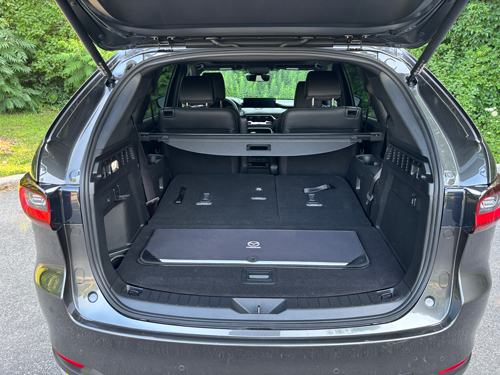
2025 Mazda CX-90 PHEV GT
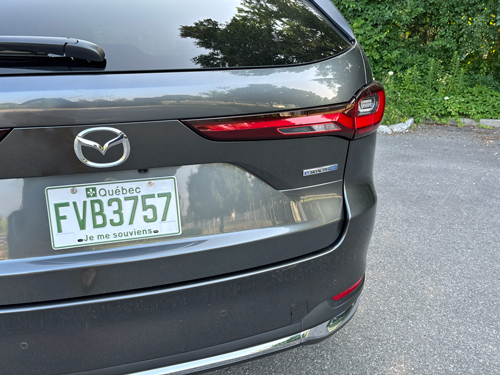
2025 Mazda CX-90 PHEV GT
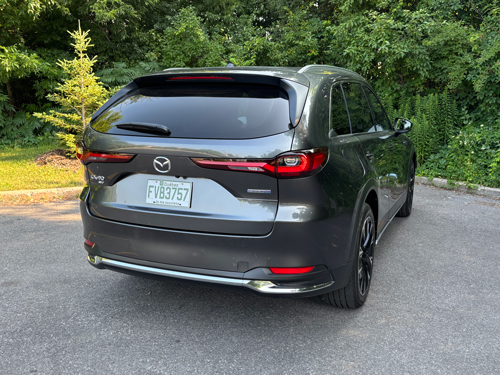
2025 Mazda CX-90 PHEV GT
Conclusion: While the attractiveness of a PHEV would usually sway me to choose it, the CX-90 version is not quite refined enough for my liking.
For my money, the inline six, using regular gasoline, would be the model I would opt for. The smoother powertrain and better overall drive feel are the difference for me.
2025 Mazda CX-90 PHEV GT and MHEV Signature
Price as tested: $67,640 (PHEV), $66,690 (MHEV)
Freight: $2,195
Configuration: Front engine / All-wheel drive
Engine/transmission:
PHEV: 2.5-litre 4-cylinder with electric motor / 8-speed automatic
MHEV: 3.3-litre inline 6-cylinder with Hybrid Boost / 8-speed automatic
Power/torque:
PHEV: Up to 323 horsepower / 369 lb-ft of torque
MHEV: Up to 340 horsepower / 369 lb-ft of torque
Fuel (capacity): Premium (70 L PHEV, 74 L MHEV)
PHEV electric driving range: 42 km (estimated)
Warranties: 3 years / Unlimited km (basic)
Competitors: Hyundai Palisade, Kia Telluride, Nissan Pathfinder, Toyota Highlander
Website: Mazda Canada